
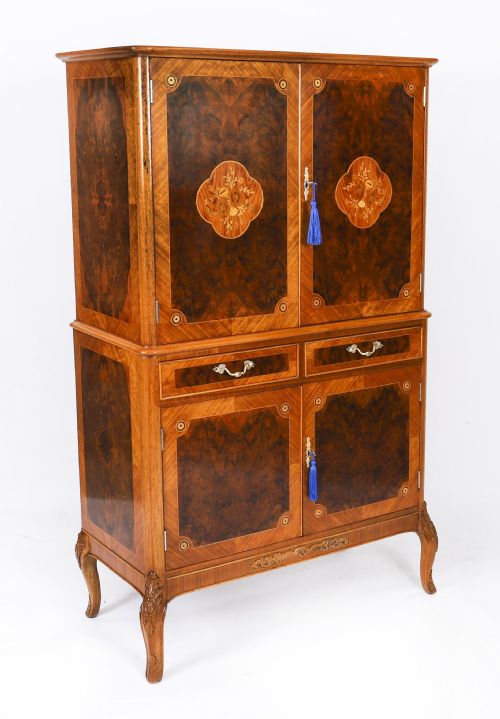
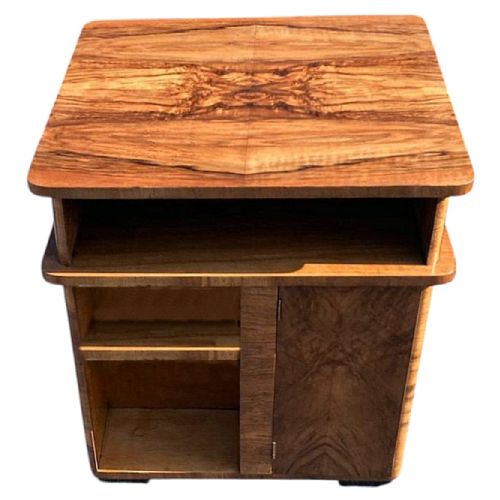


1930s Walnut Liquor Cabinet
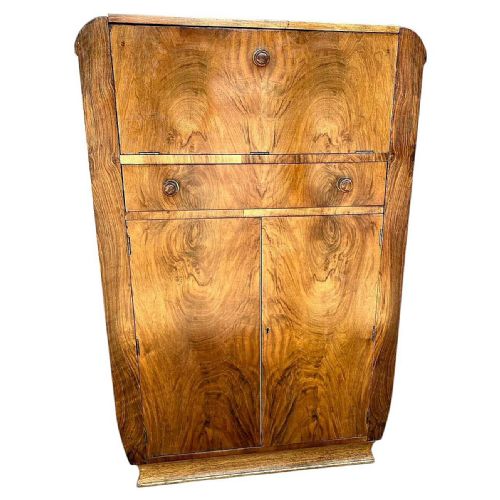
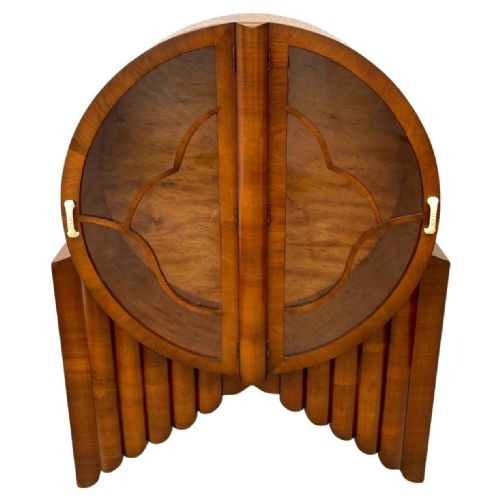
A 1930s walnut liquor cabinet brings sophisticated Art Deco style and practical home entertaining together through striking veneers.
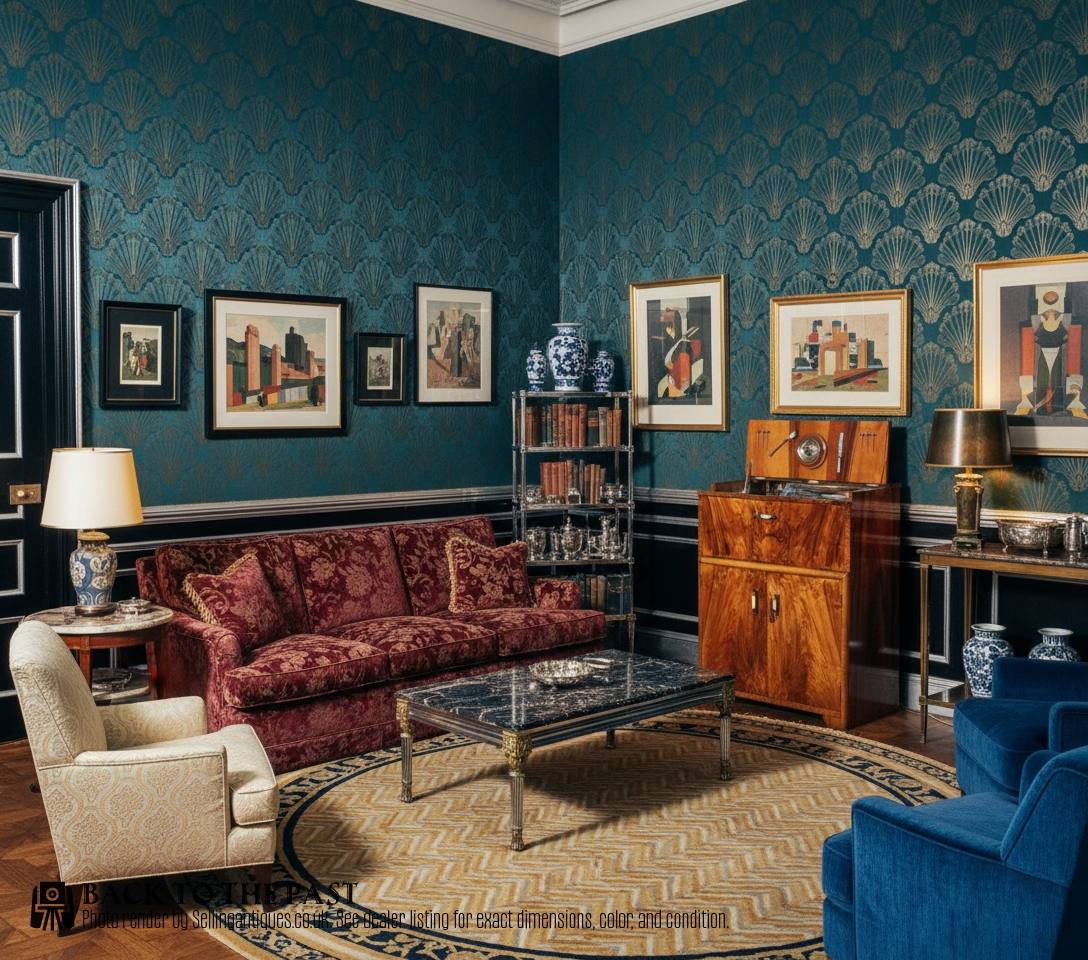
1930s Walnut Liquor Cabinet
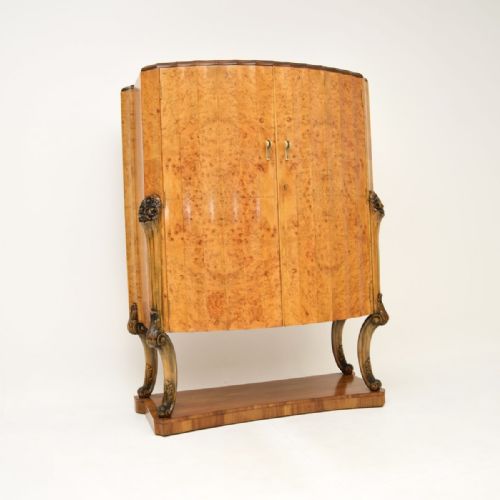
A 1930s walnut liquor cabinet is primarily designed as a cocktail cabinet, drinks cabinet, or dry bar for hosting guests. Most examples found here belong to the Art Deco style, accompanied by occasional Queen Anne Revival influences.
The primary forms take shape as freestanding cocktail cabinets, drinks cabinets, display cabinets, and specialised pop-up cocktail tables or chests. These pieces originate predominantly from the 1930 and 1920 periods.
Makers and workshops construct these items to serve as social centres within a room, featuring specialised compartments for glassware and bottles. The predominant aesthetic relies heavily on geometric lines and rich timber grain patterns.
How they were made
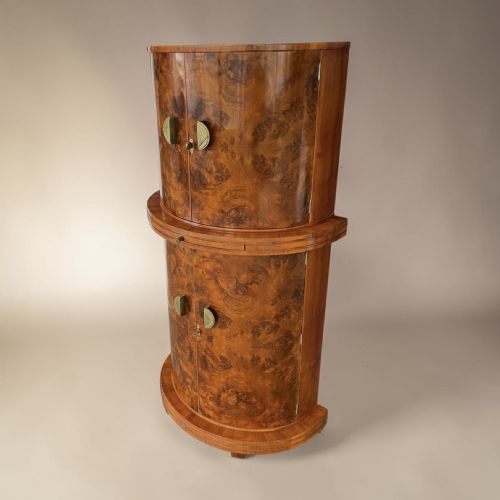
Craftsmen apply walnut and burr walnut veneer over solid timber carcases, arranging the grain patterns symmetrically to create bold visual impact on the exterior doors and drop-down panels. Marquetry details occasionally add decorative contrast to the polished surfaces.
Makers integrate functional hardware including brass fixtures, mirrored interior backs, and glass shelving to display glassware effectively. Bakelite elements appear alongside these traditional materials, reflecting the modern industrial tastes of the period.
Listings feature walnut, burr walnut, brass, glass, mirror, and Bakelite across Art Deco and Queen Anne Revival styles.
What varies in quality
The visual appeal of a 1930s walnut liquor cabinet depends largely on the choice and matching of the burr walnut veneer. Highly figured grain patterns carefully laid across symmetrical doors distinguish superior pieces from standard examples.
The sophistication of the internal mechanism, such as pop-up actions or specialised bottle storage, marks the distinction between basic utility pieces and high-end commissions. Maker attribution, particularly pieces associated with prominent workshops, further elevates the standing of a cabinet.
Epstein·Hille·Harry and Lou Epstein·Epstein and Co Furniture
The 1930s Walnut Liquor Cabinet Glossary
- Burr walnut
- A veneer sliced from the gnarled growth of a walnut tree, yielding dense, swirling grain patterns. Cabinet makers prize this material for its decorative surface movement.
- Art Deco
- A design style spanning the 1920s and 1930s characterised by sleek geometric shapes, streamlined forms, and modern materials. It dominates the appearance of these drinks cabinets.
- Vitrine
- A glass-fronted display cabinet used for showcasing glassware and porcelain. These vessels often form part of a larger drinks storage suite.
- Marquetry
- The art of applying pieces of veneer to a structure to form decorative patterns and pictures. Makers utilise this technique to enhance cabinet doors.
- Dry bar
- A piece of furniture equipped for serving alcoholic beverages without a running water supply. These compartments typically include mirrored backs and bottle racks.
1930s Walnut Liquor Cabinet: Frequently Asked Questions
How do I use a cocktail cabinet?
These cabinets function as dedicated home bars, housing bottles, shakers, and glassware behind decorative doors. Drop-down panels often serve as mixing surfaces when entertaining.
Interior mirrors and glass shelves help illuminate the glassware, while lower cupboards provide storage for larger bottles and bar accessories.
What is a rocket cabinet?
A rocket cabinet is a distinct Art Deco furniture form featuring streamlined, vertical curves that evoke mid-century aerodynamic design. These pieces serve as striking display or drinks cabinets.
The elongated proportions and polished walnut surfaces give these cabinets a futuristic silhouette typical of advanced 1930s styling.
Are these cabinets made of solid walnut?
Most examples utilise walnut or burr walnut veneer applied over a secondary timber carcase. This technique allows craftsmen to display dramatic grain patterns across large flat surfaces.
Solid walnut typically appears on structural elements like frames, mouldings, and legs, while veneers cover the main doors and panels.
How do I date a 1930s drinks cabinet?
Dating relies on stylistic markers such as Art Deco geometric forms, the presence of Bakelite hardware, and traditional construction methods. Surviving labels or workshop attributions help confirm the period.
Cabinet designs from this era transition away from heavier historical revivals toward cleaner, functional shapes tailored for modern entertaining.