

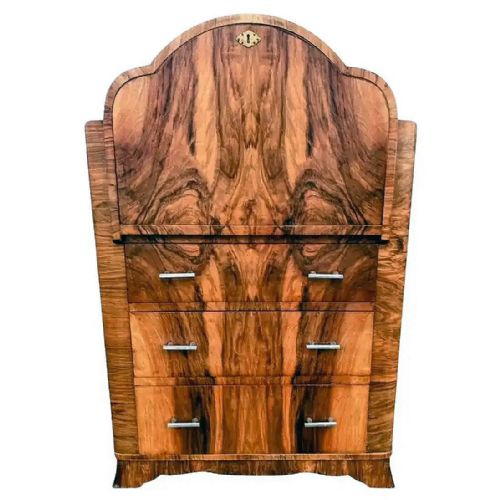


1930s Walnut Bureau
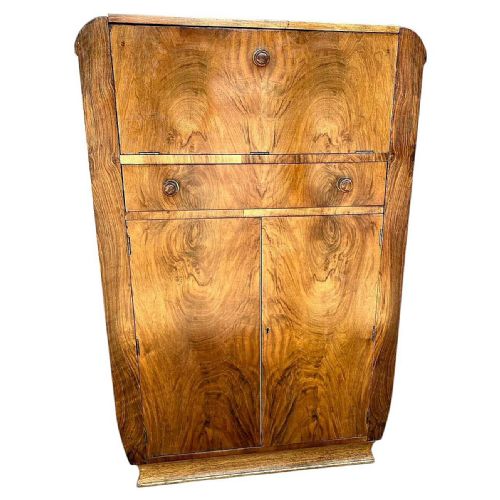
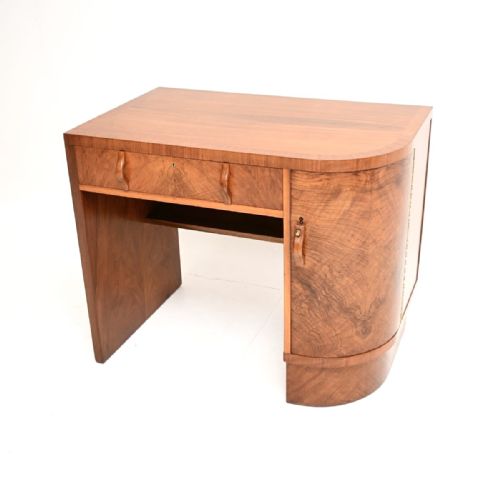
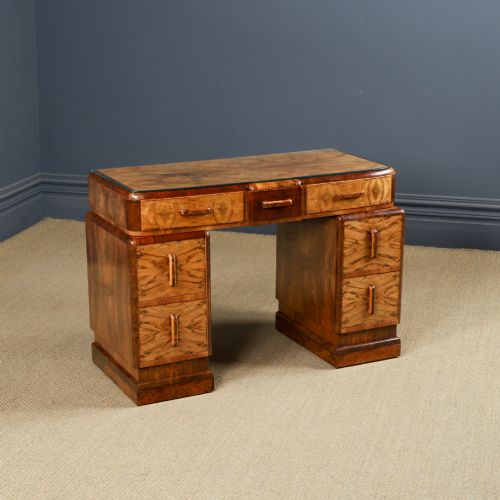
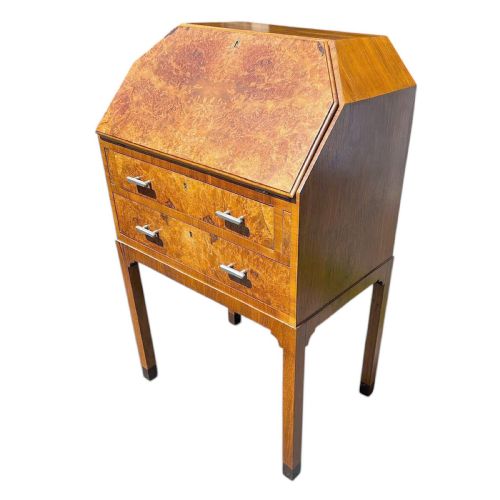
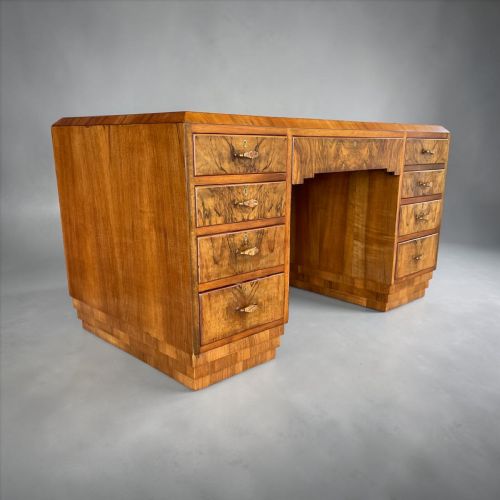
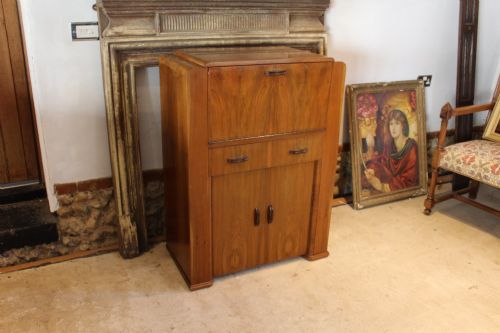
A 1930s walnut bureau brings together rich wood figures and practical writing space in the distinct geometric lines of the period.

1930s Walnut Bureau
A 1930s walnut bureau is a dedicated writing cabinet or desk characterised by the streamlined shapes of the Art Deco era. Buyers searching for this phrase encounter upright drop-front writing desks, pedestal writing tables, and combined bureau bookcases.
The pieces on this page originate predominantly from English and French workshops of the nineteen-thirties, spanning upright glazed bookcase combinations and compact writing desks. Walnut forms the primary surface, often laid out to showcase complex grain patterns across the main fall-fronts and drawer faces.
How they were made
Cabinet makers constructed these pieces using solid wood carcases overlaid with decorative veneers such as burr walnut and figured walnut. Brass handles, hinges, and occasional glass elements provide structural contrast to the warm brown tones of the timber.
Techniques relied heavily on precise slicing of walnut veneer to create symmetrical grain patterns across large flat panels, supplemented by shaped wood elements characteristic of Art Deco design.
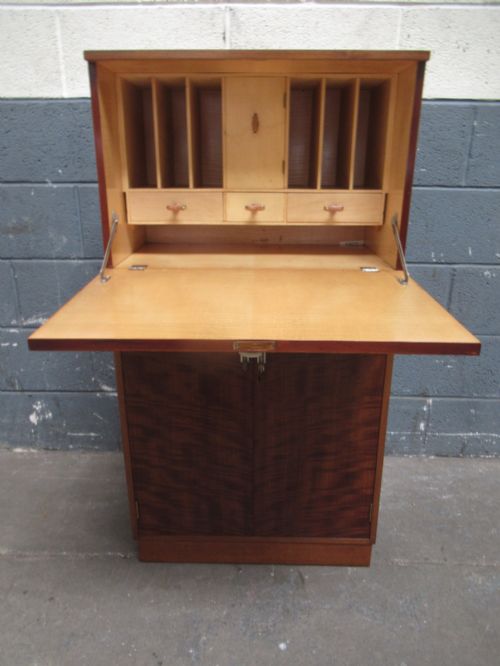
Some bureaus hide internal stationery compartments cleverly behind miniature tambour doors that slide shut with a satisfying click.
What varies in quality
The standard of a 1930s walnut bureau rests on the selection and matching of the veneer grain across the primary surfaces. Superior examples display balanced figuring across the drop-front and drawers, whereas simpler pieces utilise plain veneer.
Execution of the cabinet joinery and the integration of internal pigeonholes, small drawers, and fitted compartments distinguish standard commercial production from workshop pieces attributed to known makers.
F.H. Marshall & Co Glasgow·Étienne Kohlmann·Maurice Adams
The 1930s Walnut Bureau Glossary
- Burr walnut
- A prized wood figuring obtained from the gnarled growths of walnut trees, showing swirling knot patterns. It creates highly decorative surfaces on bureau fall-fronts.
- Bureau plat
- A flat-topped writing table without an upright superstructure, commonly associated with French designs from the period. These tables feature finished backs for placement in the centre of a room.
- Art Deco
- The dominant design style of the 1930s, defined by clean geometric lines, stylised curves, and modern materials. It replaced the ornate carving of earlier decades with sleek surfaces.
- Veneer
- A thin slice of superior wood applied over a secondary timber carcase to provide a decorative exterior. This technique allowed makers to utilise expensive timbers efficiently.
1930s Walnut Bureau: Frequently Asked Questions
How do I use a bureau desk?
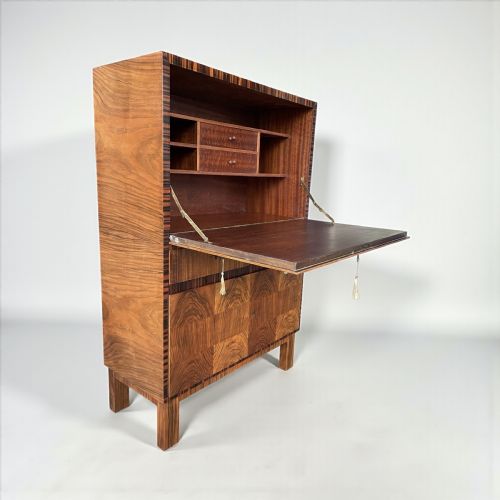
The hinged drop-front opens down to create a flat writing surface supported by internal arms or pull-out lopers. This reveals a fitted interior of small drawers and pigeonholes for correspondence.
When writing is finished, the flap closes to conceal papers and stationery, maintaining a tidy appearance in a living space or study.
Where should I place a bureau?
A bureau suits studies, living rooms, and bedrooms where a compact writing station is required without occupying the footprint of a large partner desk. Upright bureau bookcases also provide upper display space for books or glassware.
Keep the piece away from direct sunlight and heat sources to prevent the walnut veneer from drying or fading over time.
How do I identify Art Deco style?
Art Deco pieces from the nineteen-thirties rely on symmetrical shapes, waterfall edges, and cloud-like curves rather than historical revival ornamentation. The emphasis rests on smooth wood surfaces and restrained metal hardware.
Makers utilised figured walnut grain patterns as the primary decoration, letting the natural timber replace carved details.
What is the difference between English and French desks?
English bureaus of this era frequently combine writing functions with upright bookcase storage or compact pedestal formats. French examples in the records lean toward bureau plat forms and distinct geometric pedestal desks.
Both national traditions employ walnut and brass, but French pieces often incorporate attribution to specific studio designers.