


1930s Bureau Cabinet
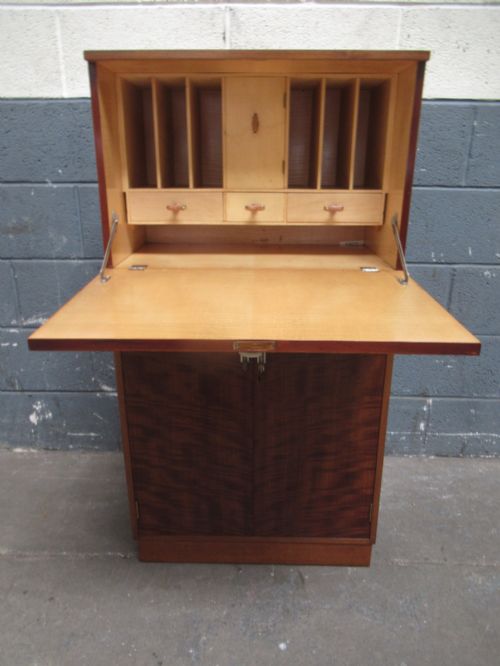
A 1930s bureau cabinet combines a drop-front writing desk with display or storage space, offering practical workspace and period character for the modern home.

1930s Bureau Cabinet
When you search for a 1930s bureau cabinet, you encounter compact writing furniture that serves multiple purposes within a single footprint. These pieces bridge the gap between traditional writing desks and modern storage cabinets.
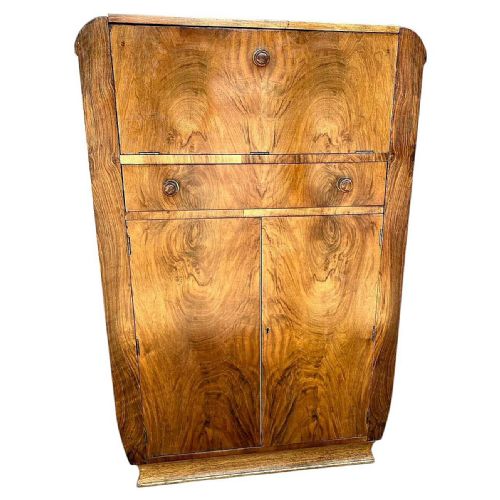
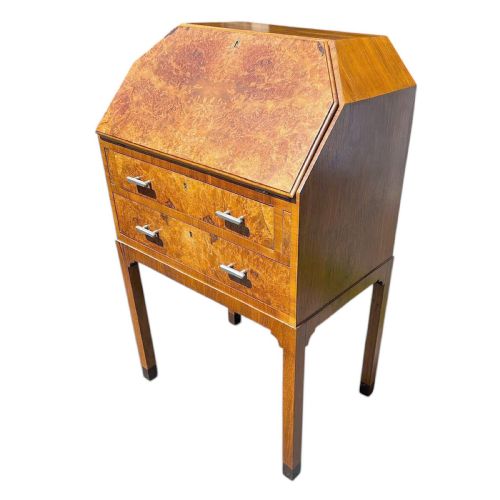
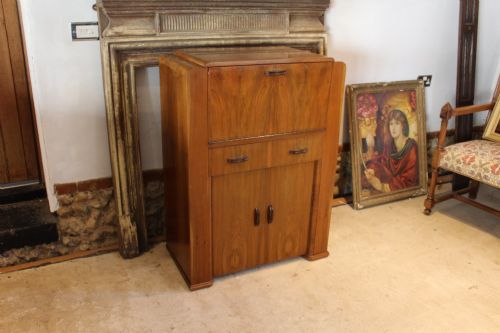
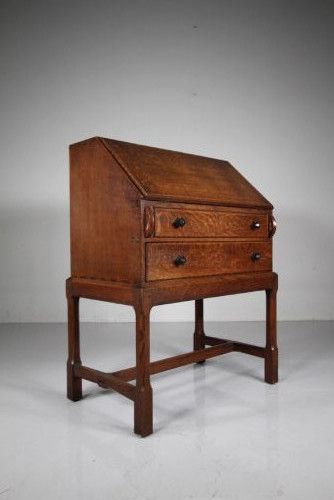
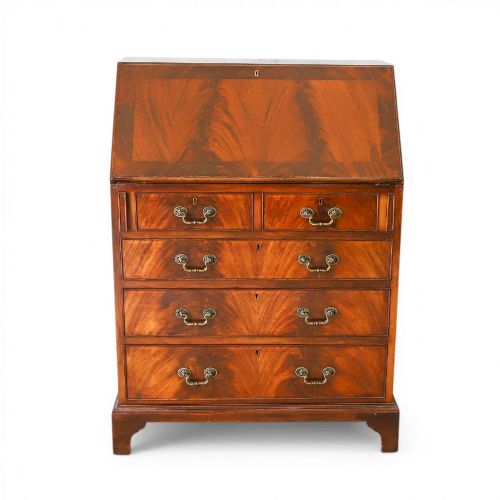
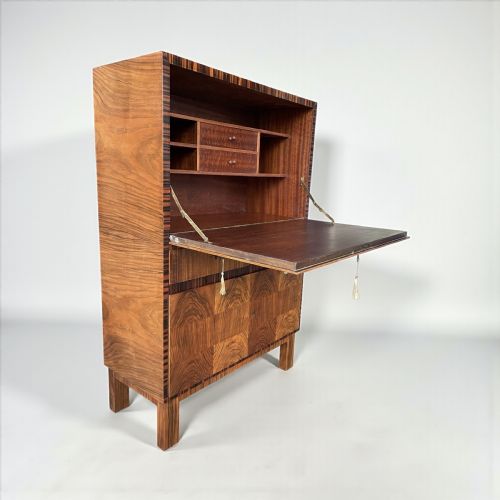
The versions most commonly met on this page span the Art Deco and Arts and Crafts styles, alongside Georgian Revival adaptations. They frequently incorporate drop-front writing surfaces alongside glazed bookcase sections or dedicated cocktail compartments.
Origins range from English workshops to Scottish makers and Welsh regional furniture production. The forms vary from streamlined geometric silhouettes to traditional oak and mahogany constructions with distinct regional labels.
Materials and construction
Makers of the period utilised timber veneers, notably figured and flame walnut, applied over solid secondary woods to create striking grain patterns on the main facades. Oak and mahogany also appear frequently, reflecting both traditional craftsmanship and modernist design preferences.
Brass hardware and internal glass components complete the construction of these cabinets. Joinery techniques combine traditional cabinet-making methods with the sleek, geometric demands of Art Deco and the honest construction of the Arts and Crafts movement.
Current listings feature walnut, oak, and mahogany, spanning Art Deco, Arts and Crafts, and Georgian Revival styles.
Assessing quality
The distinction between standard production and superior examples lies in the selection and book-matching of veneers across the front panels. High-quality pieces display continuous, symmetrical grain patterns that demonstrate careful planning by the cabinet maker.
Original maker's marks, metalwork and integrated labels elevate a piece by providing documented provenance. The integrity of the internal fittings, such as specialised pigeonholes, fitted cocktail compartments and glazed bookcase doors, further distinguishes the better examples.
F.H. Marshall & Co Glasgow·Stanley Webb Davies·Bryn Mawr
The 1930s Bureau Cabinet Glossary
- Drop-front
- A hinged writing flap that pulls down to create a horizontal surface for correspondence. When closed, it conceals internal pigeonholes and small drawers.
- Veneer
- A thin layer of figured wood applied to a solid wood base to create decorative patterns. Figured walnut veneer is typical of the period.
- Bookcase bureau
- A tall cabinet combining upper shelving enclosed by glazed doors with a lower writing desk section. This form provides display space alongside concealed storage.
- Arts and Crafts
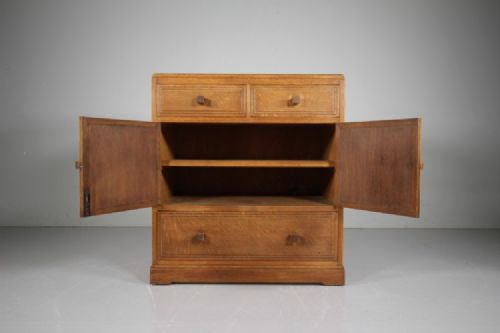
- A design movement emphasising handcraftsmanship and simple vernacular forms. Pieces in this style often highlight the natural grain of solid oak.
1930s Bureau Cabinet: Frequently Asked Questions
How do I identify a 1930s bureau cabinet?
Look for characteristic design markers such as stepped pediments, geometric veneering, and waterfall edges typical of the Art Deco period. Construction methods and timber choices, particularly figured walnut and regional oak, also point directly to this era.
Compare the silhouette with earlier Victorian or Edwardian desks, which generally feature heavier carvings and more ornate brasses. 1930s pieces lean towards cleaner lines and functional dual-purpose forms.
Were these cabinets used for writing or storage?
They were designed to serve both functions simultaneously within smaller domestic spaces. The drop-front flap opens to reveal a compact writing desk equipped with letter slots and small drawers.
Below or above the writing area, cupboards, shelving, or glazed bookcase sections provide enclosed storage for books and household items. Some specialised variants substitute the bookcase for a cocktail compartment.
How do I fit a bureau cabinet into a modern room?
A bureau cabinet works effectively in a living room, hallway, or home office due to its vertical proportions and dual utility. The enclosed writing surface allows you to conceal paperwork instantly when not in use.
Keep the surrounding decor relatively uncluttered to let the figured wood veneers and period hardware stand out. Ensure there is adequate floor clearance in front of the piece for the drop-front flap to open fully.
What is the difference between Art Deco and Arts and Crafts examples?
Art Deco pieces prioritize sleek symmetry, highly figured veneers, and modern urban styling. They often feature dramatic grain patterns and streamlined hardware.
Arts and Crafts examples emphasise visible construction, solid regional timbers like oak, and honest craftsmanship over decorative veneer work. Labelled pieces from regional workshops often reflect this traditional approach.