
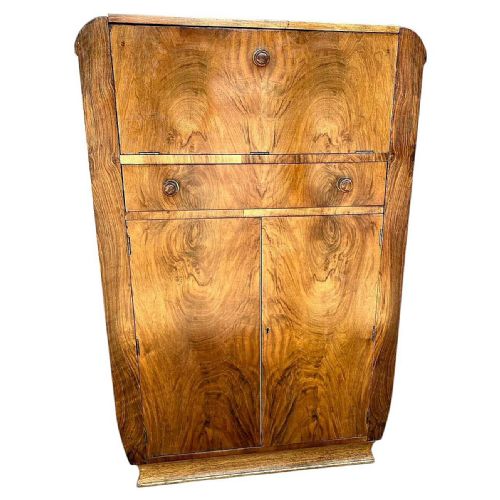
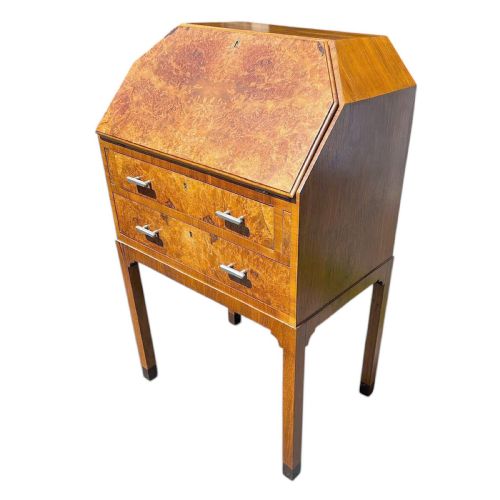
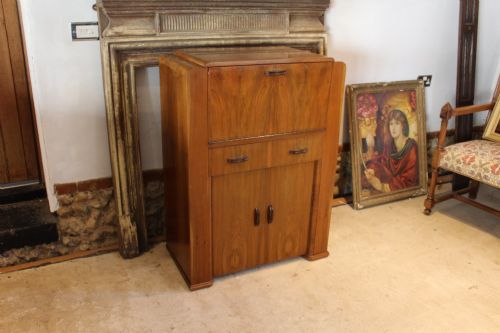
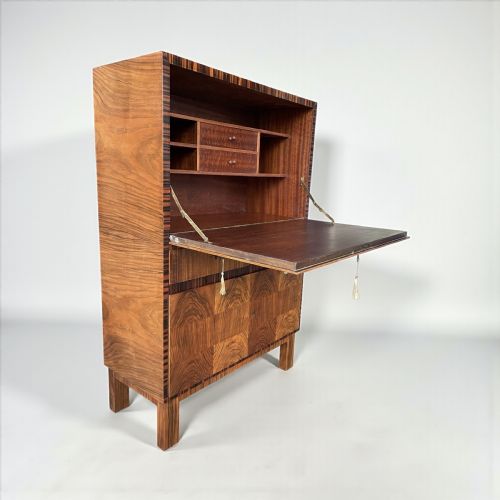


Art Deco Bureau Cabinet
An art deco bureau cabinet marries the clean geometry of the interwar years with serious domestic utility, offering a fitted writing desk and concealed storage behind architectural doors.

Art Deco Bureau Cabinet
When you search for an art deco bureau cabinet, you are looking at practical furniture designed to double as a writing desk and a storage unit, frequently combining a fall-front flap with shelving or display space. These pieces emerge predominantly from the nineteen thirties, though related forms stretch from the nineteen twenties into the mid-twentieth century.
The versions you are most likely to meet on this page are constructed in walnut or walnut veneer, often showcasing striking figuring across the drop-front and doors. Forms range from compact desks to tall bureau bookcases and cocktail cabinets, reflecting how makers adapted the desk format for modern living.
English and French workshops dominate the origins of these pieces, supplying variations that include upright glazed bookcases and fitted writing compartments. While some examples remain strictly utilitarian, others incorporate display cabinets for glassware or drinks.
Materials and construction
Makers relied heavily on walnut and burr walnut veneer applied over secondary woods, allowing them to create symmetrical patterns across large cabinet surfaces. The natural grain of the timber serves as the primary decoration, often arranged in book-matched panels on the main doors and writing flaps.
Brass and glass feature prominently as secondary materials, providing functional contrast through handles, hinges, and glazed upper bookcase sections. Metal hardware is typically minimal and geometric, reinforcing the clean lines characteristic of the period.
Listings span three decades, with the nineteen thirties representing the primary period of production alongside occasional pieces from the nineteen twenties and forties.
Distinguishing quality in the range
The distinction between standard production items and finer examples lies in the selection and application of veneer, particularly where burr walnut is matched across the entire front elevation. Superior pieces display seamless grain continuity across drawers and doors, indicating careful timber preparation by the maker.
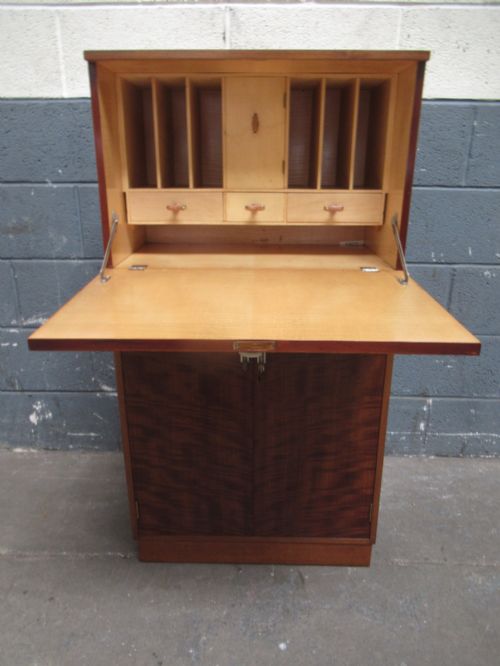
Fitted interior compartments also separate the hierarchy, with better workshops providing bespoke pigeonholes, secret drawers, and integrated lighting within the bureau section. The precision of the joinery around the fall-front hinges and internal pigeonholes reveals the original maker's standard of construction.
F.H. Marshall & Co Glasgow
The Art Deco Bureau Cabinet Glossary
- Bureau cabinet
- A combined furniture form featuring a sloping or vertical fall-front writing surface above or below enclosed storage compartments. It often includes upper bookcase sections or display doors.
- Walnut veneer
- A thin layer of valuable walnut timber applied to a stable base wood to create decorative surfaces. It allows makers to utilise striking grain patterns economically.
- Burr walnut
- Wood taken from a tree growth or burl, producing highly figured, swirling patterns used on prominent exterior panels. It is prized for its decorative visual impact.
- Fall-front
- A hinged writing flap that opens down to create a horizontal desk surface. It conceals internal pigeonholes and small drawers when closed.
- Book-matched
- A technique where adjacent veneer leaves are mirrored to create symmetrical patterns. This method enhances the natural grain.
Art Deco Bureau Cabinet: Frequently Asked Questions
What is a bureau cabinet?
A bureau cabinet is a dual-purpose piece of furniture that combines a drop-front writing desk with vertical storage or display space, such as a bookcase or a cocktail cabinet. It is designed to save floor space while keeping writing materials and household items neatly concealed.
These pieces typically feature a hinged flap that pulls down to form a writing surface, backed by small compartments for stationery. The upper section often contains shelves enclosed by wooden or glazed doors.
How do I date these cabinets?
Dating relies primarily on stylistic markers, construction techniques, and materials characteristic of the interwar period, particularly the nineteen thirties. The presence of specific geometric forms, stepped pediments, and waterfall edges helps anchor a piece to this era.
Makers occasionally included stamps or paper labels inside drawers, though many pieces remain unmarked. Comparing the hardware style and veneer patterns with documented examples from the same decade provides further confirmation.
Were they used for drinks?
Many cabinets from this period were specifically adapted to serve as cocktail cabinets, featuring mirrored interiors, glass shelving, and pull-out trays for mixing beverages. These drinks cabinets reflect the entertaining habits of the interwar years.
While traditional bureau cabinets focused on writing and book storage, the crossover with cocktail furniture led to hybrid designs that housed both stationery and glassware behind locking doors.
How do I care for walnut veneer?
Walnut veneer requires protection from direct sunlight and excessive moisture to prevent fading and lifting of the thin wood layer. Regular dusting with a soft, dry cloth helps maintain the finish without building up heavy wax residues.
Maintaining a stable room temperature prevents the underlying wood from expanding and contracting, which can cause the veneer to crack or warp over time.