


Art Deco Writing Cabinet
An art deco writing cabinet brings clean architectural lines and clever compartmentalised storage to a study.
Art Deco Writing Cabinet
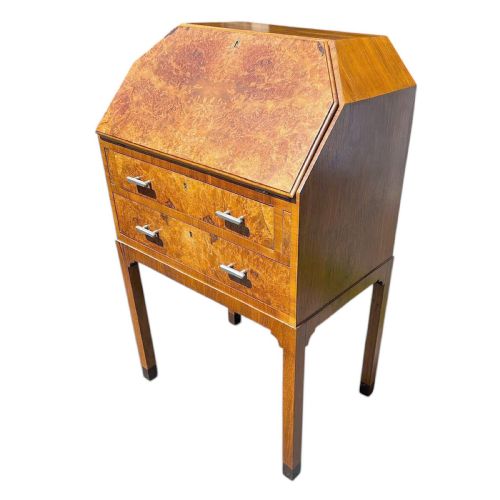
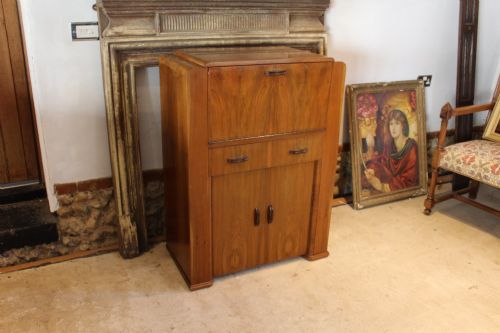
When you search for an art deco writing cabinet, you are looking at compact workspaces designed during the interwar years to conceal paperwork behind disciplined geometric veneers. These pieces combine the utility of a traditional bureau with the streamlined silhouette characteristic of the 1920s and 1930s. The versions you are most likely to meet on this page take the form of walnut bureau cabinets, upright glazed bookcases combined with writing flaps, and dedicated desks.
The evidence shows these cabinets emerging primarily from the 1930 period, alongside examples dated to the 1920s and mid-century. Forms range from simple writing desks and compact walnut compact desks to substantial bureau bookcases fitted with glass upper sections. They bridge the gap between display furniture and private working spaces, often integrating shelving and drop-down writing surfaces into a single vertical footprint.
Materials and construction
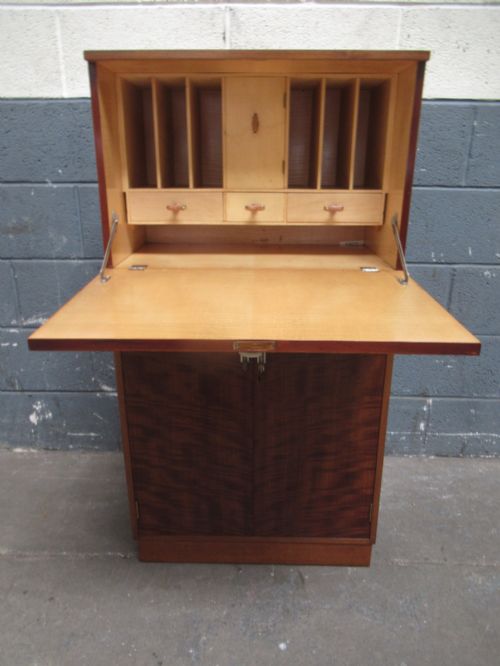
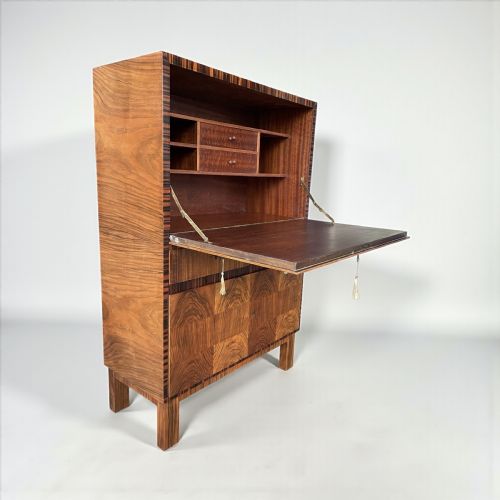
Makers of the period relied heavily on walnut and burr walnut veneers applied over solid wood carcases, creating rich figure and grain patterns across large flat surfaces. Satinwood often appears as a contrasting secondary timber for interior fitments, offering a pale and luminous ground inside the dark exterior shells. Metal and brass hardware provide functional accents, appearing as hinges, drop handles, and escutcheons that punctuate the rectilinear woodwork.
Glazing is another recurring technique, with leaded or plain glass panels fitted into upright bookcase doors to display libraries above the writing station. Construction methods balance traditional cabinet-making joints with modern plywood and veneer technologies of the interwar era. Surface finishing typically involves French polishing or varnishing to highlight the natural chatoyancy of the burl and straight-grained walnut.
One unexpected bookcase cabinet arrived bearing hand sign-written detail for the British Broadcasting Company.
Assessing quality in execution
The distinction between standard commercial production and finer work lies in the selection and matching of veneers. Superior pieces display book-matched burr walnut grain that flows seamlessly across drawer fronts and fall-front writing flaps. Cabinetmakers who took greater care ensured that the interior pigeonholes and small drawers received the same timber quality as the exterior facade.
Hardware and joinery integrity further separate the tiers of manufacture. Better cabinets utilise cast brass fittings and robust internal hinges that support the downward weight of a writing flap without sagging. The precision of the drawer fit and the crispness of the applied mouldings reveal the level of hand labour invested by the workshop.
F.H. Marshall & Co Glasgow·Bath Cabinet Makers
The Art Deco Writing Cabinet Glossary
- Bureau
- A desk featuring a sloping hinged flap that opens to reveal a fitted interior of small drawers and pigeonholes. This form provides a concealed workspace when closed.
- Veneer
- A thin slice of decorative timber applied over a secondary wood base to create patterned surfaces. Burr walnut veneer is particularly prized for its swirling knot formations.
- Secretaire
- A dedicated writing cabinet or desk containing a hidden or fold-down writing surface. French examples often use this term for refined upright writing furniture.
- Bookcase Bureau
- A hybrid piece combining upper open or glazed shelving for books with a lower writing desk component. It maximises vertical storage in smaller rooms.
- Drop-front
- A writing surface hinged at the bottom edge that rotates from a vertical position to horizontal for writing. It relies on internal stays or arms for support when lowered.
Art Deco Writing Cabinet: Frequently Asked Questions
How do I use a writing cabinet today?
These cabinets suit modern laptops and paperwork by providing a desktop surface that folds away entirely out of sight when not in use. The internal compartments keep stationery and small items organised within arm's reach.
Leaving the flap down permanently places strain on the support stays, so closing the unit after use preserves both the mechanism and the clean appearance of the room.
Are these pieces English or French?
The selection includes both English and continental origins, with distinct regional preferences in timber selection and decorative restraint. English pieces frequently favour figured walnut veneers and straightforward upright proportions.
French variations, often labelled as secretaires, tend to embrace more expressive hardware and lighter secondary woods inside the writing compartments.
How do I date an art deco cabinet?
Dating relies on stylistic markers such as stepped pediments, waterfall edges, and the specific geometry of the veneer layouts typical of the interwar decades. Most examples cluster around nineteen thirty, reflecting the height of the style.
Later mid-century pieces from the nineteen forties and fifties show a transition toward simpler, lighter frames with less applied ornamentation.
Do bureau bookcases come apart for moving?
Many tall bureau bookcases are constructed in two distinct sections, separating the upper glazed bookcase from the lower desk base for transport. Checking the interior sides reveals whether the carcase splits horizontally.
Securing the internal drawers and locking the fall-front flap prevents shifting while moving the heavier walnut structures between rooms.