

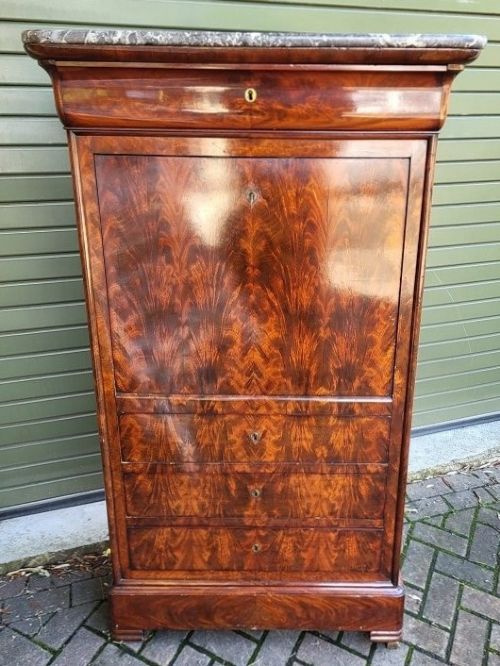


French Drop Front Desk
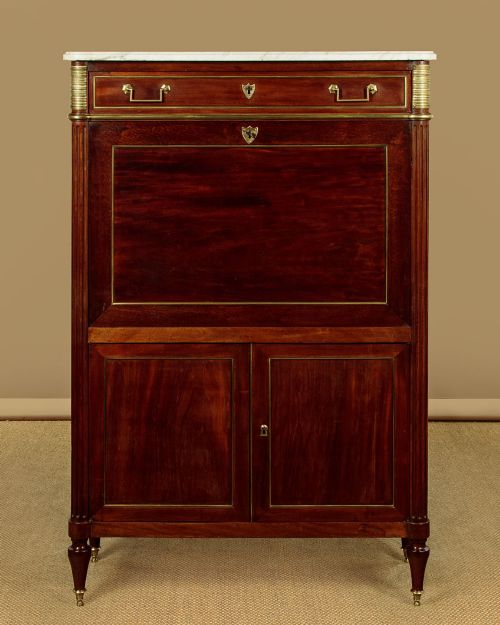
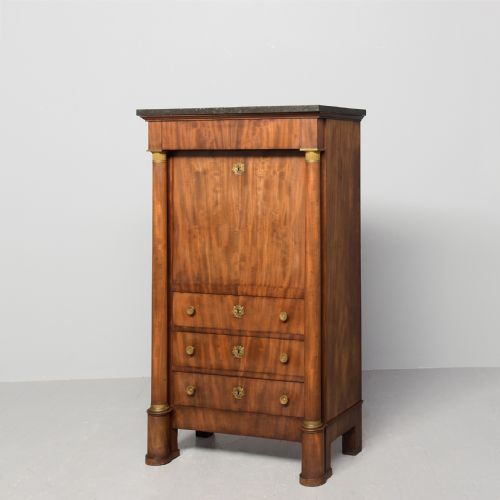
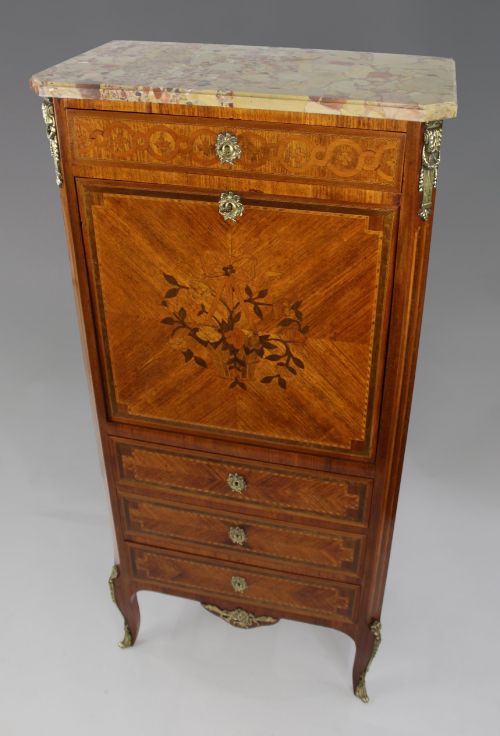
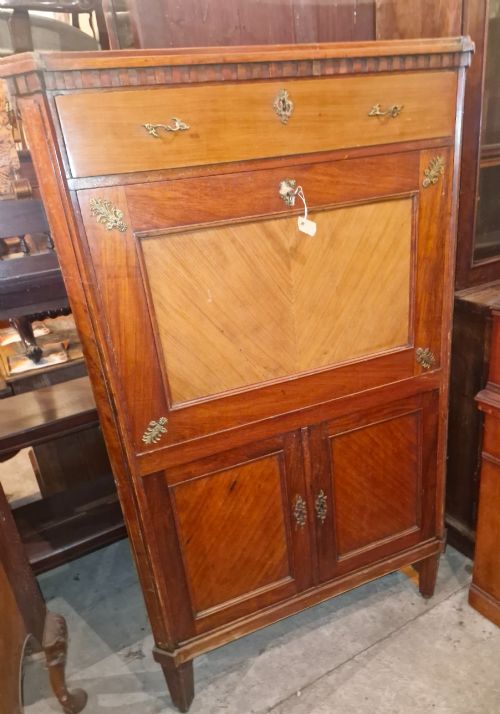
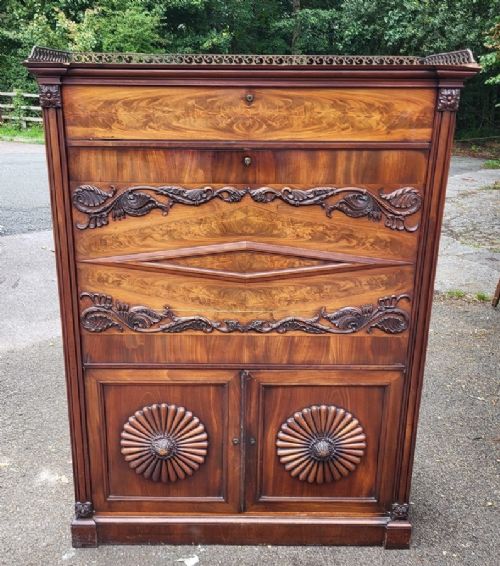
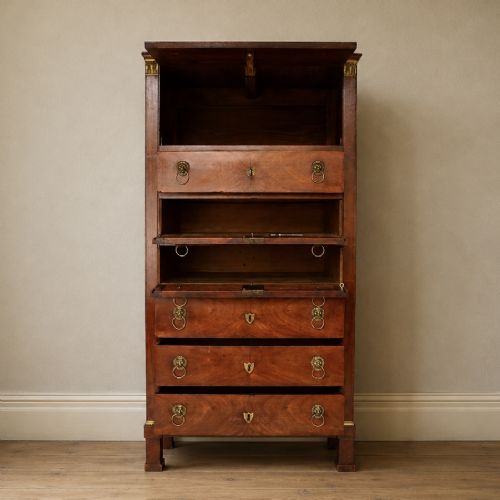
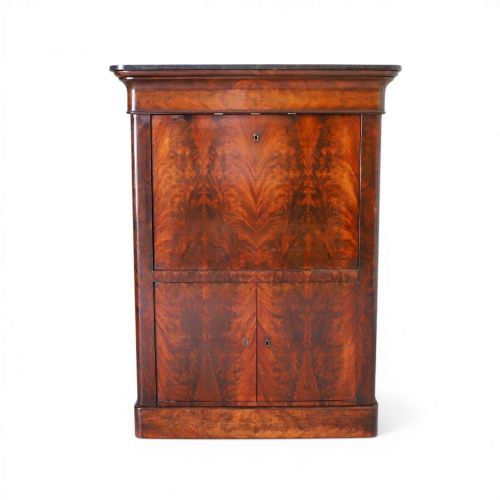
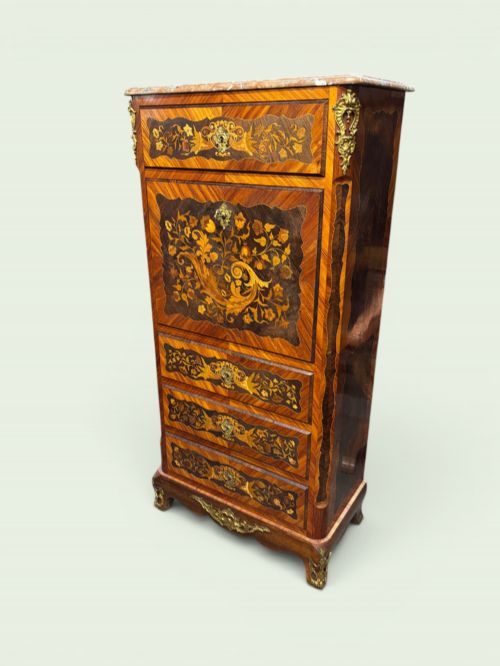
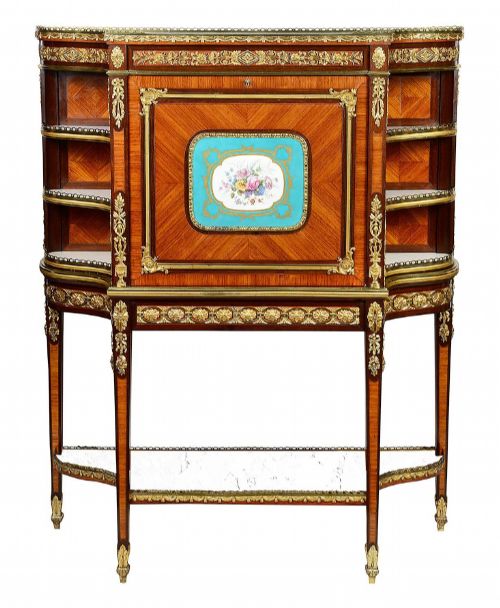
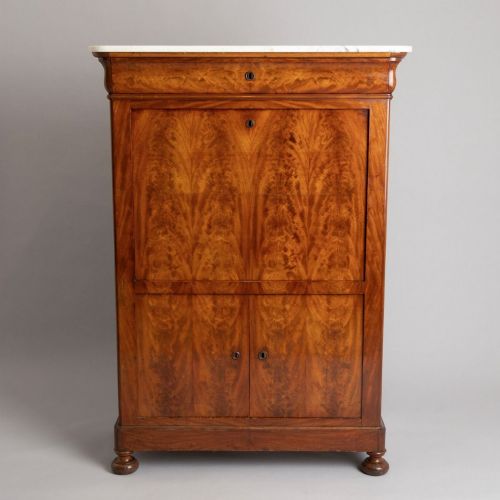
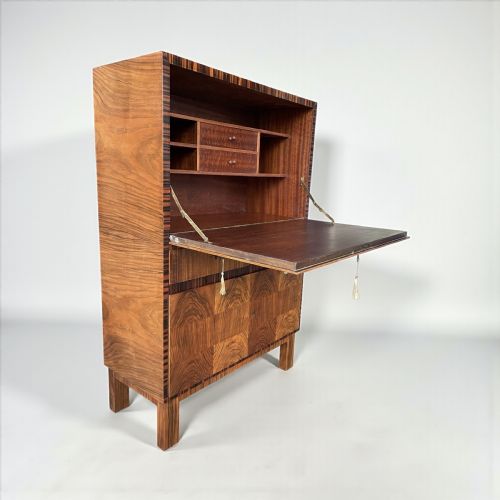
These pieces are a French drop front desk, offering a concealed writing surface and refined storage for any study or drawing room.
French Drop Front Desk
A french drop front desk provides a vertical cabinet format that opens to reveal a fitted writing surface and internal compartments. Buyers seek these pieces for their combination of generous storage and a compact footprint.
The version most commonly encountered on this page is the secretaire à abattant, typically originating from the nineteenth century in mahogany, kingwood, or walnut.
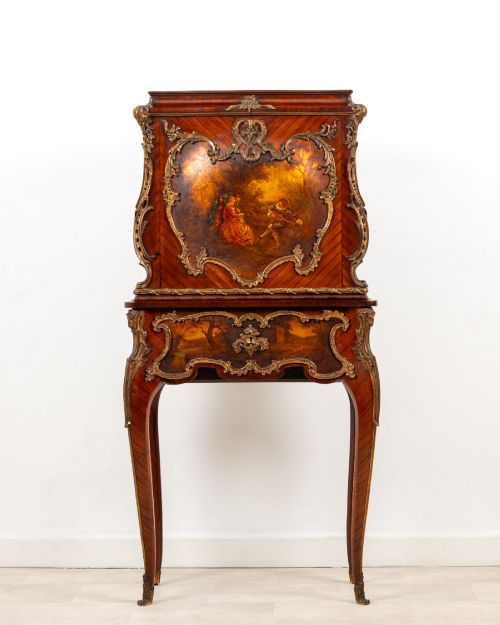
Design vocabulary spans from the restrained lines of the French Empire and Louis XVI styles to the ornate flourishes of Louis XV and Rococo revival periods, often incorporating decorative marquetry or parquetry.
Materials and Construction
Cabinetmakers utilised dense native hardwoods such as mahogany and walnut, frequently applying exotic veneers like kingwood, rosewood, and flame mahogany across the primary surfaces.
Structural embellishments relied on cast ormolu and gilt bronze mounts, which framed panels of marquetry or Vernis Martin painted decoration.
Many examples integrate heavy marble slabs inset into the upper surface above the drop front mechanism.
French Drop Front Desk Retail Price Guide 2026
Typical asking prices for french drop front desk among the pieces listed under this phrase on Sellingantiques today, from the lower quarter to the upper quarter. They describe what is for sale here now, not the wider market.
Listings feature eighteenth-century to twentieth-century periods, utilising marble, brass, ormolu, mahogany, kingwood, walnut, rosewood, and flame mahogany.
Assessing Quality
Quality rests upon the selection and matching of timber veneers, where continuous grain patterns across the fall front indicate careful planning by the cabinetmaker.
The precision of the internal drawer construction and the complexity of the secret compartment mechanisms distinguish finer workshops from standard production pieces.
The crispness of cast ormolu mounts and the integrity of original marble tops separate sophisticated examples from simpler variants.
Blake London
The French Drop Front Desk Glossary
- Secretaire à abattant
- A tall, upright cabinet with a hinged fall front that drops down to form a desk surface. This form conceals pigeonholes and small drawers within.
- Ormolu
- Gilt bronze mounts applied to furniture for decorative effect. The metal is cast and chased before being gilded.
- Marquetry
- Decorative veneer patterns formed by fitting together small pieces of wood, shell, or ivory. These designs often depict floral or geometric motifs.
- Vernis Martin
- A type of simulated Japanese lacquer developed in France during the eighteenth century. It employs multiple layers of resin varnish to achieve a translucent finish.
- Parquetry
- Geometric wood inlay patterns resembling mosaics. Squares, triangles, and diamonds combine to create repeating surface designs.
French Drop Front Desk: Frequently Asked Questions
What is a french drop front desk?
A french drop front desk is an upright cabinet featuring a hinged writing flap that opens forward. It provides concealed pigeonholes and drawers for correspondence alongside enclosed shelving below.
Cabinetmakers designed these pieces to save floor space while maintaining a formal appearance in reception rooms and private chambers.
How do I identify the style period?
Stylistic clues lie in the decorative mounts and veneer choices. Empire examples favour dark mahogany with bold ormolu, whereas Louis XV revival pieces display curved lines and floral marquetry.
Dates generally span the nineteenth century, drawing upon earlier eighteenth-century royal court aesthetics.
Where were they used in the home?
These desks typically stood in parlours, drawing rooms, or private studies where owners managed correspondence and personal accounts. The lockable drop front kept confidential papers secure from casual view.
Some specialised variants appeared in nineteenth-century pharmacies or administrative offices for record keeping.
Are the marble tops original?
Many nineteenth-century pieces feature fitted marble slabs designed to protect the upper wood surface from ink spills and daily wear. These stones were cut specifically to follow the contours of the cabinet corners.
Matching the stone profile to the rebate of the wood helps confirm originality.