





Brown Wooden Secretaire
These brown wooden secretaire pieces combine practical writing desks with extensive storage, offering timeless elegance for any study.
Brown Wooden Secretaire
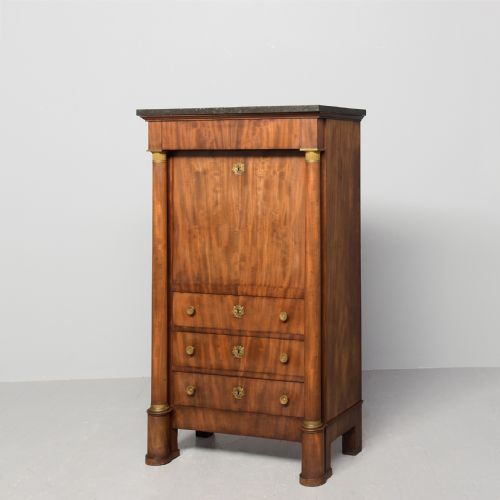
A brown wooden secretaire combines a hidden writing surface with storage compartments, offering both a desk and a cabinet in one form. These items appear across several historic periods, notably the Georgian, Regency, Victorian, and Edwardian eras.
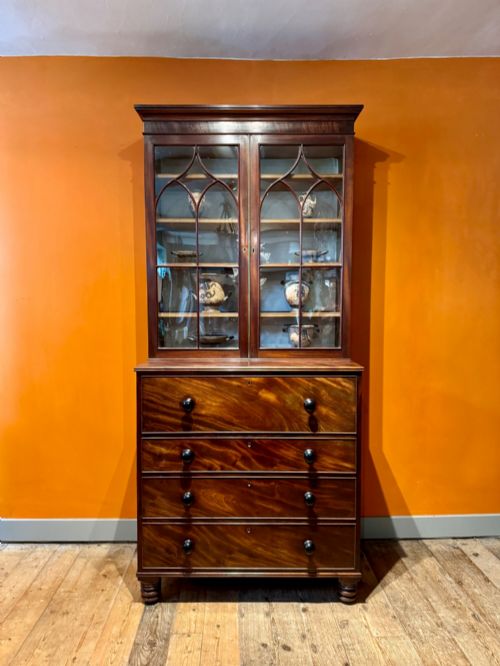
The pieces listed on this page include secretaire bookcases, bureau bookcases, campaign chests, and upright secretaire abattant forms. Mahogany forms the predominant timber, alongside walnut, camphor wood, and maple.
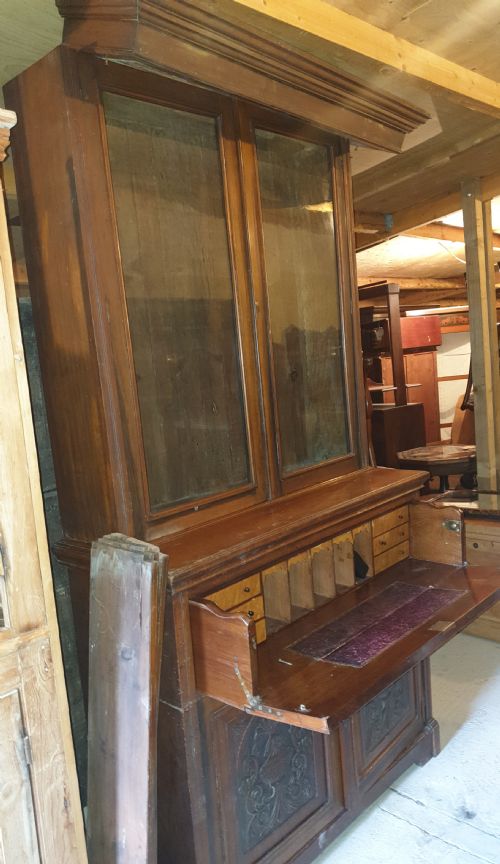
Buyers mostly encounter tall bookcase combinations featuring glazed upper doors above fitted writing drawers. These grand items reflect the domestic and professional storage needs of their original periods.
How they were made
Cabinet makers utilised solid timbers and veneers, frequently selecting flame mahogany to create striking figured surfaces on primary panels. Inlaid details in contrasting woods decorate many of the facades, showing careful marquetry skills.
Functional metal elements such as brass handles, hinges, and locks secure the fitted drawers and drop-down writing desks. Glass panes are fitted into the upper bookcase sections to protect books and papers from dust.
Brown Wooden Secretaire Retail Price Guide 2026
Typical asking prices for brown wooden secretaire among the pieces listed under this phrase on Sellingantiques today, from the lower quarter to the upper quarter. They describe what is for sale here now, not the wider market.
Some secretaire desks hide secret compartments behind miniature drawers, designed to safeguard family letters and small valuables.
What varies in quality
The selection of timber grain largely determines the visual impact of each piece, with highly figured flame mahogany sitting at the upper end of the scale. Subtly integrated brass hardware and delicate inlay work distinguish finer workshops from simpler regional production.
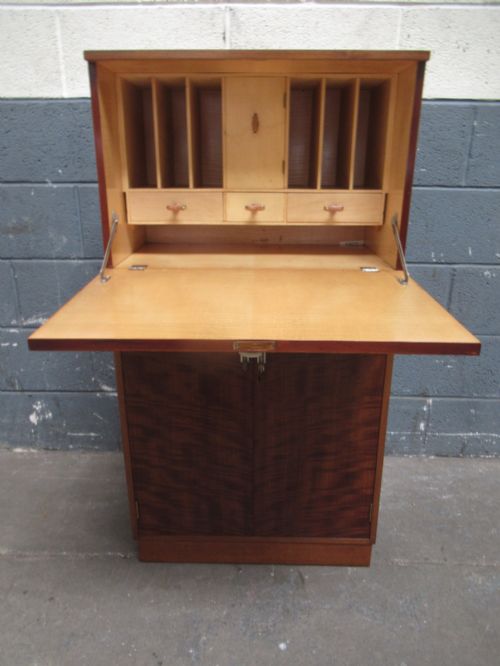
The internal arrangement of small drawers and pigeon holes within the drop-down writing section shows the maker's attention to detail. Proportion and balance across large bookcase forms govern how well the design succeeds.
Maple and Co.
The Brown Wooden Secretaire Glossary
- Secretaire abattant
- A tall, upright cabinet with a drop-down front that serves as a writing surface. This form gained popularity in continental European furniture design during the nineteenth century.
- Flame mahogany
- A timber cut from the fork of the mahogany tree, producing a distinctive rippled pattern resembling flickering flames. Cabinet makers used these veneers on prominent drawer fronts and cabinet doors.
- Campaign chest
- A modular chest of furniture designed to be easily dismantled and transported for military use. These items often incorporate brass corners, recessed handles, and durable secondary timbers like camphor wood.
- Marquetry
- The art of applying decorative pieces of veneer to a structural surface to form intricate pictures or geometric patterns. Makers utilised varied wood species to achieve natural contrasts in colour and tone.
Brown Wooden Secretaire: Frequently Asked Questions
What is a brown wooden secretaire?
A brown wooden secretaire is a piece of furniture that incorporates a pull-down or drop-front writing flap concealing a fitted interior of small drawers and pigeon holes. They often combine a desk with a bookcase or chest of drawers beneath.
These items were designed for home studies and libraries, providing a private space for correspondence while keeping ledgers and books organised.
How do I date a brown wooden secretaire?
Dating relies on identifying stylistic markers, construction methods, and timber types associated with periods like the Georgian, Regency, or Victorian eras. Examining the secondary woods inside drawers also helps confirm the age of the piece.
Cabinet hardware and the complexity of the interior pigeon holes often reflect the prevailing tastes of the decade in which the furniture was constructed.
Where should I place a secretaire bookcase?
These tall pieces require adequate wall space and stable flooring, making them well suited to studies, libraries, or spacious sitting rooms. Positioning them away from direct sunlight protects the timber veneers and polished finishes.
Ensure there is enough clearance in front of the cabinet to drop the writing flap comfortably without obstructing room walkways.
How do I care for antique mahogany furniture?
Maintain the timber by dusting regularly with a soft, dry cloth and avoiding silicone-based polishes that build up over time. Keeping the furniture away from excessive heat sources prevents the wood and veneers from drying out or cracking.
Applying a traditional beeswax occasionally helps nourish the surface and preserves the rich lustre of the mahogany.