


French Mahogany Writing Bureau
These french mahogany writing bureau examples combine rich timber surfaces with practical compartments designed for correspondence and private accounts.
French Mahogany Writing Bureau
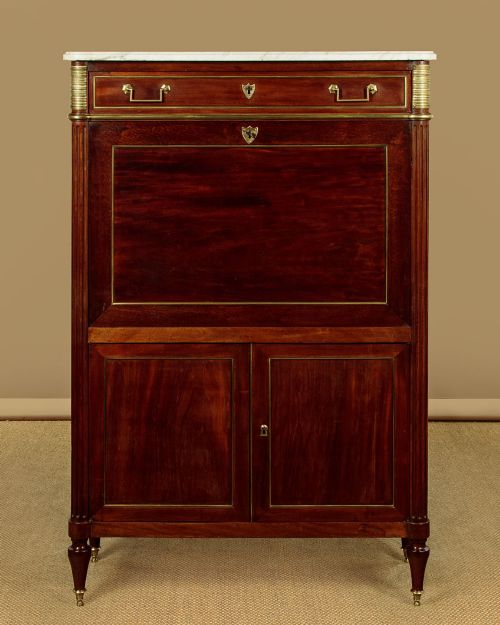
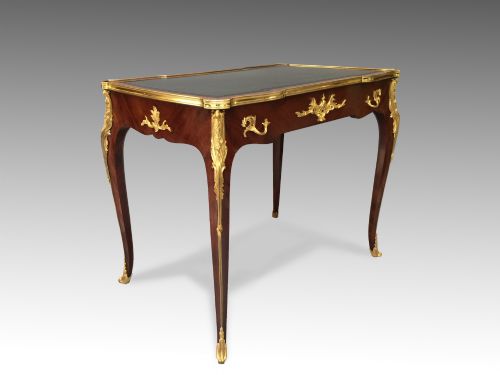
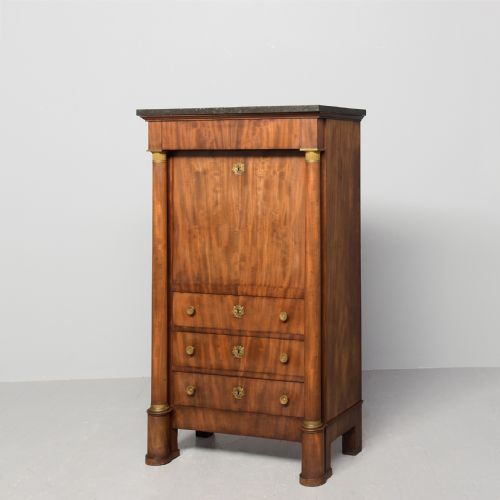
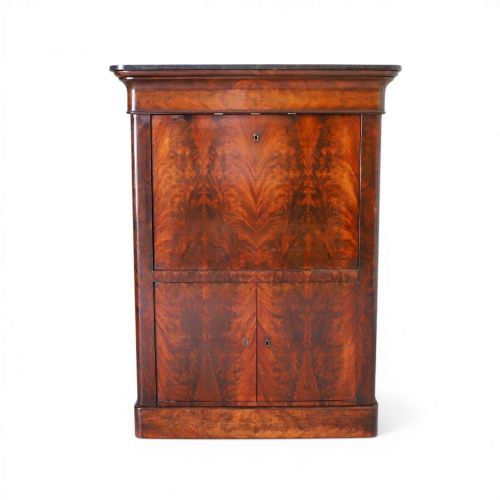
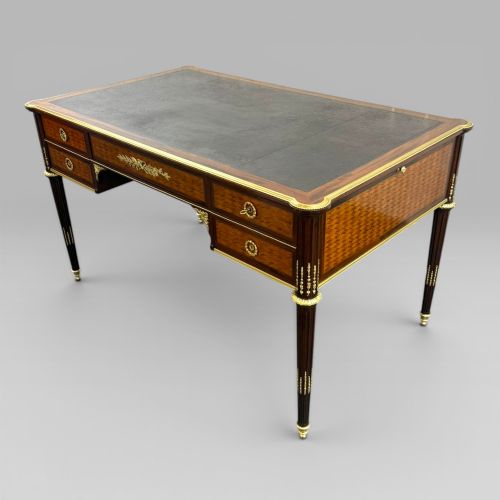
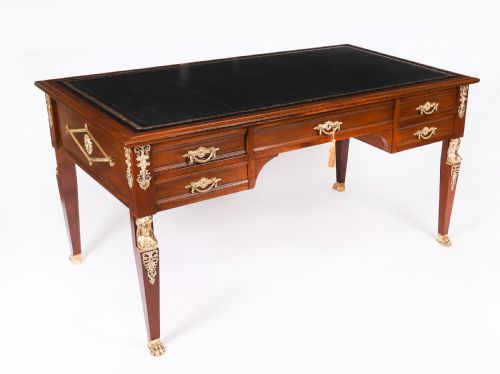
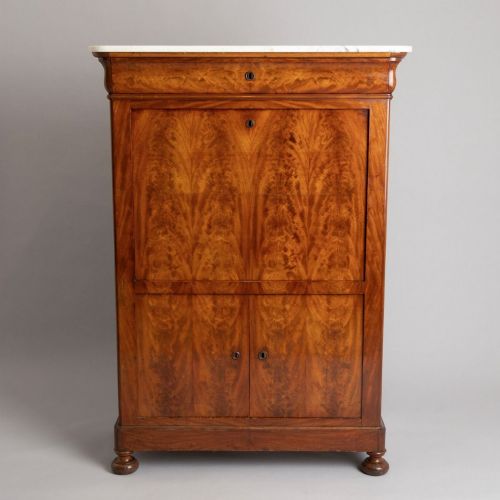
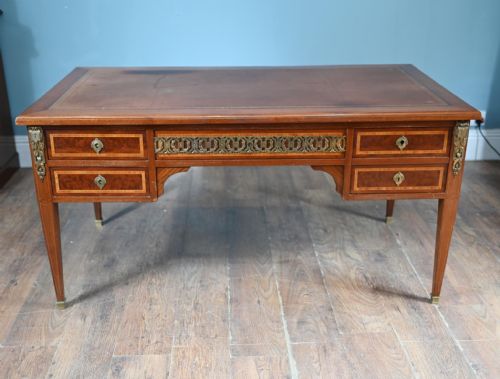
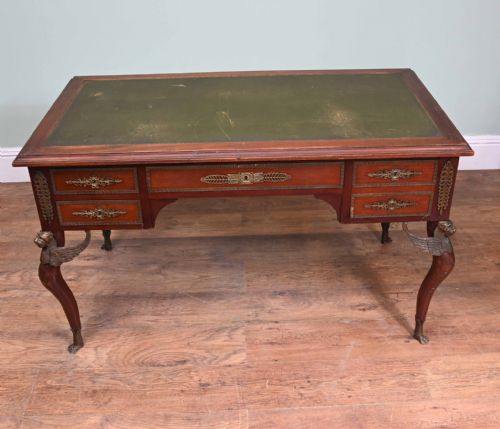
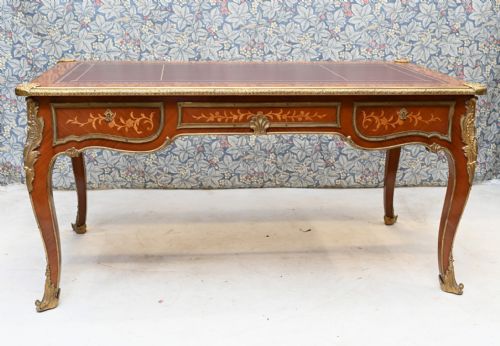
A french mahogany writing bureau encompasses various practical forms designed for correspondence, including the upright secretaire abattant and the flat-topped bureau plat. These pieces originate primarily from the nineteenth century, spanning periods influenced by the Empire, Louis XVI Revival, and Directoire styles. Buyers frequently encounter drop-front cabinets and writing tables with leather surfaces.
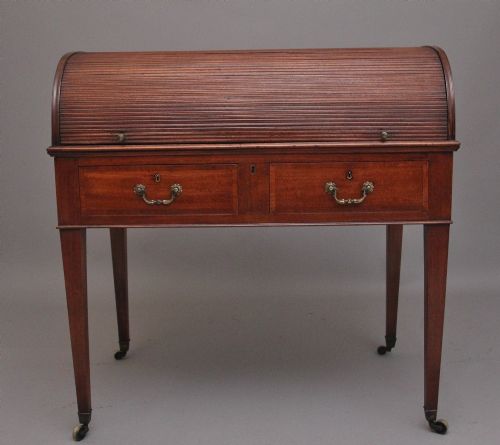
The selection includes specific regional variants such as the compact bureau du dame and the cylinder desk, alongside miniature apprentice pieces. Makers adapted classical revival vocabularies to create functional furniture suited to salons and studies alike.
Materials and Technique
Cabinet makers utilised dense mahogany and figured flame mahogany veneers over solid carcases, often incorporating satinwood and parquetry details. Structural stability relies on traditional joinery combined with carefully chosen timber selections for drawer linings and internal fittings.
Metals and stone form integral components of the construction, with ormolu mounts, brass galleries, and gilt bronze details applied to edges and corners. Many surfaces feature inset leather writing panels alongside marble tops and concealed secret drawers.
Apprentice cabinet makers created miniature bureau bookcases at one-quarter scale to demonstrate their technical proficiency to the guild.
Assessing Craftsmanship
The standard of execution in ormolu mounts and gilt bronze chasing separates standard production from exceptional pieces. Crisp detailing in cast metalwork indicates superior workshop output.
Veneer selection and matching across large surfaces such as cylinder fronts and drop-front panels demonstrate the maker's skill. The integration of internal secret compartments and original hardware further distinguishes finer examples.
François Linke·Edwards & Roberts·Alphonse Tahan
The French Mahogany Writing Bureau Glossary
- Bureau plat
- A double-sided writing table, typically freestanding with a rectangular leather-lined top and drawers in the frieze.
- Secretaire abattant
- An upright cabinet featuring a hinged drop-front flap that opens to reveal a writing surface and small pigeonholes.
- Ormolu
- Gilded bronze ornamentation applied to furniture corners, mounts, and handles for decorative accent.
- Bonheur du jour
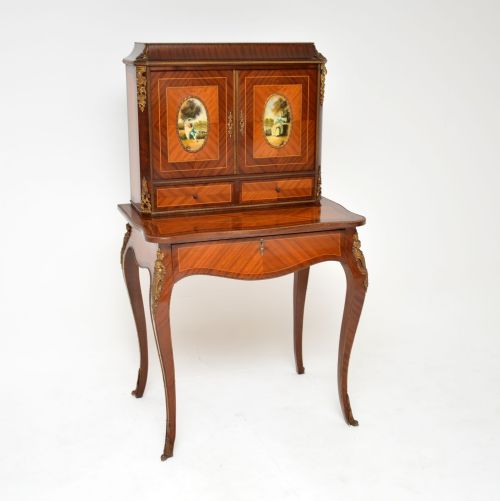
- A light lady's writing desk featuring a small cabinet or superstructure with shelves and drawers above the main work surface.
- Tambour
- A sliding surface constructed from narrow vertical strips of wood glued to a canvas backing, allowing it to curve around a cylinder.
French Mahogany Writing Bureau: Frequently Asked Questions
What is a secretaire abattant?
A secretaire abattant is an upright cabinet designed with a fall-front panel that lowers to create a writing surface. Inside, the fitted interior typically contains small drawers and pigeonholes for correspondence.
These tall pieces offer significant storage while occupying a relatively small floor space, making them practical for smaller rooms.
How do I identify a bureau plat?
A bureau plat is a flat-topped writing table featuring a finished back so it can stand in the middle of a room. It usually includes frieze drawers and an inset leather writing surface.
Unlike an upright bureau, these tables provide an open workspace rather than enclosed compartment storage.
What is flame mahogany?
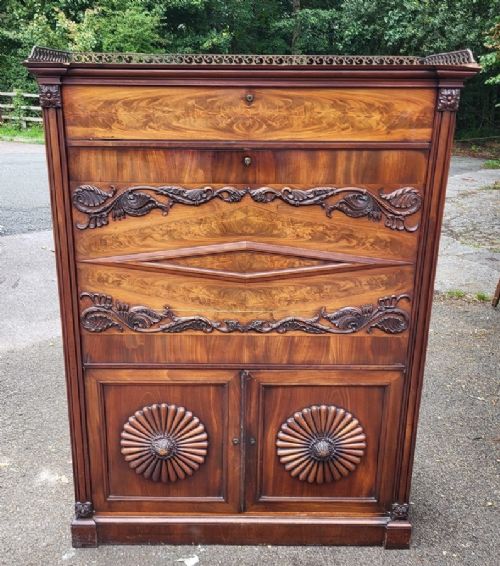
Flame mahogany refers to a distinctive veneer figure resembling flickering flames, created by cutting across the branch junctions of the tree. Cabinet makers reserved this highly figured timber for prominent surfaces like drawer fronts and fall panels.
Its striking grain pattern adds movement and visual depth to nineteenth-century case pieces.
Are marble tops original?
Many nineteenth-century case pieces, particularly upright cabinets and commodes, were constructed with fitted marble slabs on top. These stone surfaces provided a durable, decorative finish that protected the wood underneath.
When inspecting a piece, uniform thickness and careful edge profiling indicate period manufacture.