






1930s Silver Barware
These 1930s silver barware pieces bring the geometric spirit of Art Deco to home mixing and entertaining.
1930s Silver Barware
When searching for 1930s silver barware, collectors look at items designed for the preparation and service of alcoholic drinks during the interwar period. The style of these objects is predominantly Art Deco, translating the era's taste for clean lines and geometric forms into practical drinking equipment.
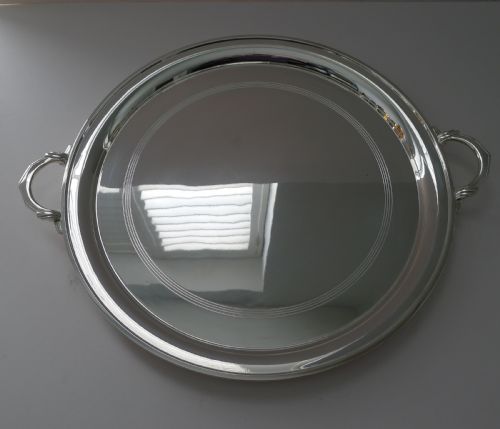
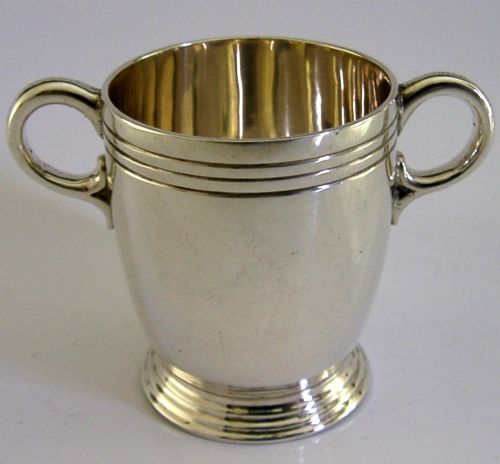
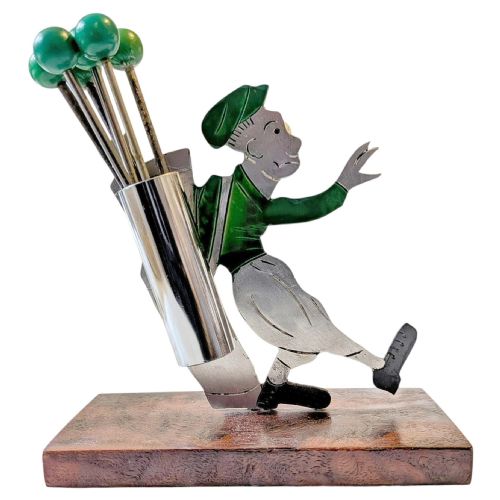
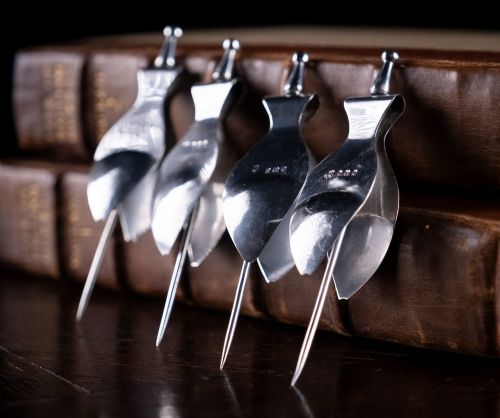
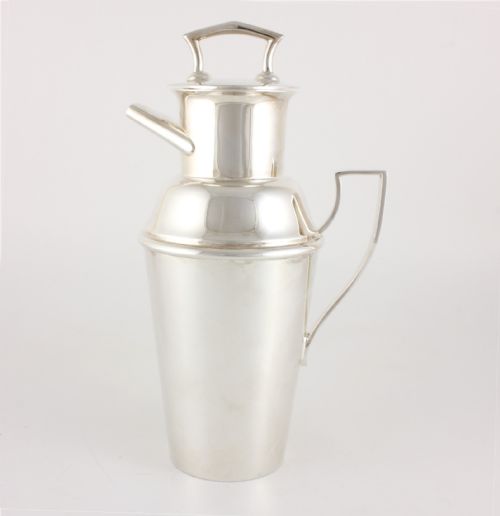
The objects commonly met on this page include cocktail shakers, trays, decanters, and cocktail sticks. Many pieces show the influence of industrial design, such as shakers shaped like milk churns or decorated with engine turning.
Originating largely from British and French workshops, these items reflect the social habits of the period when cocktail parties gained domestic popularity. Makers utilised a combination of metals and glass to create functional items that doubled as display pieces.
How they were made
Makers constructed these items using sterling silver, electroplated nickel silver, and chrome alongside glass and occasionally wood or enamel. Metal components were often spun, stamped, or cast, then finished with engine turning or hand engraving.
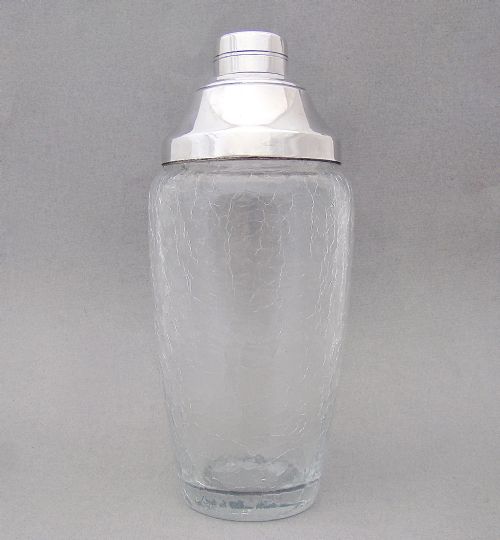
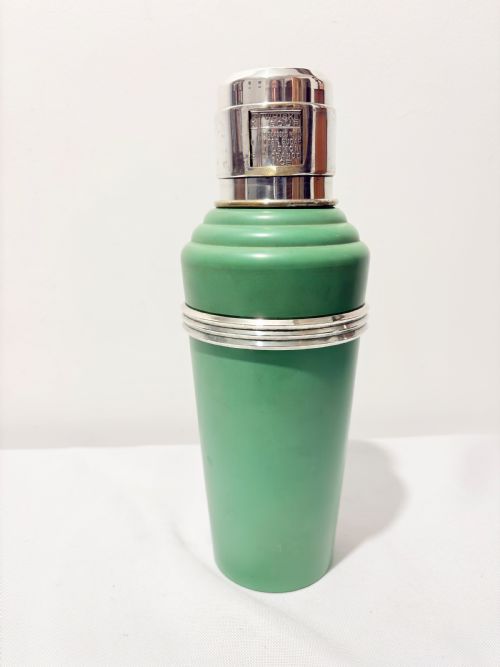
Glass elements, such as decanters and shaker bodies, were frequently cut or moulded, then mounted in silver-plated collars or frames. Coloured glass and Bakelite accents were added to provide contrast to the polished metallic surfaces.
Listings feature items from the 1920s to the 1940s, showcasing materials including sterling silver, chrome, glass, and enamel.
What varies in quality
The standard of design and execution sets individual examples apart, particularly when associated with known designers or retail houses. The weight of the metal, the crispness of any engraved recipes or engine turning, and the integration of glass and silver elements define the better specimens.
Maker attribution influences the standing of a piece, with items from recognised firms or designers showing more deliberate attention to proportion and detail. The condition of the original plating or glass and the retention of matching elements like lids or accompanying glasses also distinguish the finer examples.
Keith Murray for Mappin & Webb·Sudre·Richard Comyns·Asprey & Co·Jacques Adnet·J B Chatterley & Sons·Hukin & Heath·Elkington·William Suckling·C S Green & Co
The 1930s Silver Barware Glossary
- Art Deco
- A design style of the 1920s and 1930s characterised by stylised motifs, geometric shapes, and streamlined forms. It influenced nearly all the barware objects produced during this decade.
- Electroplated Nickel Silver
- A base metal alloy of copper, nickel, and zinc coated with a layer of pure silver through an electrolytic process. This material formed the basis for many accessible cocktail shakers and trays of the period.
- Engine turned
- A decorative technique involving precise geometric patterns mechanically etched into a metal surface. It was frequently applied to the bodies of cocktail shakers and flasks.
- Tantalus
- A decorative frame holding decanters securely with a locking mechanism, allowing the bottles to be seen but not removed without a key. These were often fashioned from chrome and glass during the 1930s.
- Silver plate
- A thin layer of silver bonded to a base metal substructure. Most barware from this era utilised this method to achieve the look of solid silver at a lower manufacturing cost.
1930s Silver Barware: Frequently Asked Questions
What materials were used for 1930s barware?
Makers utilised sterling silver, silver plate, electroplated nickel silver, and chrome, frequently combining them with cut glass, enamel, and Bakelite. These mixed media compositions defined the aesthetic of the decade.
Metal components provided durability for shaking and serving, while glass allowed users to view the contents of shakers and decanters during preparation.
Were these pieces meant for daily use?
These items were produced to accommodate the rising popularity of home cocktail parties and domestic entertaining during the interwar period. Decanters, shakers, and trays were designed to facilitate the serving of mixed drinks to guests.
Many examples include practical additions such as built-in lemon squeezers or printed recipes on the shaker body to aid the host.
How should I clean silver plated barware?
Silver-plated items require gentle cleaning with a soft cloth and a specialised silver polish formulated not to abrade the thin metal coating. Harsh scrubbing agents can wear away the plating over time.
Glass components can generally be washed separately in warm soapy water, taking care to avoid submerging antique wooden or cemented parts.