

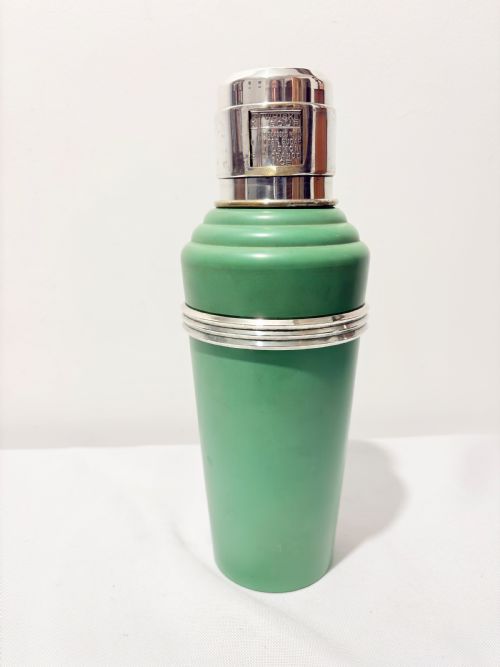


Vintage Drink Shaker
When you search for a vintage drink shaker, you encounter vessels designed to mix spirits with style during the height of twentieth-century entertaining.
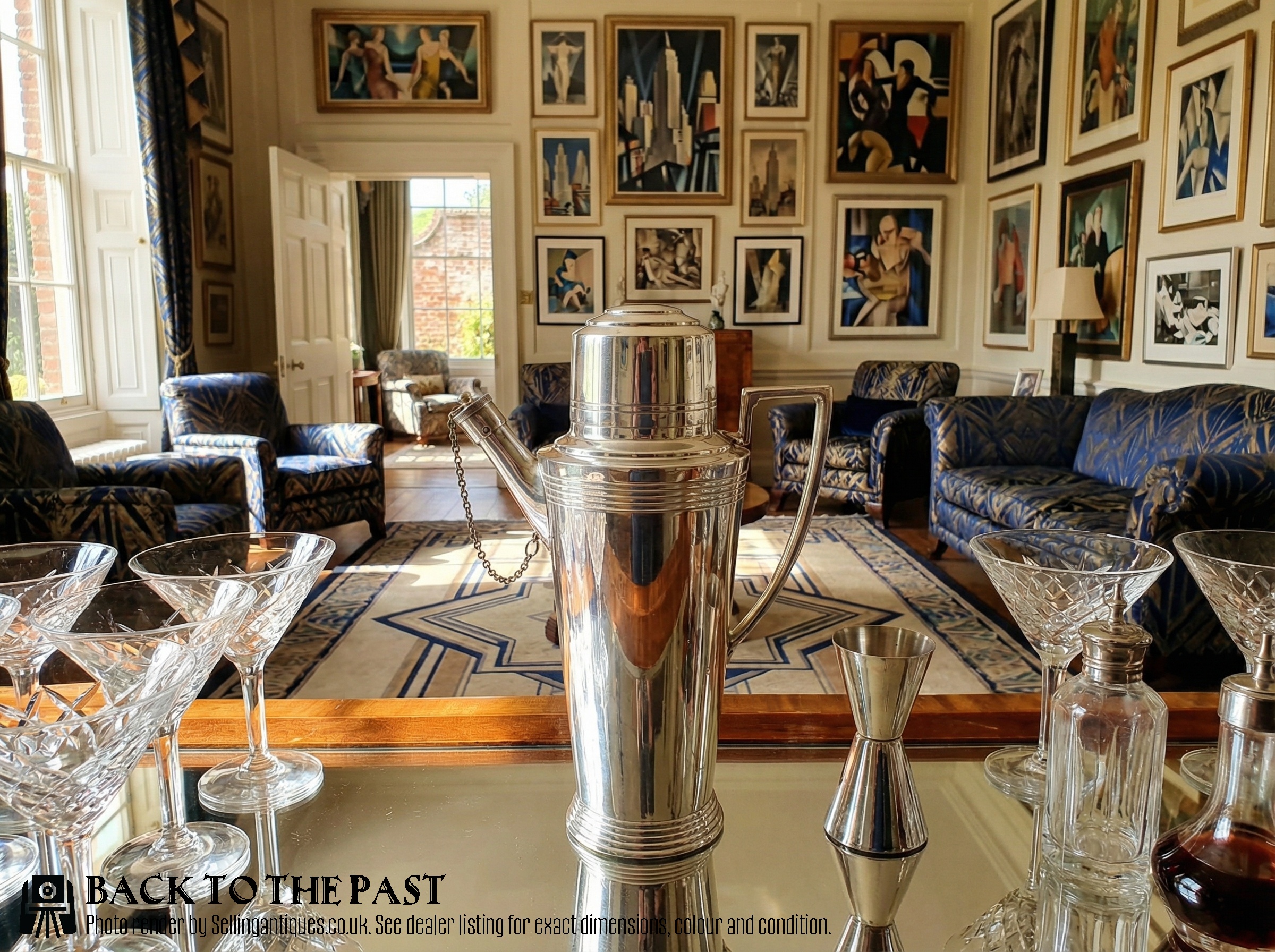
Vintage Drink Shaker
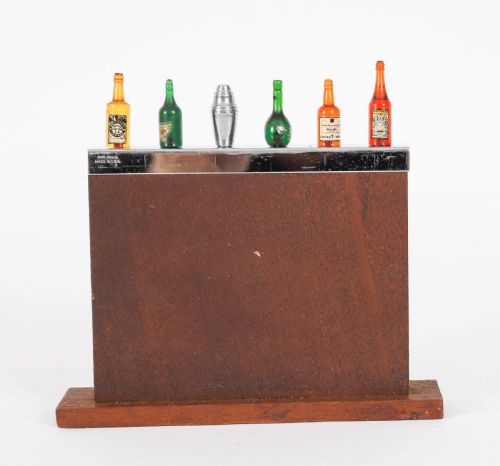
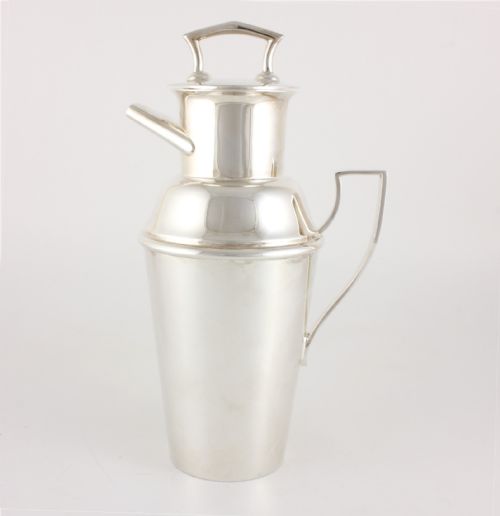
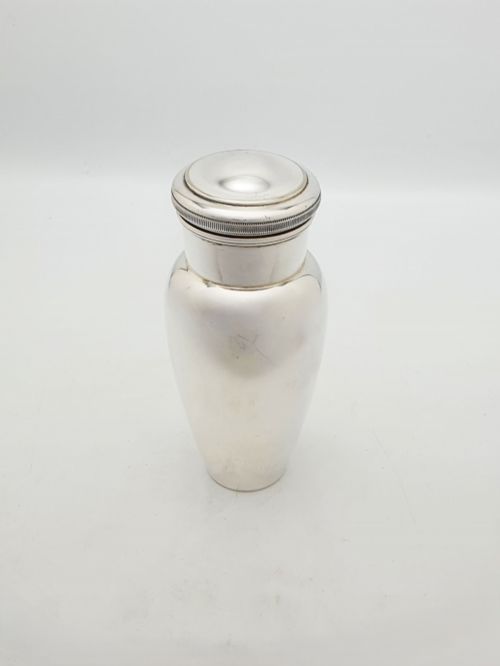
A vintage drink shaker serves as a functional barware vessel originating primarily from the early to mid-twentieth century. The selection on this page consists predominantly of cocktail shakers from the 1920s, 1930s, and 1940s, alongside barware accessories and beakers.
Most examples lean heavily into the Art Deco style, reflecting the design sensibilities of the period through geometric lines, engine-turned patterns, and sleek silhouettes. Forms range from standard metallic cylinders to novelty shapes such as milk churns and bullet designs.
How they were made
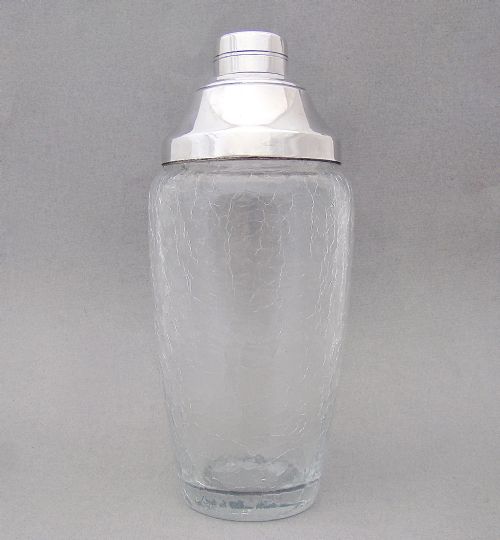
Makers utilised silver plate, electroplated nickel silver, and sterling silver over metallic foundations, frequently combining metal with clear or crackle glass. Cork stoppers and green Bakelite components add contrasting textures and functional seals to the designs.
Surface decoration relied on specialist metalworking techniques including engine turning, engraving, and enamel work to create geometric patterns and inscribed cocktail recipes. Glass bodies were often moulded, blown, or painted with figurative subjects such as cockerels.
Vintage Drink Shaker Retail Price Guide 2026
Typical asking prices for vintage drink shaker among the pieces listed under this phrase on Sellingantiques today, from the lower quarter to the upper quarter. They describe what is for sale here now, not the wider market.
Materials recorded across the inventory include silver plate, sterling silver, glass, wood, cork, and Bakelite.
What varies in quality
Quality differentiates by the weight of the metal, the precision of the mechanics in rotating recipe rings or built-in squeezers, and the crispness of the engine-turned or engraved detailing. Heavier gauges of silver plate and solid sterling silver provide a more substantial feel in the hand than lighter counterparts.
Asprey And Co·Hukin And Heath·James Dixon And Sons·Adie Brothers·William Suckling·C S Green And Co·Christofle·Napier
The Vintage Drink Shaker Glossary
- Silver Plate
- A thin layer of silver bonded to a base metal foundation such as copper or nickel brass. This method provided the appearance of solid silver at a lower production cost.
- Electroplated Nickel Silver
- An alloy of copper, nickel, and zinc coated with a layer of silver via an electrolytic process. It served as a durable base for many twentieth-century barware items.
- Engine Turned
- A decorative technique involving precise geometric patterns mechanically engraved into a metal surface. It created textured backgrounds that resisted fingerprints.
- Bakelite
- An early form of synthetic plastic used frequently for handles, knobs, and decorative accents during the Art Deco period. Its chemical stability made it ideal for functional household items.
Vintage Drink Shaker: Frequently Asked Questions
How do I use a vintage drink shaker?
Fill the body with ice and your chosen spirits, secure the lid firmly, and shake vigorously before straining the contents into a glass. The built-in strainers and tight seals on these vessels ensure smooth pouring without unwanted ice shards.
Take care when handling older metallic or glass components to preserve their original finishes. Hand washing is essential to protect silver plate, enamel work, and delicate glass surfaces from damage.
What are dial-a-drink shakers?
Dial-a-drink shakers feature a rotating outer sleeve or dial inscribed with various cocktail recipes. Twisting the mechanism aligns the ingredients for different drinks through a viewing window.
These novelty barware pieces gained popularity for their interactive nature during home gatherings. They represent a playful intersection of mechanical design and mixology.
How do I identify Art Deco shakers?
Art Deco shakers are distinguished by streamlined geometric forms, stepped motifs, and engine-turned surface patterns. Materials often combine polished metals with contrasting black or coloured Bakelite accents.
Many examples from this design movement date between the 1920s and 1940s. Their architectural shapes mirror the broader aesthetic trends of the period's interior design.
Were these shakers made in Britain?
Many listed pieces originate from British makers and silversmiths operating during the early twentieth century. These domestic items often bear traditional hallmarks or maker marks associated with regional manufacturing centres.
Continental European and American workshops also contributed significantly to the available styles. French and Italian examples frequently showcase distinct modernist interpretations of the standard cocktail vessel.