
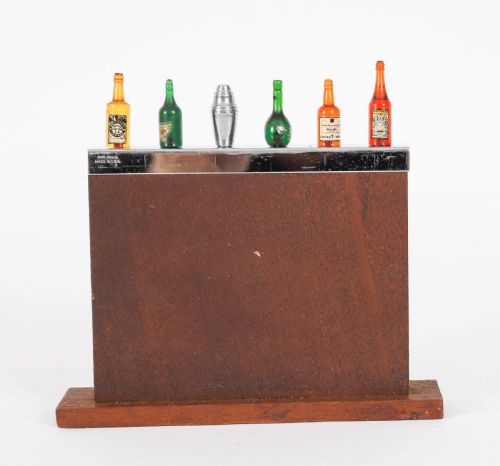


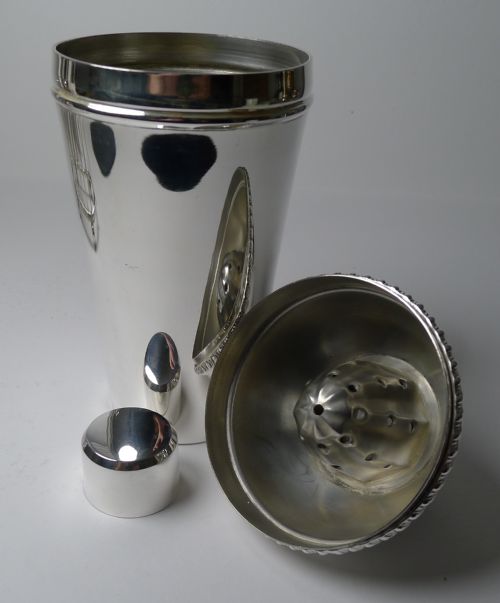
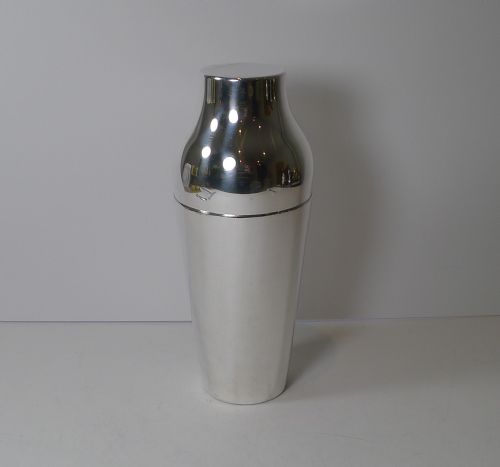


Mid Century Cocktail Shaker
These mid century cocktail shaker examples combine striking modernist forms with practical barware utility, offering a sophisticated addition to any home entertaining setup.
Identifying the mid century cocktail shaker
A mid century cocktail shaker represents a functional barware object designed during the 1940s, 1950s, and 1960s. These pieces encompass distinct cocktail shakers shaped by Art Deco, Mid-Century Modern, and Modernist aesthetic movements.
Most examples found on this page appear as two-part vessels or larger formats, including a three-pint American sterling silver design and notable European works. Origins span England, France, Norway, Germany, and America, showing varied international approaches to mid-century design.
Makers and designers from this era utilised clean lines and utilitarian forms to create barware that bridges service and display. Collectors encounter both silver plated base metal versions and solid sterling silver models.
Materials and Construction
Makers produced these vessels primarily from silver plate and sterling silver over base metal foundations. The physical construction relies on metalworking techniques suited to forming secure, multi-part liquid containers.
Selected high-end pieces incorporate vitreous enamel, specifically guilloche enamel details applied to metal surfaces. These decorative finishes require precise firing and polishing methods to achieve the characteristic glossy appearance.
Retail Price Guide 2026
Typical UK retail prices for mid century cocktail shaker, calculated from the Sellingantiques database of over a million retail prices indexed since 2003. This retail price guide relies exclusively on Sellingantiques data; no external sources or auction records are used, so the figures do not describe the wider market.
Some mid-century cocktail shakers come equipped with hidden internal ice lips so clever they almost pour the drinks themselves.
Distinctions in Quality
Quality separates standard production barware from important designer commissions through the weight of the metal and the precision of the fit between sections. Heavier sterling silver builds and named designer associations elevate certain pieces significantly above standard silver plated base metal alternatives.
The presence of specialised decorative techniques, such as intricate guilloche enamel work by notable Scandinavian houses, demonstrates superior craftsmanship compared to plain metal finishes. The pedigree of the silversmithing firm dictates the overall standing of the shaker within the market.
J. B. Chatterley & Sons·Lino Sabattini·Christofle·Tuttle·David Andersen·Lutz & Weiss
The Mid Century Cocktail Shaker Glossary
- Silver Plate
- A thin layer of silver bonded to a base metal core. This method allowed manufacturers to produce substantial vessels at a lower cost than solid silver.
- Sterling Silver
- An alloy containing a high proportion of pure silver combined with other metals to increase durability. Items made to this standard often feature hallmarks indicating their metallic purity.
- Guilloche Enamel
- A decorative technique where translucent enamel is layered over engine-turned metalwork. This creates a repeating geometric pattern visible beneath the glossy coloured glass surface.
- Base Metal
- Any non-precious metal used as the structural foundation for plating. Common examples include brass, copper, or white metal alloys.
- Modernist
- An aesthetic style emphasising clean geometric forms, functional utility, and the rejection of historical ornamentation. This movement heavily influenced barware design during the mid-twentieth century.
Frequently Asked Questions
What is a mid century cocktail shaker?
A mid century cocktail shaker is a metal barware vessel produced during the 1940s, 1950s, or 1960s used for mixing drinks. These pieces range from simple silver plated items to elaborate designer sterling silver and enamel models.
They reflect the shifting design sensibilities of the period, moving from traditional forms into modernist and Mid-Century Modern styles.
How do I clean a silver plated shaker?
Cleaning requires gentle silver polish and a soft cloth to protect the underlying metal surface from abrasive wear. Care must be taken around enamel panels to avoid harsh chemical exposure.
Regular light dusting helps maintain the shine without stripping the plating over time.
How do I date a cocktail shaker?
Dating relies on maker marks, hallmarks, stylistic cues, and documented design years from silversmith archives. Pieces from the 1940s often retain heavier Art Deco influences, while 1950s and 1960s versions embrace modernist minimalism.
Matching the object to known factory production records provides the most accurate timeframe.
Are these shakers safe for mixing drinks?
Most metal shakers remain functional for drink preparation provided the interior is clean and free from heavy tarnish or lining degradation. Sterling silver and silver plate have historically served as standard materials for beverage vessels.
Owners should inspect the interior condition before using vintage barware for food service.