



Vintage Cocktail Shaker
A vintage cocktail shaker brings period glamour to the bar cart, combining functional barware design with striking twentieth-century silhouettes.
Vintage Cocktail Shaker
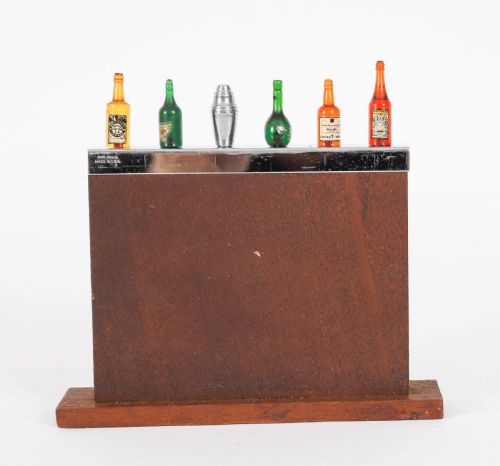
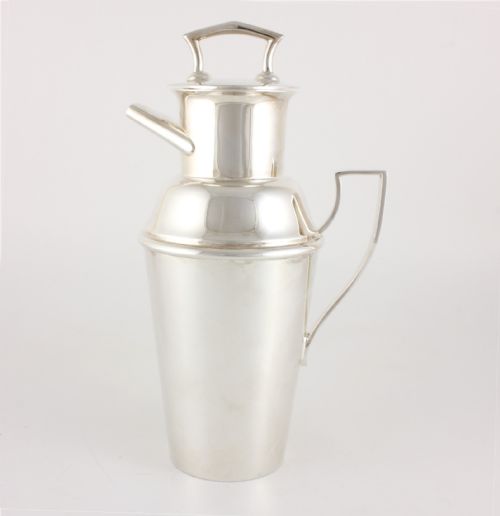
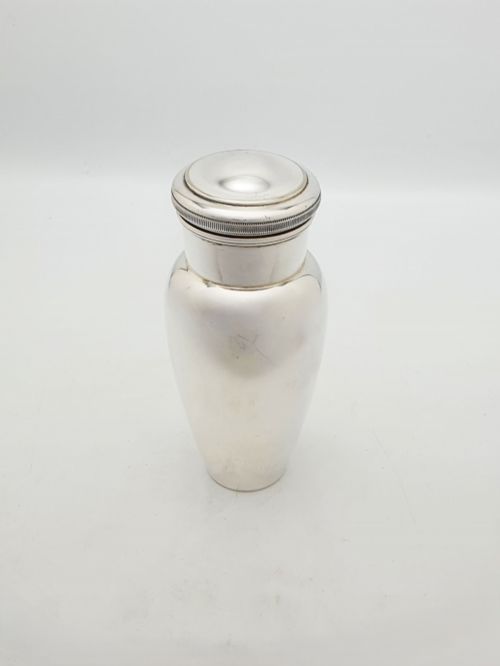
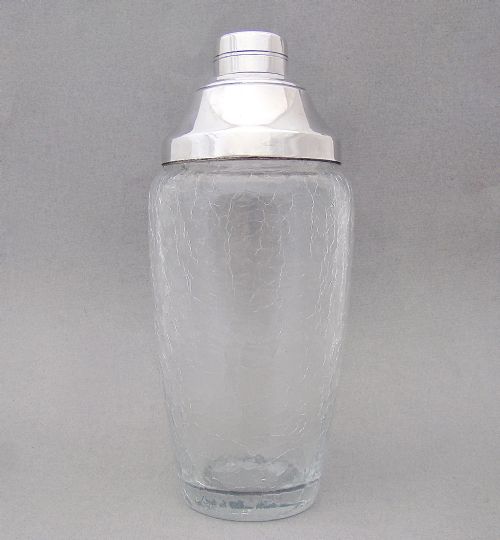
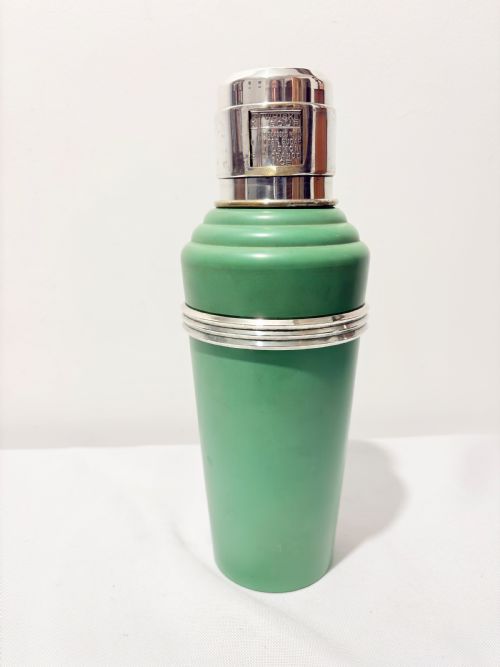
A vintage cocktail shaker is a drinking vessel engineered for mixing spirits and ice, frequently encountered in forms dating from the early to mid-twentieth century. The selection ranges from streamlined cylindrical cylinders to novelty shapes such as milk churns, golf balls, and bomb forms.
Most examples originate from the Art Deco period of the 1920s and 1930s, though pieces span from 1900 through to the 1960s. Makers produced these in England, France, Italy, and America, employing varied mechanisms including rotating recipe dials, built-in lemon squeezes, and internal ice breakers.
Materials and Construction
Makers predominantly utilised silver plate, electroplated nickel silver, and sterling silver over a metal core, often pairing the metal with clear, crackled, or enamelled glass bodies. Components such as lids and strainers relied on cork seals and precision-turned metal fittings to prevent leakage during vigorous agitation.
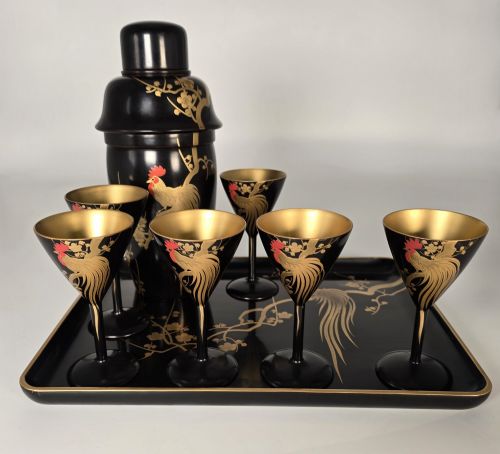
Surface decoration frequently involved engine-turning, geometric engraving, hand-painted motifs, and applied Bakelite or plastic details. Italian and French workshops also incorporated gold plating and specialised lacquer work to achieve distinct visual finishes.
Vintage Cocktail Shaker Retail Price Guide 2026
Typical asking prices for vintage cocktail shaker among the pieces listed under this phrase on Sellingantiques today, from the lower quarter to the upper quarter. They describe what is for sale here now, not the wider market.
Listings feature silver plate, sterling silver, glass, and wood across periods spanning from 1900 to the 1960s.
Assessing Quality and Manufacture
Quality rests on the weight of the metal, the precision of the fit between lid, strainer, and body, and the reputation of the silversmith or manufacturer. Substantial wall thickness and robust silver plating indicate higher production standards than thin, lightweight alternatives.
Design sophistication also dictates the tier of a piece, separating standard utilitarian vessels from signed works by notable designers and premier firms. Integrated functional elements, such as mechanical recipe dials and built-in juicers, demonstrate superior engineering.
Asprey & Co·Hukin & Heath·James Dixon & Sons·Christofle·Lino Sabattini·Napier
The Vintage Cocktail Shaker Glossary
- Silver Plate
- A thin layer of silver bonded to a base metal core such as copper or nickel brass. This technique allowed manufacturers to produce robust barware with the appearance of solid silver at a lower cost.
- Electroplated Nickel Silver
- An alloy of copper, nickel, and zinc coated with a layer of pure silver through an electrolytic process. It serves as a durable foundation for twentieth-century metal barware.
- Engine-Turned
- A surface decoration technique involving precise geometric patterns cut into metal by a lathe. It provides texture and diffuses light across cylindrical shaker bodies.
- Bakelite
- An early form of synthetic plastic utilised for handles, knobs, and decorative accents. Its presence helps date pieces securely to the Art Deco and mid-century periods.
- EPNS
- An abbreviation for electroplated nickel silver, commonly stamped as a maker mark on British barware. It indicates the underlying metal composition of silver-plated items.
Vintage Cocktail Shaker: Frequently Asked Questions
How do I clean a vintage cocktail shaker?
Wash the interior thoroughly with warm soapy water and a soft cloth, avoiding harsh abrasive pads that damage silver plating or glass enamel. Dry all metal components immediately to prevent water spots.
For the exterior, use a specialised silver cloth for plated pieces rather than liquid dips, which can strip away delicate detailing and vintage patina.
Are vintage shakers safe for daily use?
Most silver-plated and glass vessels remain entirely functional for mixing drinks, provided the interior plating is intact and the cork seals function correctly. Check that internal mechanisms move smoothly before filling with liquid.
Avoid leaving citrus juices or alcohol sitting inside plated shakers for extended periods, as prolonged exposure can tarnish or corrode the interior metal surface.
How do I identify the period of a shaker?
Examine the stylistic cues, such as the geometric lines typical of 1930s Art Deco or the organic contours associated with 1950s Italian modernism. Maker marks, registry numbers, and patents stamped on the base also help narrow down the date of production.
Materials provide further clues, as early synthetic plastics like Bakelite and specific glass treatments point firmly to the interwar decades.