





Antique Cobbler Shaker
An antique cobbler shaker brings sharp geometry and polished gleam to the bar, offering a practical vessel with unmistakable period style.
Antique Cobbler Shaker
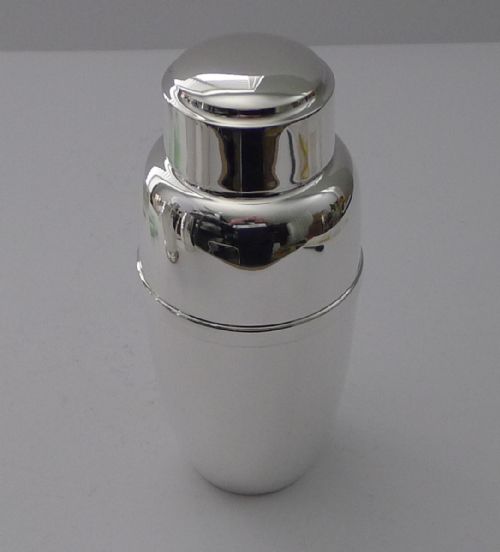
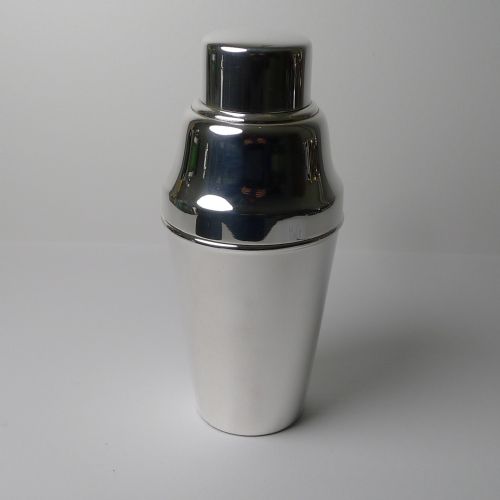
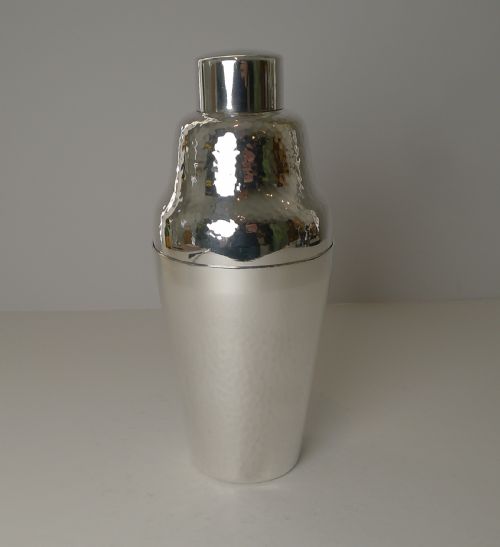
An antique cobbler shaker is a three-piece barware vessel designed for mixing drinks, most commonly found in the bold geometric forms of the Art Deco style. These cocktail shakers date predominantly from the 1920s through to the 1940s, originating from workshops across England, France, Germany, and Switzerland.
The pieces appearing on this page include large capacity models, often holding up to two and a quarter pints, alongside standard sizes. Many examples incorporate clever functional details such as an integral lemon squeezer nestled beneath the cap.
How they were made
The construction of an antique cobbler shaker relies heavily on silver plate over a base metal or electroplated nickel silver core, known as EPNS. Artisans shaped these metallic alloys by spinning or stamping, creating smooth body tubes and fitted caps.
Decoration was applied through mechanical techniques such as engine turning, which etches precise geometric patterns into the metal surface. Makers also utilised clean, streamlined silhouettes characteristic of the period without resorting to excessive ornamentation.
Some shakers hide a squeezer inside, proving that 1930s cocktail enthusiasts took their fresh citrus juice remarkably seriously.
What varies in quality
Quality in an antique cobbler shaker separates the mass-produced hotelware from the fine pieces produced by recognised silversmiths and retail houses. Heavier gauge metal provides a more substantial feel in the hand, while crisper engine-turning denotes superior craftsmanship.
The integrity of the fit between the three components - the base, the strainer lid, and the small top cap - dictates the refinement of the piece. Well-executed maker marks and retailer stamps also elevate the standing of an individual shaker.
J. B. Chatterley & Sons·Hukin & Heath·C S Green & Co.·Adie Brothers·Gaskell & Chambers·William Suckling Ltd.·Mappin & Webb·Carl Deffner·Oliver & Bensley
The Antique Cobbler Shaker Glossary
- Cobbler shaker
- A three-piece cocktail shaker consisting of a base, a lid with an integrated strainer, and a small cap. This form became the standard for domestic cocktail making during the early twentieth century.
- EPNS
- Electroplated nickel silver, a common base material where a thin layer of silver is deposited onto a nickel alloy. It provides the appearance of solid silver at a lower production cost.
- Engine turned
- A decorative technique involving a machine that etches precise, intricate geometric patterns into metal surfaces. This method was widely favoured during the Art Deco era.
- Integral lemon squeezer
- A built-in reamer component located beneath the cap of certain cocktail shakers. It allowed users to juice citrus directly into the mixing vessel.
Antique Cobbler Shaker: Frequently Asked Questions
How do I use an antique cobbler shaker?
Fill the base with spirits, ice, and mixers, then secure the strainer lid and cap firmly before shaking. Pour the drink through the built-in strainer holes.
Ensure you hold both the base and the lid while shaking to prevent leaks caused by the cooling contraction of the metal.
Can I still make drinks with these?
Yes, provided the interior plating remains intact and clean. They function identically to modern three-piece shakers.
Hand wash the vessel immediately after use and dry it thoroughly to protect the historic silver plating from tarnishing or wear.
How do I identify the period?
Look for the characteristic geometric lines and engine-turned motifs associated with the 1920s, 1930s, and 1940s. Maker marks and registration numbers stamped on the base offer precise dating clues.
Stylistic restraint and specific manufacturing stamps often point directly to the interwar decades when these designs flourished.