

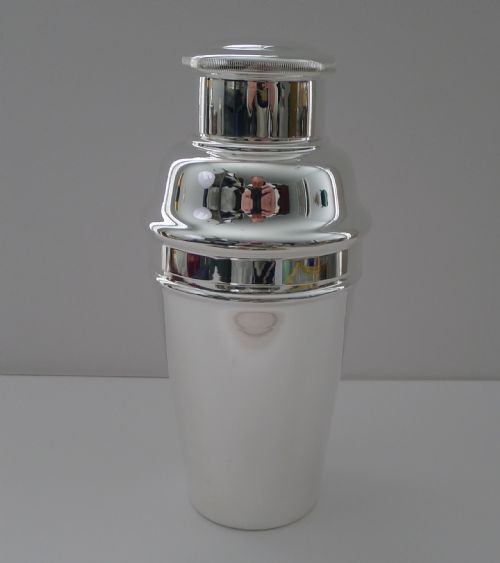

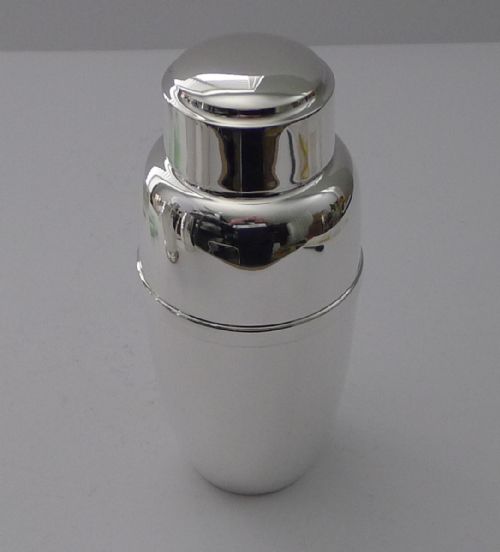


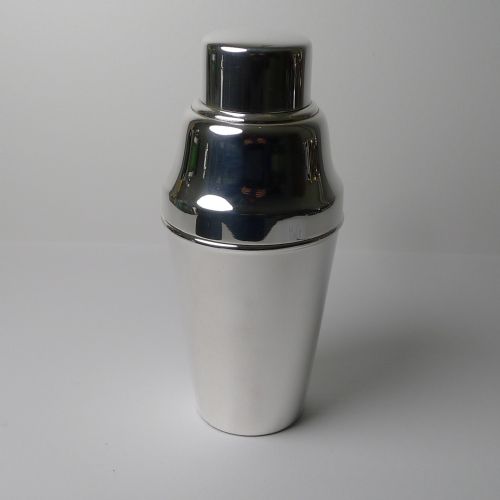


English Silver Plate Shaker
When seeking an english silver plate shaker, you find barware designed for mixing drinks with style during the twentieth century.
English Silver Plate Shaker
An english silver plate shaker primarily takes the form of a cocktail mixer from the Art Deco period, alongside Edwardian condiment sets. The core of what a buyer encounters involves cylindrical vessels intended for home and hospitality bar use, often bearing mechanical details like rotating recipes or integral squeezers.
Makers produced these pieces predominantly around nineteen-thirty, utilising electroplated nickel silver and cut glass components. The forms range from standard plain cylinders to large capacity bodies holding up to two and a quarter pints.
Materials and Construction
The foundation of these pieces relies on metal plating over base alloys such as electroplated nickel silver, providing a bright finish that imitates solid silver. Workshops applied decorative surface work including engine turned patterns and geometric bands characteristic of the period.
Certain examples combine silver plate with cut glass sections or incorporate functional internal elements like lemon squeezers and ice breakers directly into the lid assemblies.
Listings feature items dated from nineteen-twenty through nineteen-fifty, utilising silver plate, metal, cut glass, and velvet.
Distinctions in Standard
Quality separates objects through the precision of mechanical functions, such as the smooth operation of rotating recipe dials or integrated citrus squeezers. Heavier gauge metal and substantial capacity indicate a higher grade of manufacture intended for serious bar service.
The reputation of the maker heavily influences the standing of a piece, with established silversmiths and firms executing cleaner lines and more durable plating than smaller anonymous workshops.
William Suckling·Hukin and Heath·C S Green and Co·Mappin and Webb·Elkington and Co·James Dixon and Sons
The English Silver Plate Shaker Glossary
- Electroplated Nickel Silver
- A base metal alloy coated with a layer of silver through an electrolytic process. This technique allowed manufacturers to produce durable tableware economically.
- Engine Turned
- A method of mechanical decoration that cuts intricate geometric patterns into the metal surface. It adds texture and catches the light across cylindrical shaker bodies.
- Cruet Set
- A matched collection of small condiment containers held within a stand. Edwardian examples frequently appear alongside cocktail equipment in silver plate.
- Art Deco
- A design style dominant during the interwar years emphasising streamlined shapes and geometric motifs. Shakers from this era often feature stepped lines and banded decoration.
English Silver Plate Shaker: Frequently Asked Questions
What periods do these shakers come from?
The pieces seen here date primarily from the nineteen-thirties and nineteen-forties, embodying the distinct geometric design trends of those decades.
Earlier examples from the Edwardian era also appear, typically taking the form of cased condiment and cruet stands rather than cocktail vessels.
How were mechanical shakers used?
Barware with rotating recipe rings or built-in lemon squeezers allowed hosts to measure and mix ingredients directly inside the vessel during the interwar cocktail boom.
Integral ice breakers and sleeve tops helped strain drinks efficiently without requiring separate bar tools.
Are glass and metal combined in these pieces?
Certain designs pair silver plated metal hardware with heavy cut glass bodies, allowing users to see the liquid contents while mixing.
Motifs such as cockerels or roosters sometimes decorate these glass sections alongside standard geometric patterning.
How do I identify a maker?
Maker marks and firm names are typically stamped onto the base of the silver plated body, alongside indications of electroplating quality.
Recognised manufacturing names provide a clear indication of origin and standard of production.