
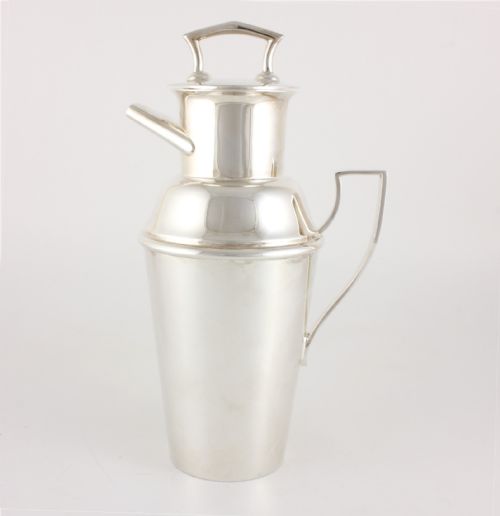


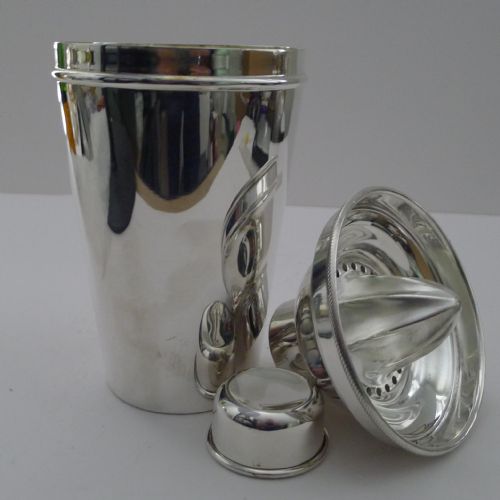
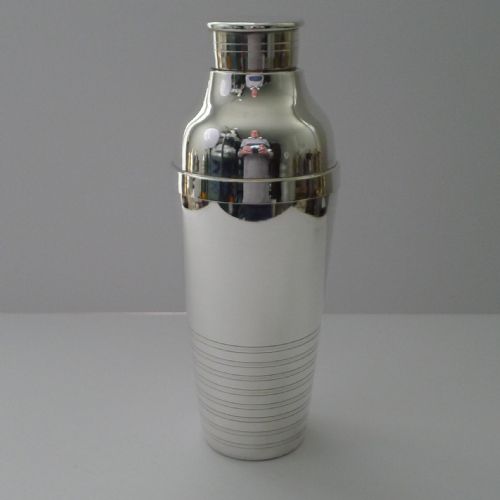
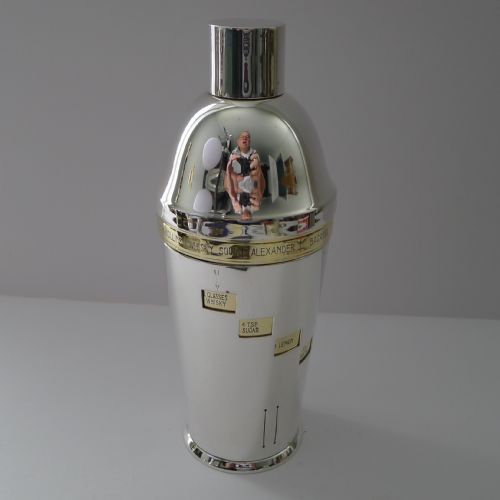


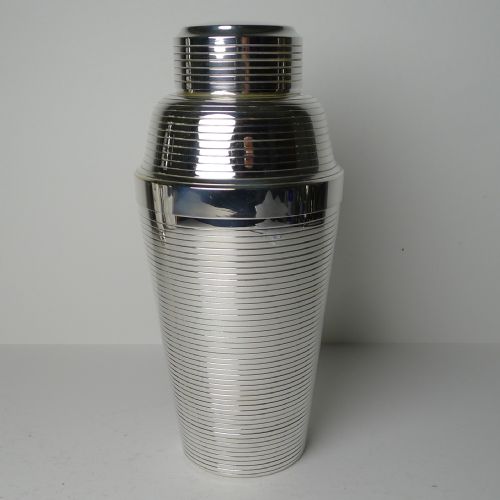

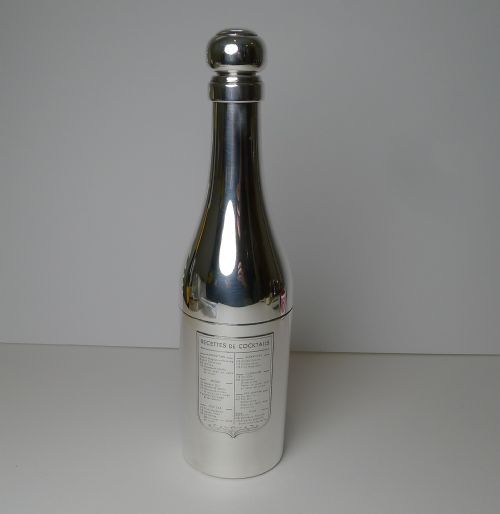


Silver Beverage Shaker
A silver beverage shaker brings period elegance to any home bar, offering classic cocktail style through striking Art Deco and Mid-Century forms.
Silver Beverage Shaker
When you search for a silver beverage shaker, you encounter sophisticated barware primarily dating from the 1920s to the 1950s. These pieces encompass striking cocktail shakers and mixers shaped by Art Deco and Mid-Century Modern aesthetics.
Originating from English, French, German, Italian, and American makers, these objects reflect an era of glamorous entertaining. The selection leans heavily toward substantial pieces designed to mix and pour spirits with theatrical flair.
Materials and construction methods
The objects on this page rely primarily on silver plate, electroplated nickel silver, and EPNS over a base metal core, alongside select examples struck in sterling silver and brass. These metals provided a durable foundation for the heavy handling associated with cocktail preparation.
Craftsmen utilised metalworking techniques to form seamless bodies, tight-fitting lids, and intricate internal strainers. Plating processes applied a bright reflective coat that required careful finishing to achieve the characteristic sheen of high-end barware.
Silver Beverage Shaker Retail Price Guide 2026
Typical asking prices for silver beverage shaker among the pieces listed under this phrase on Sellingantiques today, from the lower quarter to the upper quarter. They describe what is for sale here now, not the wider market.
Some shakers double as recipe books, letting you spin the outer shell to discover forgotten prohibition era proportions.
Distinguishing quality in period barware
Quality in a silver beverage shaker rests upon the crispness of its design execution and the integrity of its mechanics. Finer examples display precise maker marks, heavy-gauge metal that feels substantial in the hand, and tightly engineered rotating mechanisms or squeezer components that operate without binding.
The retention of the original silver plating and the clarity of engraved recipes or maker details further separate standard production items from distinguished studio or firm outputs. Pieces bearing attribution to notable silversmiths maintain superior finishing on both interior strainers and exterior surfaces.
Asprey And Co·Hukin And Heath·Adie Brothers·Carl Deffner·Mappin And Webb
The Silver Beverage Shaker Glossary
- EPNS
- Electroplated nickel silver. This forms the base material for the majority of mid-twentieth-century silver-plated barware.
- Art Deco
- A design style dominant in the 1920s and 1930s characterised by geometric symmetry and stylised motifs. It heavily influences the shakers found in this collection.
- Barware
- Utensils and vessels used for preparing and serving drinks. This category includes the shakers, mixers, and squeezers listed here.
- Sterling silver
- An alloy containing a high proportion of pure silver by weight. It represents the top tier of metal purity for luxury tableware.
Silver Beverage Shaker: Frequently Asked Questions
How do I use a vintage cocktail shaker?
Fill the vessel with spirits, ice, and mixers, secure the lid and cap firmly, and shake vigorously before straining into a glass. The integrated strainers and tight seals ensure the liquid pours cleanly while holding back the ice.
Take care to rinse and dry the interior thoroughly after each use to protect the metal plating from acidic ingredients like citrus juice.
What periods do these silver shakers come from?
The pieces span the 1920s, 1930s, 1940s, and 1950s. The majority date from the interwar Art Deco period through to mid-century modern designs.
Stylistic cues such as geometric engraving and machine age silhouettes help distinguish the earlier 1930s examples from later post-war forms.
How do I clean a silver plated shaker?
Wash the item gently using warm water, a mild non-abrasive dish soap, and a soft cloth. Avoid harsh chemical dips or abrasive scouring pads that can strip the silver plate.
Dry the metal completely immediately after washing to prevent water spots and maintain the reflective shine of the exterior.