



Vintage Barware Shaker
A vintage barware shaker brings architectural glamour to the table, combining heavy metal or glass with ingenious mechanisms for mixing drinks.
Vintage Barware Shaker
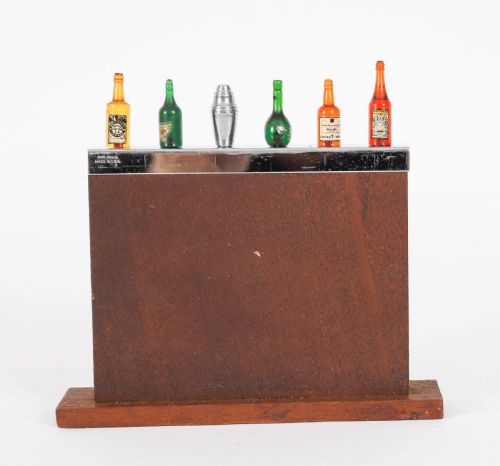
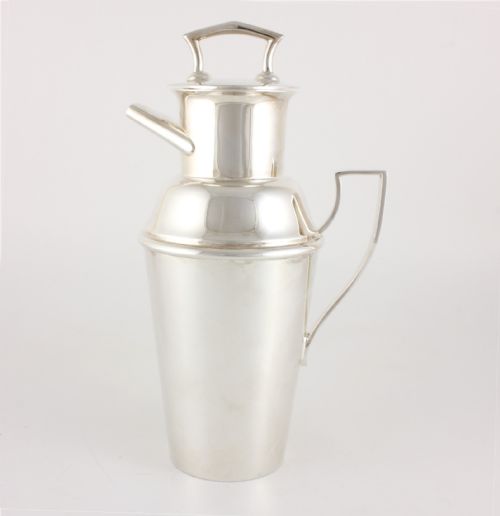
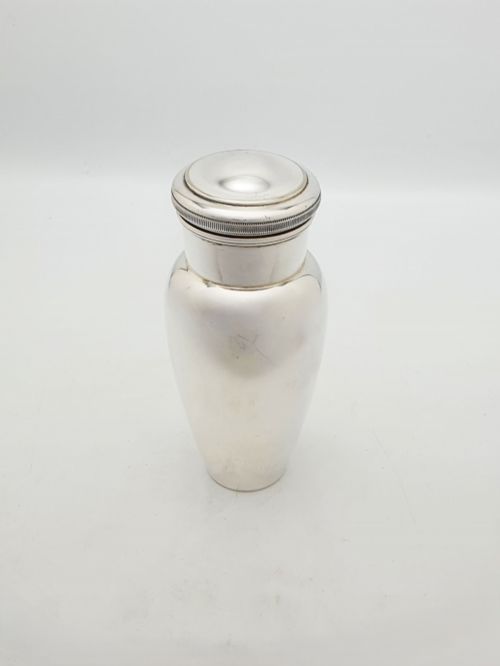
You will most frequently meet silver plated or electroplated nickel silver bodies, alongside combinations of glass, wood, and cork. Origins range across English, French, Italian, and American makers, demonstrating how different workshops approached cocktail preparation during the 1920s, 1930s, and 1940s.
Materials and construction
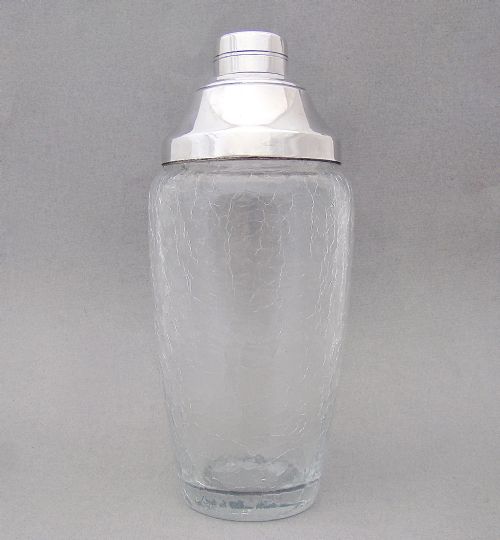
Makers utilised silver plate over base metals or sterling silver, often pairing metal spouts and tops with thick moulded glass bodies or crackle glass. Engine turning was applied to create intricate geometric patterns across the metal surfaces.
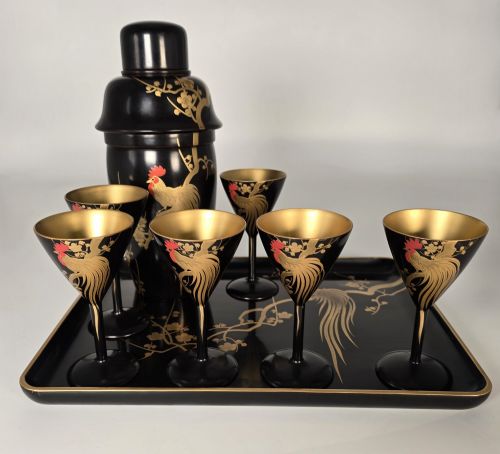
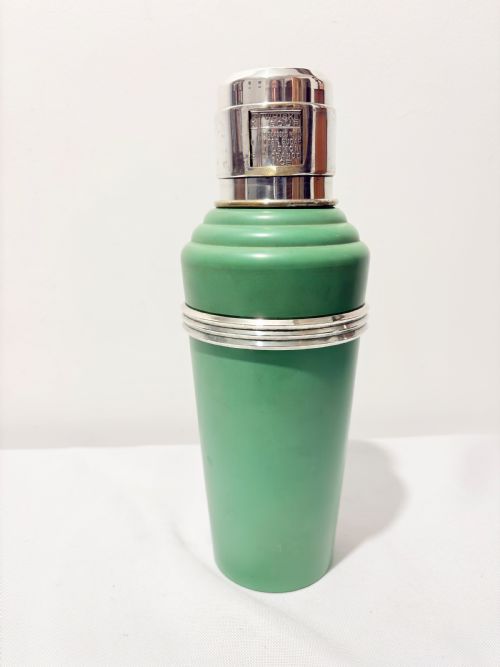
Functional elements such as integral lemon squeezers, cork stoppers, and rolling recipe mechanisms required precise engineering. Lacquer, enamel, and Bakelite accents were added to provide contrast against the polished metal finishes.
Evaluating the range
The distinction between standard production vessels and higher quality examples rests on the crispness of the designer's execution and the robustness of integrated mechanisms. Pieces attributed to named designers or renowned silversmiths display superior balance and heavier gauge metal.
Complexity of function also differentiates the range, such as rotating recipe cylinders or multi-part constructions with built-in strainers and squeezers. The clarity of glass bodies and the intact nature of original enamel or Bakelite components further distinguish the finer pieces.
Asprey & Co·Keith Murray·Hukin & Heath·James Dixon & Sons·William Suckling·C S Green & Co·Adie Brothers·Christofle
The Vintage Barware Shaker Glossary
- Silver Plate
- A layer of silver applied to a base metal core such as copper or nickel brass. This technique allowed workshops to produce substantial vessels at a lower cost than solid silver.
- Electroplated Nickel Silver
- Commonly abbreviated as EPNS, this refers to a nickel brass alloy coated in silver via an electrical process. It provides a durable and bright surface for cocktail vessels.
- Engine Turned
- A mechanical decoration technique that cuts intricate geometric patterns into metal surfaces. It was widely utilised during the Art Deco period to catch the light.
- Bakelite
- An early form of synthetic plastic used for handles, knobs, and decorative accents. Its presence often indicates pieces from the 1930s onwards.
Vintage Barware Shaker: Frequently Asked Questions
How do I use a vintage cocktail shaker?
These vessels were designed for mixing spirits with ice before straining into glasses. Many include built-in strainers or removable tops to hold back the ice.
Some examples feature rotating bands or sliding panels that display drink recipes directly on the body of the shaker.
What periods do these shakers come from?
The pieces span the twentieth century, with a strong concentration from the 1920s, 1930s, and 1940s. You will also encounter examples from the 1900s, 1950s, and 1960s.
Design styles shift from ornate early pieces to streamlined Art Deco forms and later mid-century modernism.
How do I clean silver plated barware?
Clean silver plate and electroplated nickel silver gently using a specialist metal polish and a soft cloth. Avoid harsh abrasives that can wear away the thin silver layer over the base metal.
Ensure any cork or wooden components remain dry during cleaning to preserve their structural integrity.
How do I identify an Art Deco shaker?
Art Deco shakers typically feature geometric motifs, stepped lines, and engine-turned patterns that reflect the machinery and architecture of the interwar period. Cylindrical, bullet, and milk churn shapes are particularly common.
Materials like chrome, Bakelite, and enamelled glass often accompany the silver-plated bodies.