

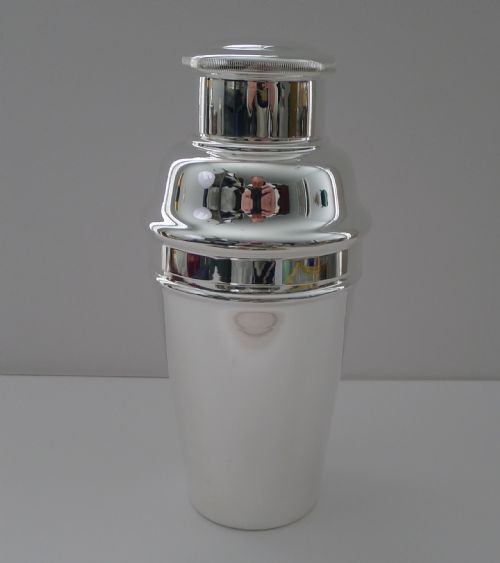

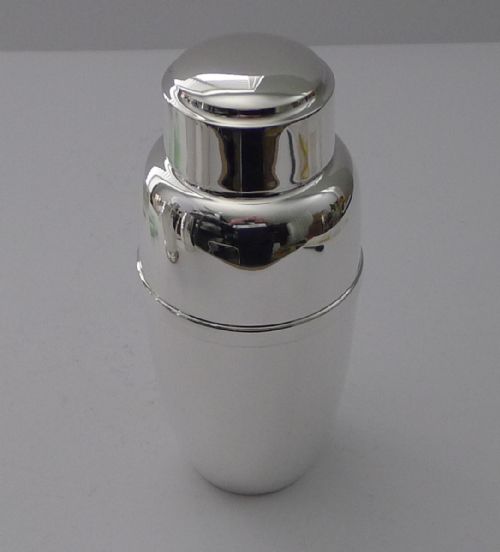


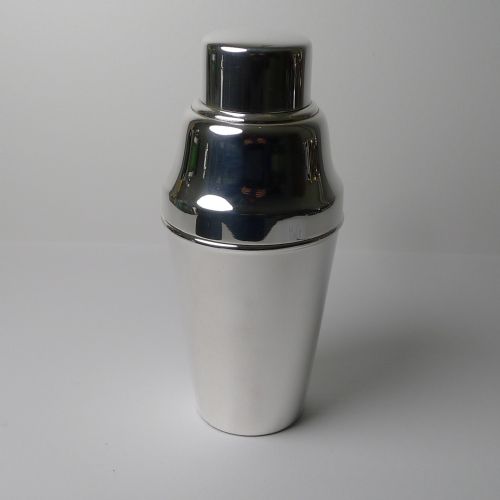


English Silver Plated Shaker
An English silver plated shaker brings geometric lines and cocktail culture from the early twentieth century straight to a modern home bar.
English Silver Plated Shaker
When a buyer searches for an english silver plated shaker, the focus rests heavily on barware from the Art Deco period, alongside Edwardian condiment stands and cruet sets. The selection spans cocktail shakers, mixers, and rotating recipe designs originating primarily from the nineteen-thirties and nineteen-forties.
The dominant forms are cocktail shakers executed in silver plate, metal, electroplated nickel silver, and cut glass, often paired with velvet in cased sets. Makers utilise geometric silhouettes, engine-turned decoration, and functional additions like integral lemon squeezers or ice breakers.
How they were made
Silversmiths constructed these pieces using silver plate and electroplated nickel silver over base metal bodies, frequently combining them with cut glass sections or velvet linings within presentation cases. Metal spinning and stamping shaped the cylindrical bodies, while mechanical elements were engineered for rotating recipe bands or sleeve tops.
Decoration relied heavily on machine engraving, particularly engine-turned patterns that created precise geometric textures across the silver plated surfaces. Integral lemon squeezers and ice breakers were cast and fitted directly into the lid assemblies.
Some cocktail shakers from the nineteen-thirties feature rotating dials that reveal secret gin proportions when spun.
What varies in quality
The distinction between standard production and the top of the range lies in mechanical complexity and maker attribution. Pieces featuring rotating recipe mechanisms, integral ice breakers, or lemon squeezers demonstrate higher manufacturing ambition than plain cylindrical vessels.
Attribution to prominent silversmiths and retail houses elevates the standing of an item, as does the presence of crisp engine-turned decoration and heavy-gauge electroplated nickel silver.
William Suckling·Hukin & Heath·C S Green & Co·Mappin & Webb·Elkington & Co·James Dixon & Sons·Barker Brothers·John Grinsell
The English Silver Plated Shaker Glossary
- Electroplated Nickel Silver
- A base metal alloy of copper, nickel, and zinc coated with a layer of pure silver through electrolysis.
- Engine-Turned
- A mechanical decoration technique producing intricate geometric patterns of precise lines engraved into metal surfaces.
- Cruet Set
- A matched collection of small glass bottles or jars for condiments, held within a silver plated stand.
- Silver Plate
- A thin layer of silver bonded to a base metal foundation, providing the appearance of solid silver.
- Recipe Shaker
- A cocktail vessel featuring a rotating outer sleeve or printed panels that display drink formulas.
English Silver Plated Shaker: Frequently Asked Questions
What is an english silver plated shaker used for?
These vessels were designed for mixing and chilling cocktails by combining spirits, ice, and mixers together before straining the liquid into glasses.
Many examples include built-in strainers, lemon squeezers, or rotating sleeves displaying drink formulas to assist host duties.
How do I date an art deco shaker?
Dating relies on stylistic markers such as geometric symmetry, engine-turned patterns, and manufacturer hallmarks stamped onto the base.
The majority date from the nineteen-thirties and nineteen-forties, reflecting the height of cocktail vessel production.
What is an electroplated nickel silver shaker?
This construction involves a strong core alloy of copper, nickel, and zinc coated with a durable layer of silver.
The method provided a sturdy, heavy structure that resisted dents while maintaining the bright finish of solid silver.
How do I clean a vintage cocktail shaker?
Careful maintenance involves washing with warm soapy water and drying immediately with a soft cloth to protect the silver plate.
Harsh abrasive cleaners should be avoided to prevent wearing away the thin silver layer over the base metal.