



Vintage Silver Cocktail Mixer
A vintage silver cocktail mixer brings the bold geometry and social theatre of the early twentieth century directly to your modern home bar.
Vintage Silver Cocktail Mixer
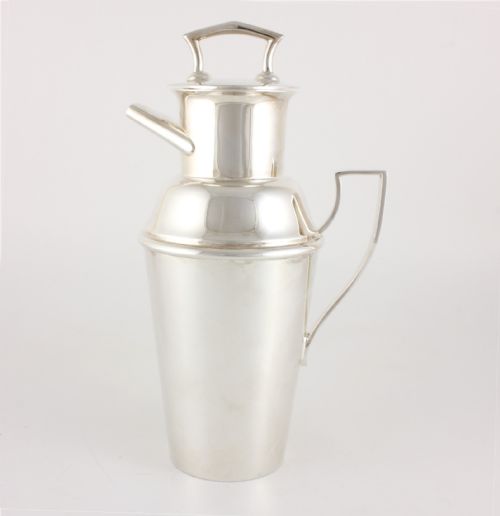
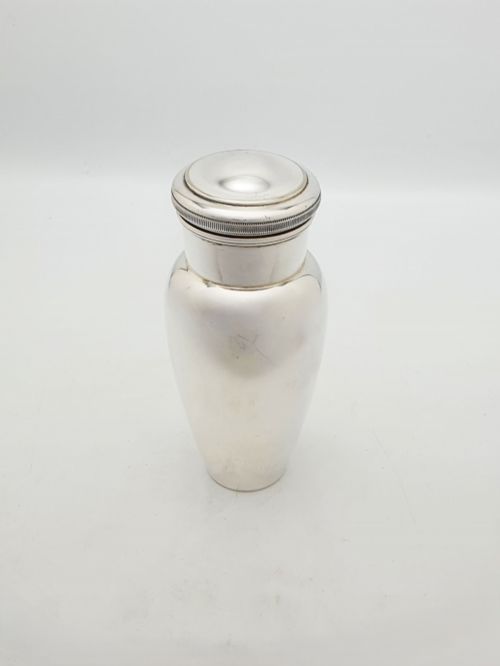
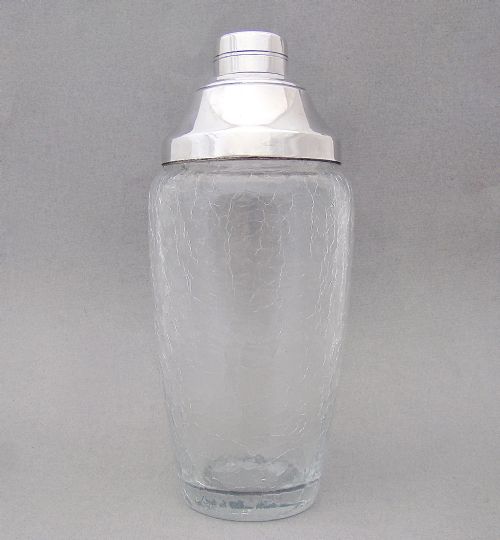
A vintage silver cocktail mixer combines utilitarian barware with striking design, most commonly encountered in the geometric forms of the Art Deco period. These vessels range from straightforward cylindrical bodies to novelty shapes like milk churns and bullets, alongside glass bodies encased in metal or fitted with sterling silver tops.
The majority of pieces date from the 1920s through to the 1940s, originating from workshops across England, France, Italy, and the United States. Alongside standard shakers, collectors find specialist designs incorporating integrated lemon squeezers, ice breakers, and rotating recipe cylinders.
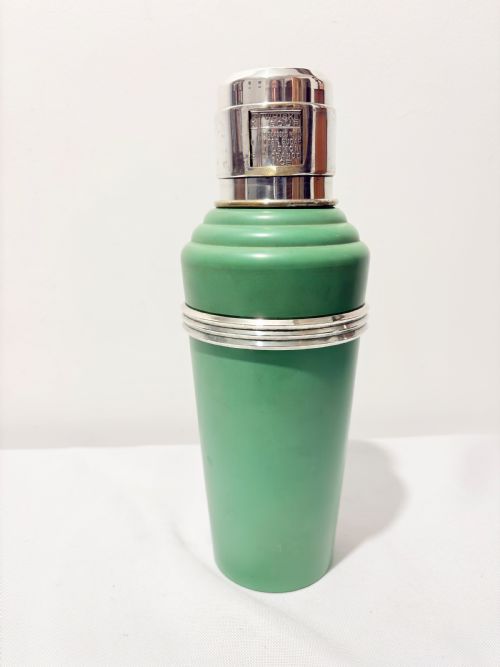
While many are constructed entirely from silver plate or electroplated nickel silver, others combine glass, brass, cork, and coloured Bakelite. These pieces reflect a period when home cocktail preparation emerged as a sophisticated form of domestic entertainment.
How they were made
Silversmiths utilised traditional spinning and stamping techniques to shape sheet metal into the sleek, aerodynamic bodies characteristic of the 1930s. Surfaces were frequently decorated with engine-turned geometric patterns, hand-engraved details, or enamelled accents applied to glass and metal.
Combinations of silver plate, electroplated nickel silver, and sterling silver were paired with practical elements such as cork stoppers and glass liners. Mechanical components, including rotating recipe bands and internal ice breakers, required precise engineering to function smoothly within the metal bodies.
Some mid-century shakers double as miniature rotating libraries of liquid courage, letting you spin up a dry martini recipe with a flick of the wrist.
What varies in quality
The refinement of the design work, from the integration of Bakelite details to the clarity of crackle glass, separates standard vessels from exceptional examples. Surviving plating thickness and the snug fit of lids and caps also distinguish the better-preserved specimens.
Asprey & Co·Hukin & Heath·James Dixon & Sons·Keith Murray·J. B. Chatterley & Sons·William Suckling·Christofle·Adie Brothers·C S Green & Co·Gaskell & Chambers·Angelletti
The Vintage Silver Cocktail Mixer Glossary
- Silver Plate
- A thin layer of silver fused to a base metal such as copper or nickel brass. This method offered the lustre of solid silver at a lower production cost.
- Electroplated Nickel Silver
- Commonly abbreviated as EPNS, this designates a base alloy of copper, nickel, and zinc coated with an electrochemical layer of silver. It provided durability for frequent bar use.
- Engine Turned
- A decorative technique involving precise geometric patterns cut into metal by a lathe. It creates textured surfaces that catch the light during use.
- Bakelite
- An early form of synthetic plastic utilised for heat-resistant handles, finials, and accents. Its rich colours contrast sharply with polished silver surfaces.
- Recipe Shaker
- A barware variant featuring an outer sleeve or rotating band inscribed with cocktail formulas. Users aligned the windows to reveal ingredient proportions.
Vintage Silver Cocktail Mixer: Frequently Asked Questions
How do I use a vintage cocktail mixer?
Most pieces function similarly to modern shakers, utilising tight-fitting lids and built-in strainers to combine spirits, ice, and mixers. Check that cork seals and metal threads remain secure before shaking liquids.
Exercise care with antique plating when washing, avoiding abrasive scourers that can strip the silver surface over time. Hand drying immediately prevents water spots on polished metal and glass.
Are these mixers watertight?
Many vintage shakers rely on snug metal-on-metal friction fits or cork gaskets rather than modern rubber O-rings to seal the liquids. Some older vessels are best suited for display or gentle stirring rather than vigorous shaking.
Test the vessel with cold water first to understand how the metal contracts and whether the specific lid design maintains a reliable seal during use.
How do I date an Art Deco cocktail shaker?
Dating relies on stylistic markers such as stepped geometric motifs, streamlined silhouettes, and the presence of Bakelite or crackle glass components typical of the 1920s and 1930s. Maker's marks and patent numbers stamped on the base provide further chronological clues.
Comparative study of manufacturer catalogues helps narrow down production years, particularly for patented items like rotating recipe cylinders introduced around 1940.
What is the difference between EPNS and sterling silver?
Sterling silver consists of solid precious metal marked with official hallmarker stamps indicating purity, whereas EPNS denotes a base metal core coated with a layer of silver. Both materials share similar visual characteristics depending on the level of polish.
Silver-plated items allow collectors to acquire substantial sculptural forms from major makers without the higher material cost associated with solid sterling pieces.