




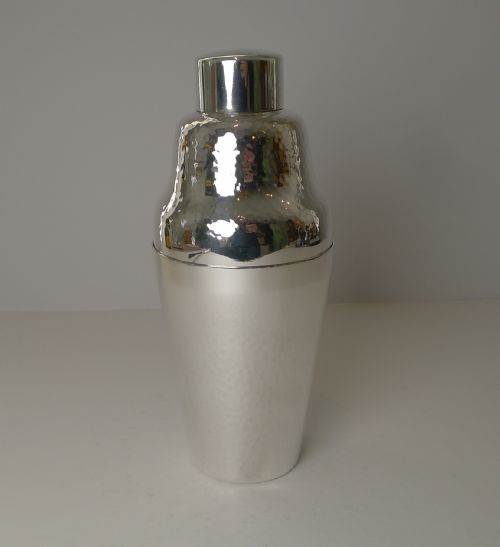
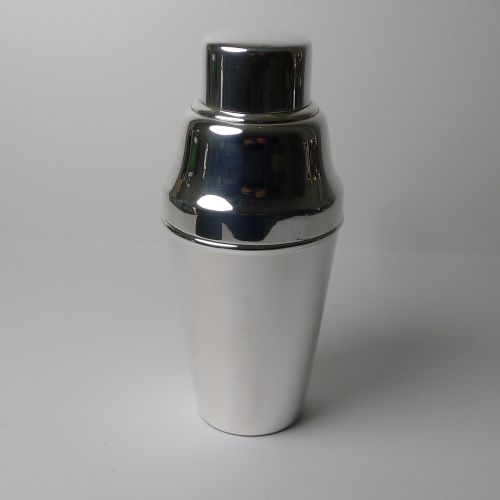


1930s Silver Plated Shaker
A 1930s silver plated shaker brings geometric elegance and serious cocktail culture to any home bar.
1930s Silver Plated Shaker
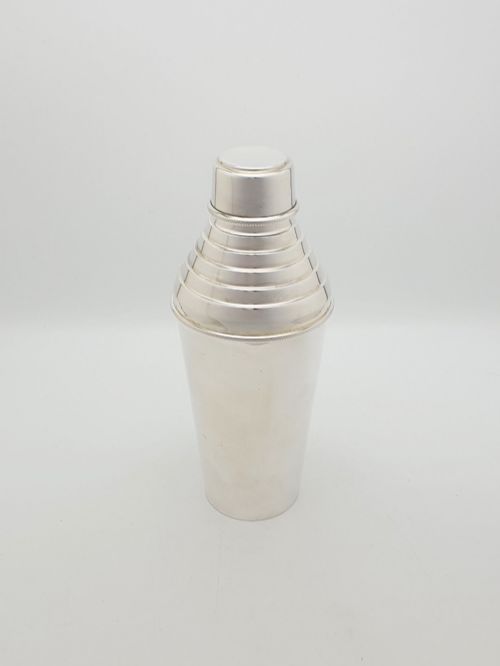
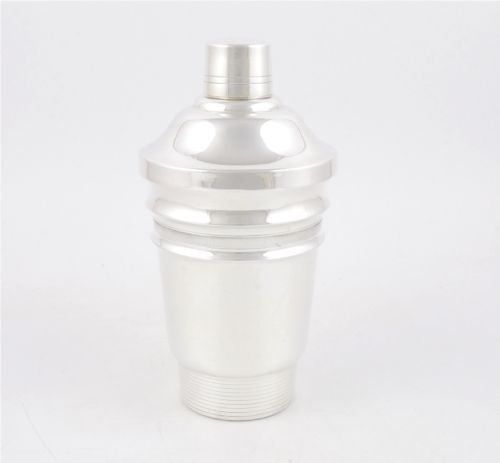
A 1930s silver plated shaker is a barware vessel designed for mixing drinks, dominated by the Art Deco style. These cocktail shakers and sets appear predominantly from the 1930 period, alongside examples attributed to 1920 and 1940.
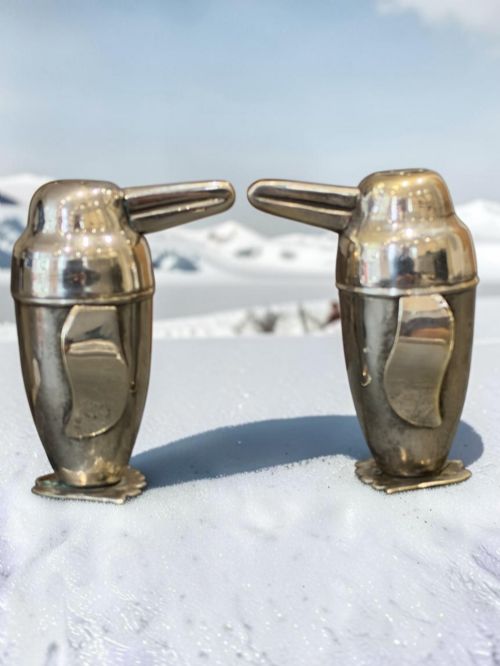
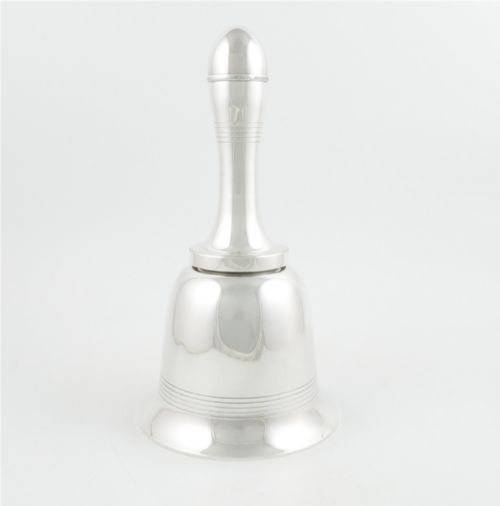
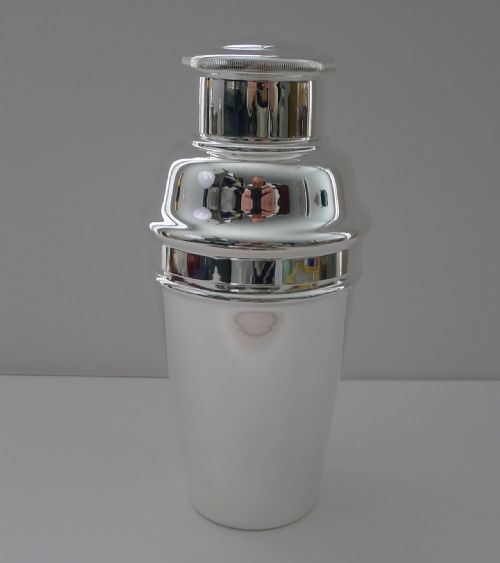
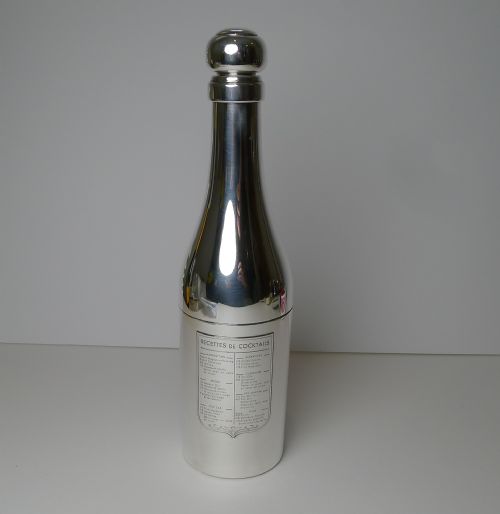
The forms range from straight-sided stepped bodies and cylindrical shapes to novelty designs resembling champagne bottles or bells. Many incorporate functional elements such as integral lemon squeezers, built-in reamers, or engraved drink recipes on the exterior.
Originating from English, French, German, Swiss, and domestic makers, these barware pieces reflect the international spread of modernist design. Buyers frequently encounter vessels paired with matching beakers or executed in combination with glass and metal.
Materials and technique
Makers utilised silver plate over metal base metals, frequently stamping items with EPNS or electroplated nickel silver. These metal surfaces were often finished with precise engine turning, hand hammering, or smooth polished coatings.
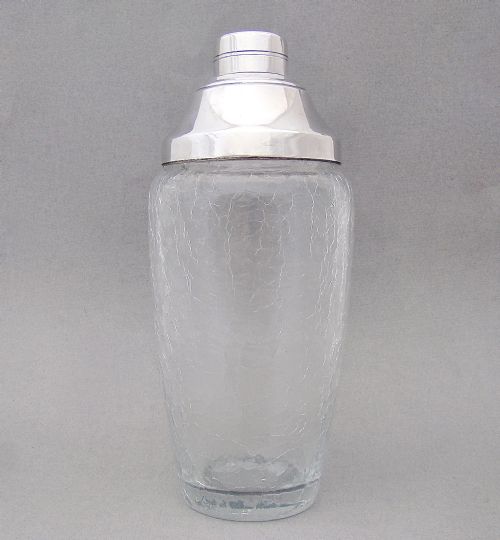
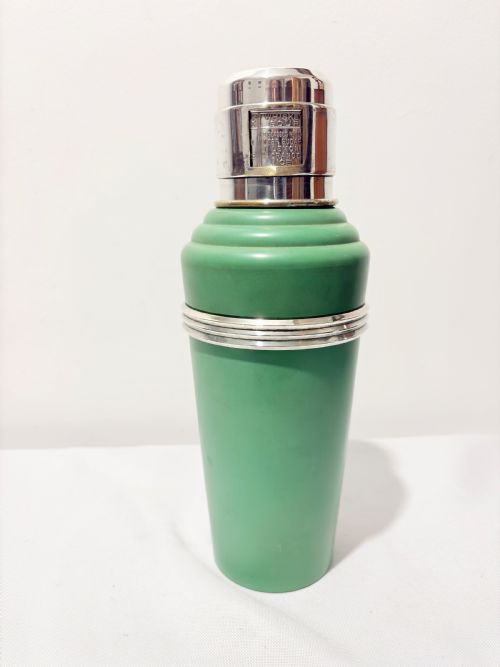
Many designs incorporate contrasting materials, pairing silver-plated components with glass, crackle glass, or colourful green Bakelite accents. Components like cork stoppers and internal reamers were integrated into the metal and glass assemblies to ensure practical bar utility.
1930s Silver Plated Shaker Retail Price Guide 2026
Typical asking prices for 1930s silver plated shaker among the pieces listed under this phrase on Sellingantiques today, from the lower quarter to the upper quarter. They describe what is for sale here now, not the wider market.
Some French shakers masquerade as champagne bottles, proving that historical drinkers appreciated a clever disguise just as much as a dry martini.
What separates the finer examples
Quality rests on the crispness of the Art Deco ornamentation and the precision of the engine-turned patterns etched into the silver plate. Sharply defined geometric stepping and well-preserved surface plating distinguish superior vessels from simpler production.
The inclusion of functional mechanisms, such as integrated lemon squeezers or stamped cocktail recipes, elevates the sophistication of a piece. Maker attribution and the integration of auxiliary materials like crackle glass or Bakelite also define the upper tier of these shakers.
Hukin Heath·Asprey·William Suckling·C S Green·Adie Brothers·Maison Barra·Carl Deffner·William Hutton·Mappin & Webb·St. Medard·Kingsway Silver Plate
The 1930s Silver Plated Shaker Glossary
- EPNS
- Electroplated Nickel Silver. This denotes a base metal of nickel silver coated with a layer of pure silver through electrolysis.
- Engine turned
- A decorative technique involving precise geometric patterns mechanically engraved into metal surfaces. This method was widely applied across Art Deco barware to catch the light.
- Bakelite
- An early form of synthetic plastic. It appears frequently on handles, finials, and decorative accents in contrasting colours like green.
- Crackle glass
- Glass deliberately fractured during manufacture and then reheated to fuse the outer layer while retaining an internal web of fine lines. It provides a textural contrast to smooth silver plate.
- Reamer
- A ribbed conical citrus squeezer built into the top assembly of certain shakers. It allowed users to juice fruit directly into the mixing chamber.
1930s Silver Plated Shaker: Frequently Asked Questions
How do I use a vintage shaker?
These vessels mix liquids by shaking ingredients over ice within the sealed metal chamber. The built-in strainer and cap allow for pouring clear drinks directly into glasses.
Ensure cork seals and metal threads are handled with care during opening. Hand washing preserves the silver-plated surfaces and any integrated glass components.
What periods do these pieces span?
The objects belong primarily to the Art Deco era around the 1930s. Some examples extend slightly into the adjacent decades of the 1920s and 1940s.
Stylistic cues remain firmly rooted in modernist design principles regardless of the exact manufacturing year.
How do I identify the manufacturer?
Maker marks and stamps typically appear on the base of the metal body or along the rim of the lid. These punch marks reveal the originating studio, silversmith, or plating company.
Matching the design style with known factory catalogues helps attribute unmarked novelty or recipe shakers.
Can I display these shakers safely?
Displaying barware on open shelves or sideboards highlights the reflective qualities of the silver plate and coloured glass. Keep pieces away from direct heat sources to protect any internal cork elements.
Occasional gentle polishing maintains the metallic sheen without wearing down the underlying plate layer.