







French Cocktail Shaker
These French cocktail shaker examples bring sophisticated Art Deco design and heavy silver plate to home barware.
French Cocktail Shaker
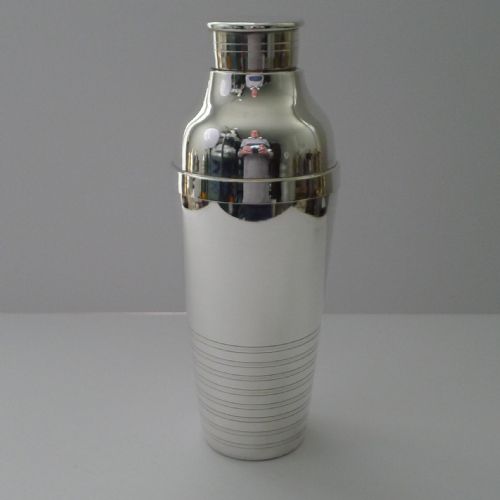
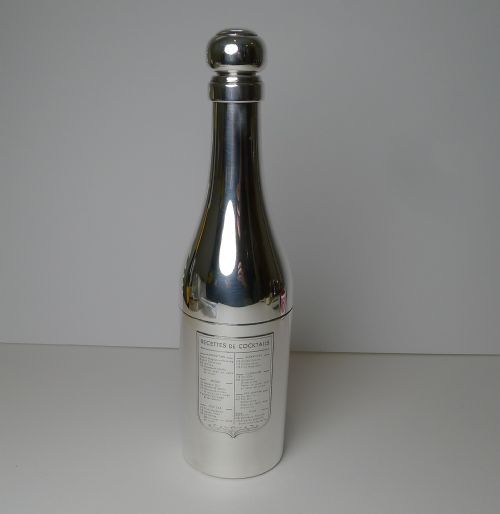
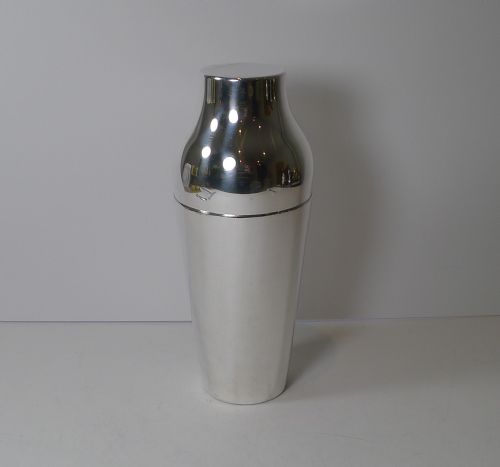
A French cocktail shaker embodies the sleek aesthetic of the Art Deco and Modernist periods, originating mostly from the 1930s and 1940s. These pieces of barware appear frequently in silver plate, sometimes taking the form of a champagne bottle or incorporating functional additions such as built-in lemon reamers.
Makers often produced these shakers as part of cased sets that included matching beakers and trays. Individual sizes and larger formats exist across the range, reflecting the varied entertaining styles of the mid-twentieth century.
Most items on this page date from 1930 to 1960, displaying the geometric lines and stepped forms characteristic of French design houses in Paris.
Materials and Construction
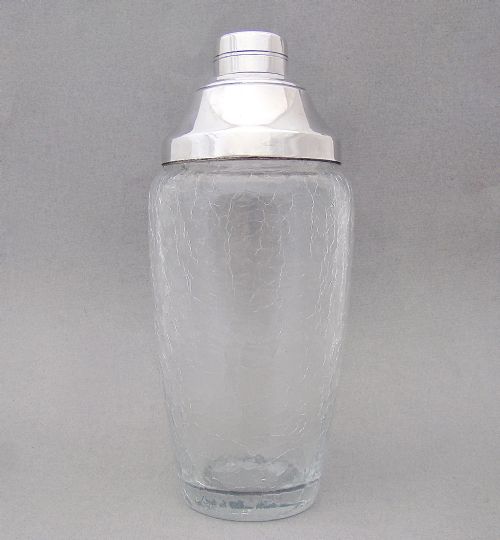
Silversmiths constructed the primary body of each French cocktail shaker using durable base metals coated in a thick layer of silver plate. Certain specialist designs combined this metalwork with crackle glass or incorporated fabric linings involving satin and velvet inside presentation cases.
Techniques such as engine turning added intricate geometric patterns to the exterior metal surfaces, creating texture and visual depth. Two-part and three-part assemblies allowed for secure seals during mixing, while specialised variants integrated mechanical lemon squeezers directly into the vessel structure.
Some French shakers masquerade as champagne bottles, ensuring your cocktail hour begins with a touch of architectural theatre.
Assessing Quality
The distinction between standard barware and superior workshop production rests on the weight of the metal, the precision of the engine-turned decoration, and the presence of fully marked maker stamps from recognised Parisian silversmiths. Pieces originating from notable establishments command attention for their heavier gauge silver plate and more complex structural engineering.
Completeness also dictates standing, as surviving cased sets that retain their original matched beakers, trays, and citrus attachments represent a higher tier of manufacture than standalone mixing vessels.
St. Medard, Paris·Orfèvrerie Christofle, Paris·Maison Barra·Roux-Marquiand·Brille, Paris
The French Cocktail Shaker Glossary
- Silver Plate
- A manufacturing process where a thin layer of pure silver is bonded to a base metal core. This technique provided the lustrous finish of solid silver without the prohibitive cost.
- Engine Turned
- A mechanical decoration method used to engrave precise, intricate geometric patterns into metal surfaces. It adds tactile grip and visual refinement to the exterior.
- Art Deco
- The dominant design style of the 1920s and 1930s characterised by streamlined geometric shapes, symmetry, and modern industrial materials. It defines the visual language of these barware pieces.
- Modernist
- A later twentieth-century design movement focusing on minimalist forms and functional purity. Pieces from this era often shed ornamentation in favour of stark, clean lines.
- Reamer
- A conical tool integrated into specific shaker designs for extracting citrus juice directly into the vessel. This component highlights the functional ingenuity of period barware.
French Cocktail Shaker: Frequently Asked Questions
What periods do these cocktail shakers date from?
The pieces span the 1930s and 1940s Art Deco height, extending into later Modernist designs from the 1960s.
Most surviving examples cluster around the interwar period when French barware manufacturing reached its peak.
Did these shakers come with matching accessories?
Many workshops issued these vessels as part of comprehensive cased sets containing matching beakers and serving trays.
Individual shaker variants also exist, sometimes featuring built-in citrus reamers for direct preparation.
How do I identify a piece by a Parisian maker?
Maker marks and workshop stamps typically appear stamped onto the base of the silver-plated body.
Prominent Parisian houses like Christofle or St. Medard placed distinct hallmarks to denote their origin and metal quality.
What materials were used besides silver plate?
While silver plate over base metal dominates the category, certain designs incorporate crackle glass bodies.
Presentation cases for these barware sets often lined their interiors with materials such as satin and velvet.