







French Art Deco Shaker
A french art deco shaker brings geometric elegance and period style to any home bar setup.
French Art Deco Shaker
When searching for a french art deco shaker, collectors encounter cocktail shakers and barware originating primarily from the 1930 and 1940 decades. These vessels served functional roles in mixing drinks and often appeared alongside matching beaker sets or lemon reamers.
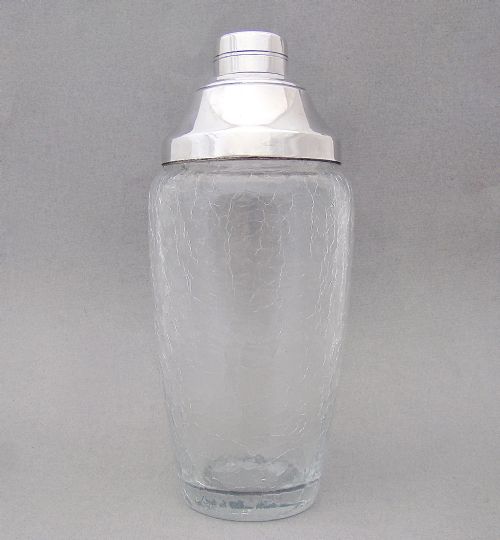
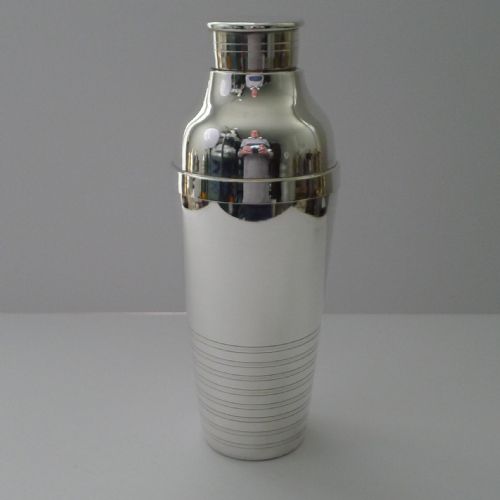
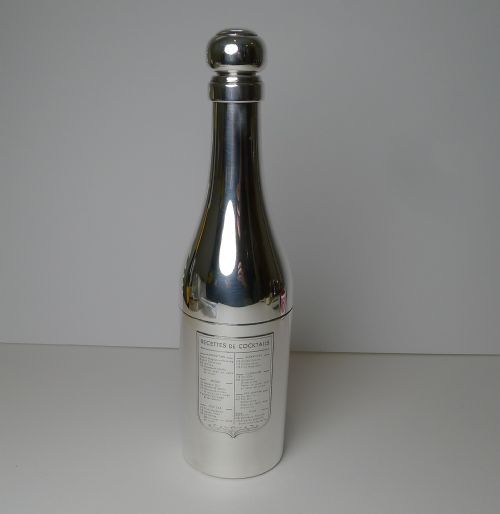
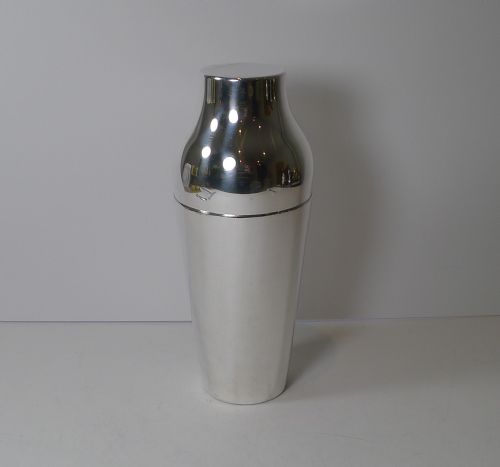
The most common version on this page is the silver plated cocktail shaker, frequently designed with stepped architectural profiles or engine turned patterns. Examples span individual sizes up to large vessels modelled on champagne bottles or recipe formats.
How They Were Made
Maker workshops utilised silver plate applied over base metal foundations to achieve durable yet gleaming surfaces suited to hospitality use. Metal spinning and engine turning techniques created precise geometric decoration across the cylindrical bodies.
Certain pieces integrated transparent elements such as crackle glass or crystal combined with metal mounts to contrast textures. Two part and three part construction allowed secure sealing during vigorous beverage preparation.
Some shakers include built in lemon reamers so a host could juice fruit directly onto the cocktail before shaking.
What Varies in Quality
The distinction between standard commercial output and superior production rests in the reputation of the Parisian silversmith or atelier responsible for the piece. Recognised makers applied heavier gauge silver plating and executed complex mechanical forms with greater precision.
Complexity of design heavily influences the calibre of an item, distinguishing plain cylindrical bodies from stepped architectural constructions or complete cased sets incorporating matching bar accessories.
Maison Barra·St. Medard·Orfèvrerie Christofle·Roux-Marquiand·Brille·Maison Pierre Bognon·Mars·Ercuis·Orbrille·Apollo·Orfèvrerie Vulcain
The French Art Deco Shaker Glossary
- Silver Plate
- A thin layer of silver fused to a base metal core such as brass or copper. This technique allowed Parisian silversmiths to produce affordable luxury barware during the twentieth century.
- Engine Turned
- A method of mechanical engraving that cuts intricate geometric patterns into metal surfaces. This precise decoration defined many modernist cocktail shakers from the period.
- Crackle Glass
- Glass intentionally subjected to thermal shock during manufacture to produce an internal network of fine fractures. The technique added texture and visual interest to barware vessels.
- Recipe Shaker
- A barware vessel featuring rotating bands or printed markings that display cocktail formulas. Users aligned the indicators to measure ingredients directly on the metal body.
- Modernist
- An aesthetic movement prioritising clean lines, function, and geometric form over traditional ornamentation. This style influenced barware design through the middle decades of the twentieth century.
French Art Deco Shaker: Frequently Asked Questions
What periods do these shakers date from?
The available items span periods primarily rooted in the 1930 and 1940 decades, with occasional mid twentieth century examples appearing.
Design characteristics align closely with art deco and modernist aesthetic movements of those eras.
Are complete sets common?
Certain examples survive alongside matching beakers, stirring spoons, or lemon reamers housed within fitted cases.
These grouped pieces reflect comprehensive barware suites produced by established Parisian silversmiths.
How do recipe shakers function?
Recipe versions incorporate printed text or moving exterior bands that display quantities for standard mixed drinks.
Owners rotated the metal components to align ingredients while preparing cocktails.
What materials make up these objects?
Construction relies heavily on silver plate over metal bodies, occasionally paired with crystal or crackle glass components.
Interiors may show plain metal finishes designed for safe contact with ingredients.