




Silver Plate Drinkware
These silver plate drinkware pieces range from Georgian tankards to Art Deco cocktail sets, offering practical hospitality gear with historical charm.
Silver Plate Drinkware
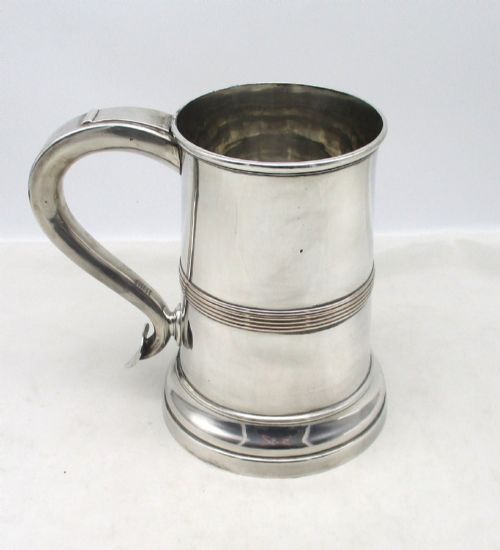
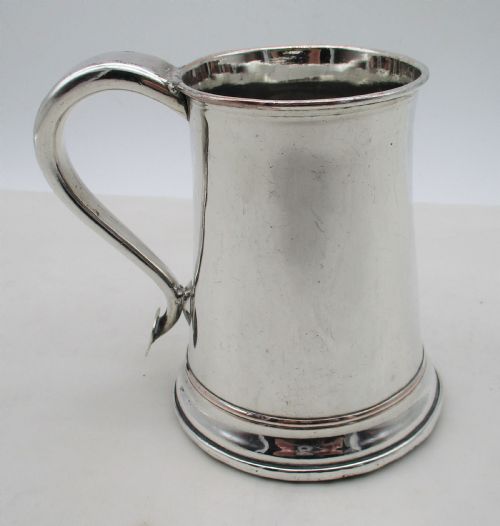
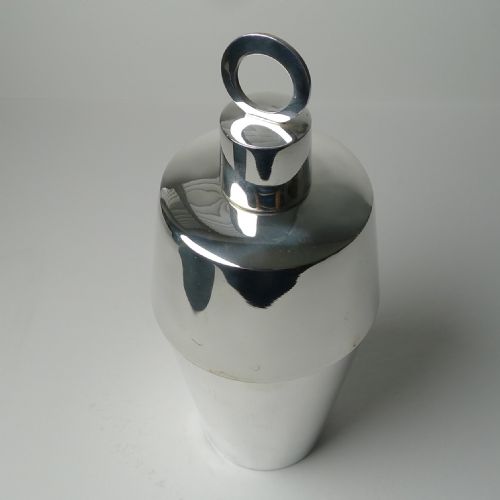
Silver plate drinkware comprises vessels designed for serving and consuming liquids, spanning forms such as tankards, mugs, jugs, pitchers, and cocktail shakers. When exploring silver plate drinkware, buyers encounter items produced across multiple centuries, reflecting changing social habits and drinking customs. Tankards and mugs form a large portion of the offerings, alongside specialised pieces for spirits and mixed drinks.
The selection includes items from the eighteenth century, the nineteenth century, and twentieth-century periods such as the nineteen-thirties and nineteen-forties. Styles range from Georgian and Queen Anne Revival to Victorian and Art Deco. Origins encompass English workshops alongside French makers.
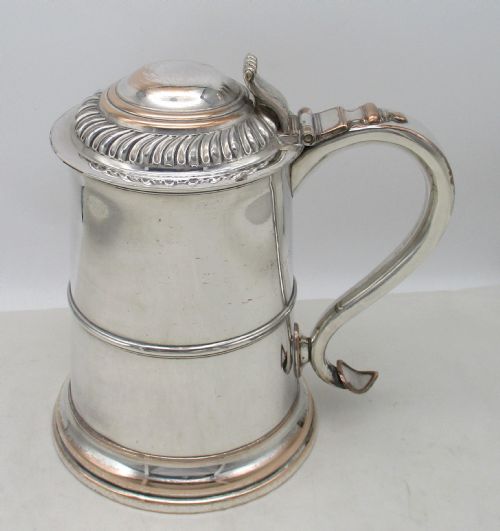
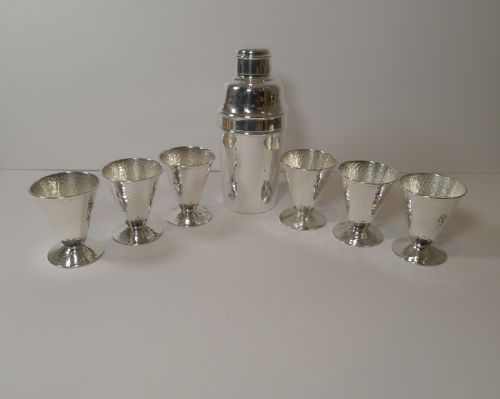
Tankards and pint or quart vessels dominate the earlier eras, often utilising Old Sheffield Plate. Later decades bring cocktail shakers, spirit flasks, and cased sets comprising shakers and beakers. Buyers frequently discover both lidded beer tankards and water jugs amongst the available forms.
How they were made
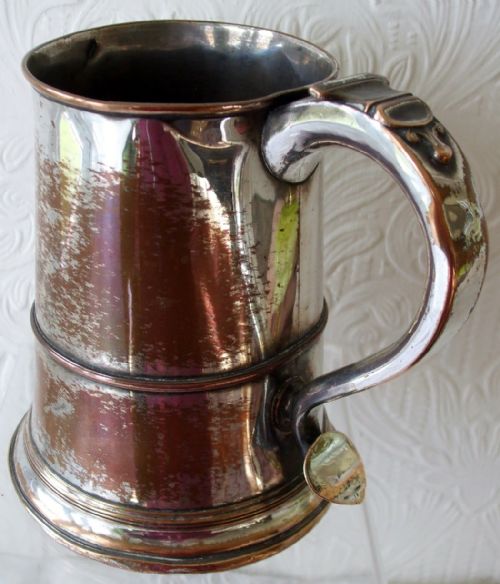
Makers utilised materials such as silver plate, Old Sheffield Plate, electroplated nickel silver, copper, and white metal, occasionally incorporating bone. Old Sheffield Plate involves fusing a thin sheet of silver to a copper core, a technique visible in many eighteenth-century and early nineteenth-century tankards. Electroplated nickel silver emerged later, allowing a uniform metallic coating over a base metal substrate.
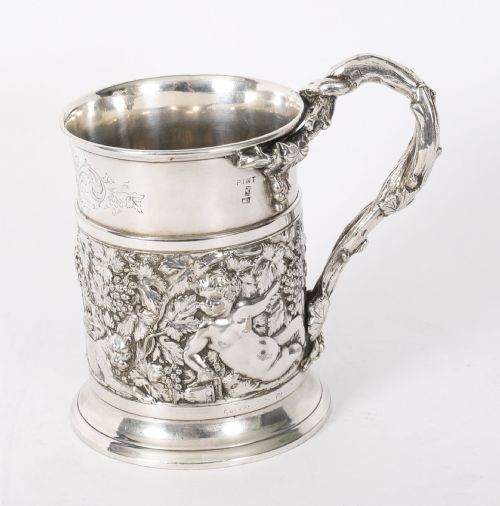
Surface decoration involved techniques like embossing and engraving, seen particularly on Victorian mugs and tankards. Hammered finishes appear on twentieth-century Art Deco cocktail shakers, demonstrating alternative methods of shaping and texturing metal. Handles and lids required careful soldering and hinge construction to ensure functional durability.
Giant spirit flasks from nineteen-thirty ensure nobody runs dry during an extended evening.
What varies in quality
The standard of metal fusion and plating thickness distinguishes Old Sheffield Plate pieces from simpler later electroplated items. Pieces exhibiting crisp hand-engraving and deep embossing demonstrate superior craftsmanship compared to plain or heavily worn surfaces. The structural integrity of lids, hinges, and handles on heavy tankards dictates practical utility.
Design complexity and maker attribution influence the standing of an object within its category. Signed pieces from recognised makers command attention through distinct styling and balanced proportions, whether in an eighteenth-century pint tankard or a French Art Deco cocktail set.
G R Collis·Richard Morton·Maison Barra·William Hutton·St. Medard, Paris
The Silver Plate Drinkware Glossary
- Old Sheffield Plate
- A composite material made by fusing a layer of silver onto a copper base before rolling into sheets. This technique predates modern electroplating.
- Electroplated Nickel Silver
- A base metal alloy of copper, nickel, and zinc coated with a layer of silver via an electrolytic process. It became common in the nineteenth century.
- Tankard
- A tall, cylindrical drinking vessel with a handle, frequently featuring a hinged lid and used for beer or ale. Quart and pint capacities are common.
- Cocktail Shaker
- A container used to mix beverages by shaking, often associated with Art Deco design and cased sets with matching beakers.
- Embossing
- A metalworking technique where the design is raised from the reverse side to create a three-dimensional pattern on the surface.
Silver Plate Drinkware: Frequently Asked Questions
What is Old Sheffield Plate?
Old Sheffield Plate is an early method of fusing silver and copper together before the invention of electroplating. The technique creates a distinct layered appearance visible around rims and wear points.
Items made this way date primarily to the eighteenth and early nineteenth centuries. They are prized for their historical construction method.
How do I clean silver plate drinkware?
Clean silver plate drinkware gently with a specialist silver cloth or mild, non-abrasive polish. Avoid harsh scrubbing that might wear through the plated surface to the base metal underneath.
Regular, careful maintenance preserves the engraved details and original finish. Store pieces in dry conditions to prevent tarnishing.
Were these tankards used for beer?
Tankards and mugs were historically utilised for serving and drinking beer, ale, or cider. Many feature sturdy handles and lidded tops designed for daily tavern or domestic use.
Heavier examples could hold pints or quarts for communal or individual consumption. Today they function equally well as decorative display items or functional vessels.
How do I date a cocktail shaker?
Cocktail shakers on this page typically date to the Art Deco period of the nineteen-thirties and nineteen-forties. Stylistic cues such as geometric lines and hammered textures help identify this era.
Maker marks and stamps from French or English houses provide further chronological context. Cased sets often retain original fitted packaging from the period.