




Silver Recipe Cocktail Shaker
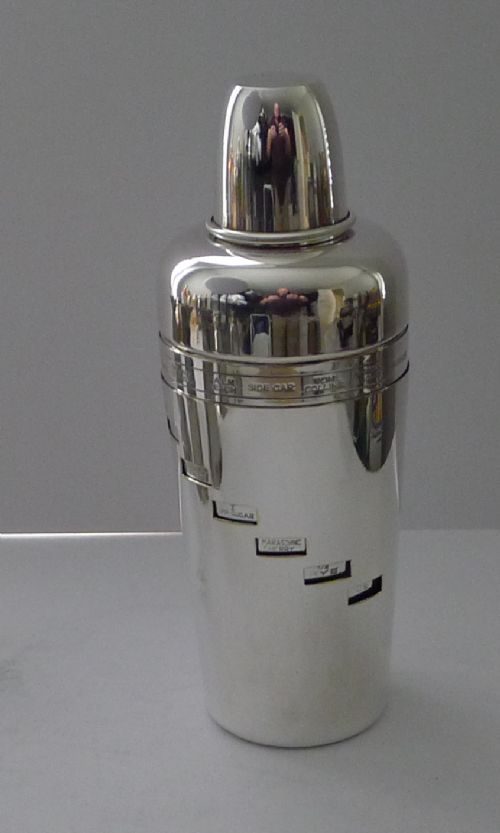
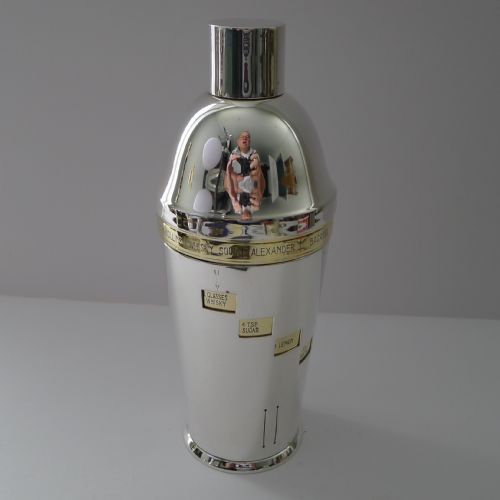
These silver recipe cocktail shaker pieces combine Art Deco barware utility with rotating dials and engraved drink formulas.
Silver Recipe Cocktail Shaker
A silver recipe cocktail shaker brings interactive mixing instructions directly onto the vessel body through rotating mechanisms, dials, or engraved text. These domestic barware pieces date primarily from the nineteen-twenties, nineteen-thirties, and nineteen-forties.
The most common form on this page is the silver-plated Art Deco cylinder or bullet shape, often originating from Italy or England. Makers integrated cocktail formulas directly into the metal body or through mechanical rotating bands.
Materials and mechanical construction
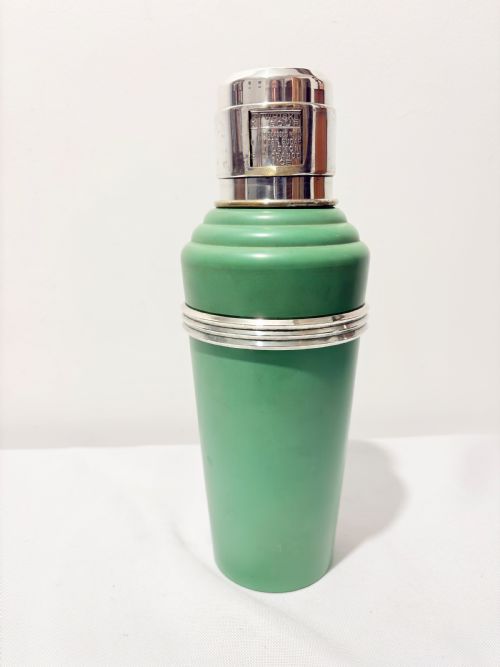
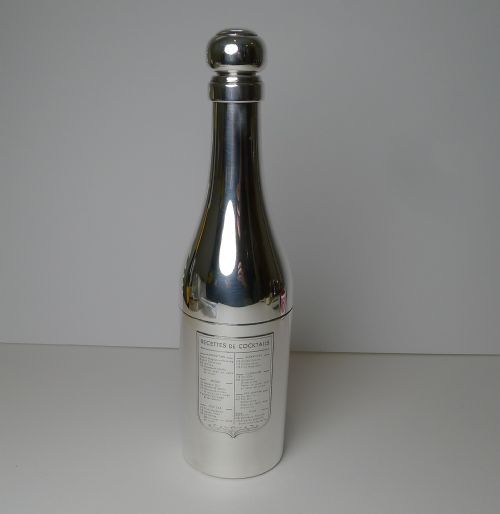
Construction relies heavily on silver plate and metal bases, frequently augmented with gilt metal, brass, and coloured Bakelite accents. Artisans shaped these materials into champagne bottle silhouettes, cylindrical canisters, and bullet forms.
Mechanical complexity defines these vessels, utilising rotating sleeves, dial mechanisms, and engraved or etched recipes. Glass components also appear in combination with silver-plated mounts and collars.
Some shakers turn into miniature cocktail manuals, letting hosts consult rotating dials for drink formulas while mixing.
Evaluating craftsmanship and mechanism integrity
Quality rests on the precision of the rotating dial or sleeve mechanism and the crispness of the engraved or etched recipes. Smoother rotation and heavier silver plating separate superior examples from standard production barware.
The integration of contrasting materials, such as green Bakelite handles or gold-plated details, marks the distinction between ordinary shakers and high-end Art Deco specimens.
Angelletti Rome·C S Green·Keith Murray for Mappin and Webb·Master Incolor·Grenadier
The Silver Recipe Cocktail Shaker Glossary
- Silver Plate
- A base metal such as brass or white metal coated with a thin layer of silver. This technique allowed manufacturers to produce affordable domestic tableware with the appearance of solid silver.
- Art Deco
- A design style dominant in the nineteen-twenties and nineteen-thirties characterised by sleek geometric lines, stylised motifs, and modern industrial materials. It strongly influences the aesthetic of these cocktail shakers.
- Bakelite
- An early synthetic phenol-formaldehyde resin used for handles, knobs, and decorative accents. Its presence in vibrant colours is a hallmark of period manufacturing.
- Gilt Metal
- Metal that has been treated with a thin coating of gold leaf or a gold-coloured wash. It provides decorative contrast against the silver-plated body.
- Barware
- Utensils and vessels specifically designed for the preparation and service of alcoholic drinks. This category includes shakers, strainers, and mixing jugs.
Silver Recipe Cocktail Shaker: Frequently Asked Questions
How do the rotating recipe mechanisms work?
Outer sleeves or central dials turn to align ingredient proportions with viewing windows on the shaker body. This mechanical feature allows the user to read specific cocktail formulas directly from the metal surface.
Such systems require careful handling to preserve the engraved or printed text through regular use.
What periods do these cocktail shakers date from?
The pieces span the nineteen-twenties, nineteen-thirties, and nineteen-forties, capturing the height of cocktail culture and Art Deco design. Italian and English workshops were particularly prolific during these decades.
Design characteristics and patent markings help narrow down the specific decade of manufacture.
Are these shakers made of solid silver?
Most examples utilise silver plate over a base metal, though occasional pieces feature solid silver or sterling silver mounts. The underlying structure commonly consists of brass, white metal, or glass.
Hallmarks and stamps on the base or rim generally indicate the metal composition and origin.
How should I clean a silver-plated shaker?
Gentle cleaning with a non-abrasive silver polish maintains the reflective finish without wearing away the plated layer. Care must be taken around engraved recipe text and Bakelite components to avoid damage.
Hand washing in warm soapy water is recommended rather than immersion in harsh chemical dips.