

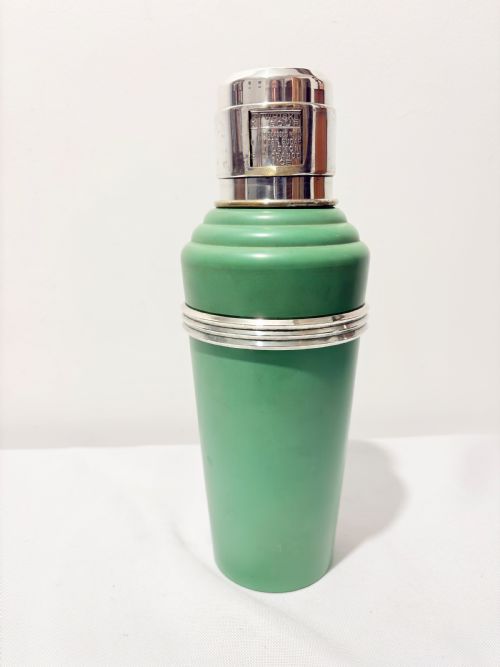


Silver Plated Drink Shaker
A silver plated drink shaker brings the polished glamour of twentieth-century cocktail culture directly to the modern bar.
Silver Plated Drink Shaker
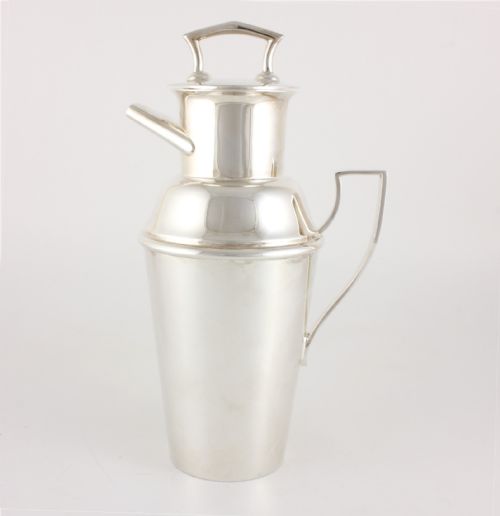
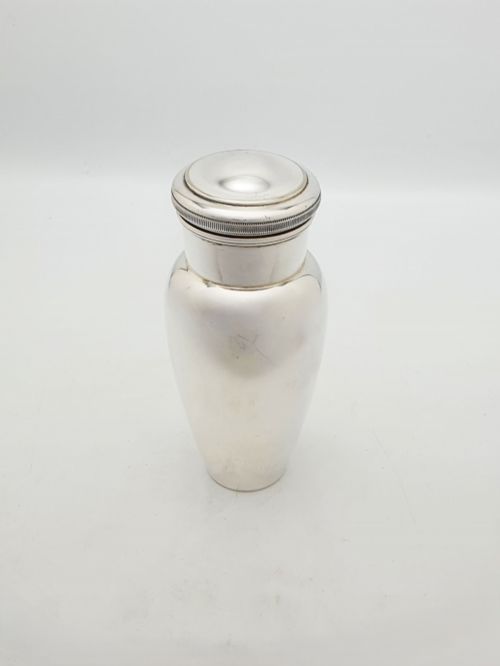
A silver plated drink shaker is a barware vessel designed for mixing cocktails, appearing predominantly in Art Deco and Mid-Century Modern styles from periods spanning the 1920s to the 1960s.
The selection on this page centres on cocktail shakers originating from Britain, France, Italy, Germany, and Switzerland, reflecting international design movements of the twentieth century.
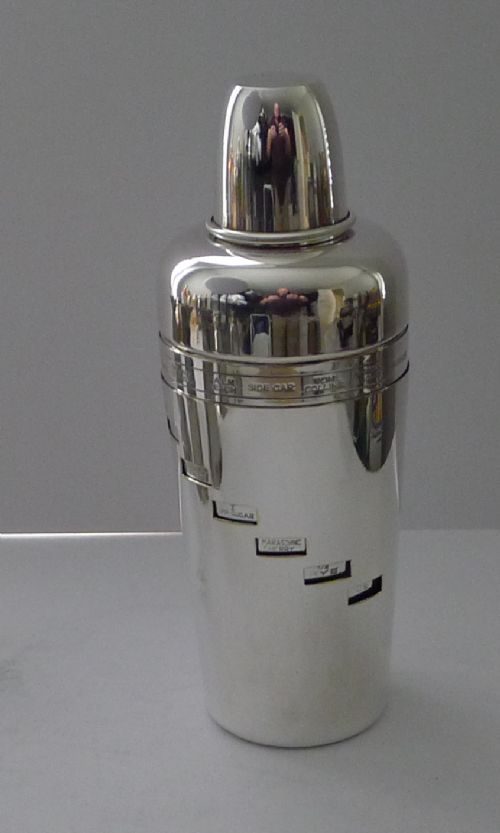
Buyers will encounter standard cylindrical forms alongside novelty shapes, milk churn designs, bullet bodies, and pieces fitted with integral lemon squeezers or rotating recipe dials.
How they were made
Manufacturers utilised silver plate, electroplated nickel silver, and EPNS over base metal foundations, frequently incorporating engine turned surface decoration for texture and visual depth.
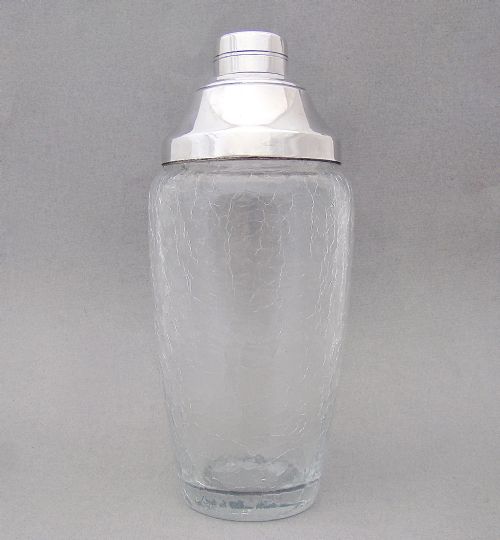
Glass bodies, including crackle glass, combined with metal mounts and closures lined with cork to create watertight seals for vigorous mixing.
Bakelite components, brass elements, and internal ice breakers or rolling mixers were integrated into the construction of specialised cocktail shakers.
Some mid-century shakers double as rotating recipe books, ensuring no host ever forgets the proportions for a proper martini.
What varies in quality
Quality rests upon the crispness of engine turned engraving, the legibility of engraved or rotating recipes, and the smoothness of mechanical actions on dial and recipe shakers.
The integrity of the original silver plating over the underlying base metal and the preservation of secondary materials such as crackle glass and Bakelite dictate the standing of an individual piece.
Asprey & Co·Keith Murray·J. B. Chatterley & Sons·James Dixon & Sons·Lino Sabattini·Christofle·William Suckling·Angelletti·Hukin & Heath·C S Green & Co·Adie Brothers·Carl Deffner·William Hutton·Napier
The Silver Plated Drink Shaker Glossary
- Silver Plate
- A layer of silver bonded to a base metal substrate, forming the primary exterior finish for these drinking vessels.
- EPNS
- Electroplated Nickel Silver, a common metallic base material used underneath the silver coating on mid-century barware.
- Engine Turned
- A precision machining technique that produces intricate geometric patterns across the metal surface of the shaker body.
- Bakelite
- An early form of synthetic plastic utilised for handles, knobs, and decorative accents during the Art Deco period.
- Crackle Glass
- Glass blown and rapidly cooled to create an intentional network of internal fractures, paired with metal tops in French barware.
Silver Plated Drink Shaker: Frequently Asked Questions
How do recipe cocktail shakers work?
Recipe shakers feature either rotating outer sleeves or engraved text that displays drink proportions when turned. Users align the indicator with the desired cocktail to read the correct ingredients.
These mechanical components were patented by various makers to simplify home bartending during the Art Deco era. They combine utility with decorative instruction directly on the metal body.
Are antique silver plated drink shakers usable?
Most silver plated drink shakers remain fully functional for mixing beverages provided the internal cork seals and threads are intact. Gentle hand washing preserves the plating.
Modern users should avoid abrasive cleaners that wear down the historic silver layer. Cork liners may occasionally require careful conditioning to maintain a liquid-tight seal.
What is a bachelor cocktail shaker?
A bachelor cocktail shaker is a smaller variant of the standard barware vessel, typically holding one or one and a half pints. They were designed for intimate gatherings rather than large parties.
These compact pieces often showcase the same intricate Art Deco motifs and engine turned decoration found on their larger counterparts.
How do I identify an Art Deco shaker?
Art Deco shakers exhibit geometric lines, stepped motifs, engine turned patterns, and streamlined forms derived from industrial design of the 1920s and 1930s. Materials like Bakelite frequently accompany the metal.
European manufacturers in Britain, France, and Germany produced distinctive silhouettes ranging from sleek bullets to stylized milk churns during this period.