
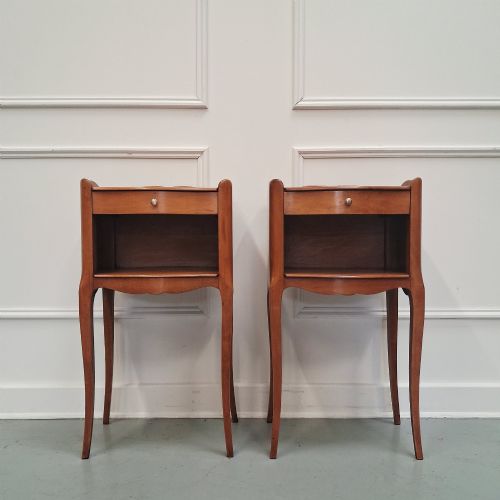
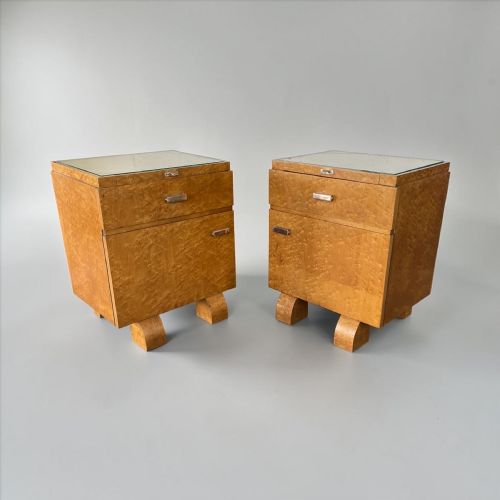
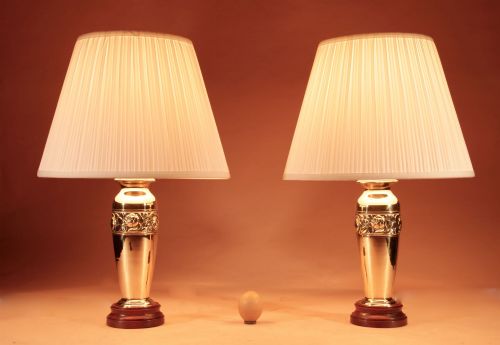
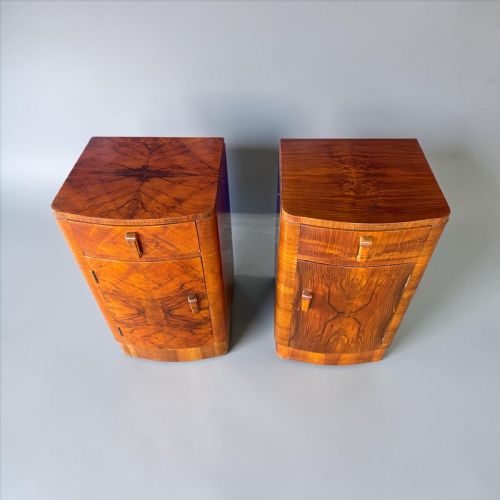



1930s Side Table Pair
These 1930s side table pair pieces bring matched symmetry and period geometry to a room, offering practical surface space alongside distinctive design.
1930s Side Table Pair
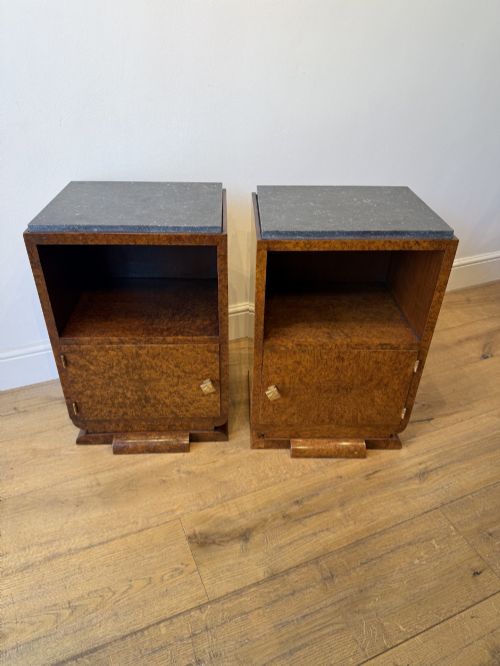
A 1930s side table pair provides symmetrical surface space and storage, frequently taking the form of bedside cabinets, chests, or low sofa tables. These matching items deliver a balanced aesthetic that single tables cannot achieve.
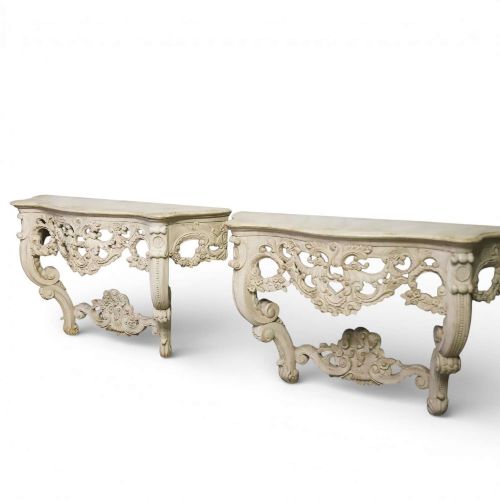
The selections encountered here span English, French, and Italian workshops, reflecting international tastes of the period. Buyers most frequently meet bedside cabinets and compact tables designed for domestic use.
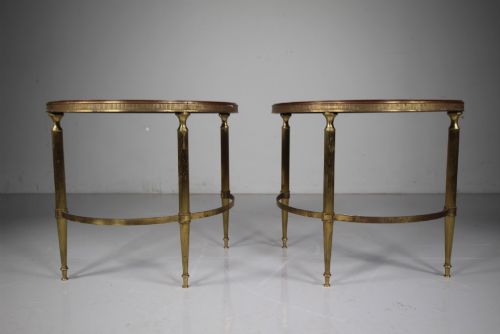
Makers utilised diverse woods alongside metal and glass, ensuring these matched sets served both decorative and utilitarian functions in period interiors. The forms range from streamlined modernist tiers to ornate revival curves.
Materials and construction methods
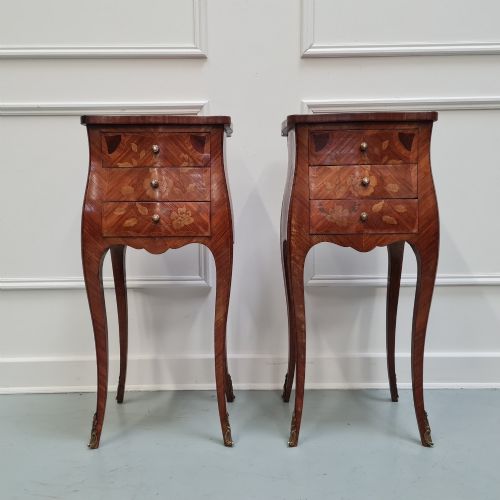
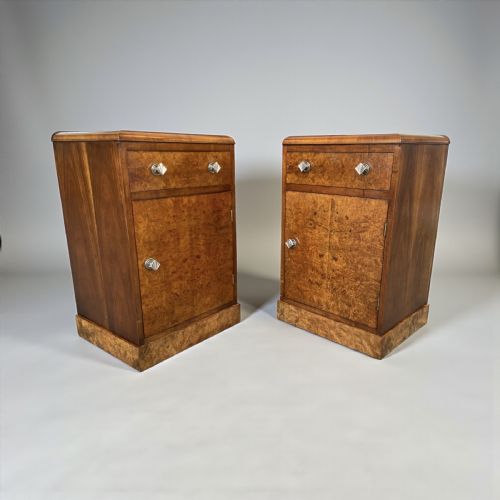
Cabinetmakers constructed these pieces using solid timbers and decorative veneers such as walnut, burr walnut, kingwood, and satinwood, often applied to interior carcases. Brass, chrome, and cast bronze provided structural supports and decorative trims.
Surface treatments included polished wood veneers, antique white finishes, and inset marble or mirrored glass tops. Joinery combined traditional cabinetry techniques with modernist metal framing.
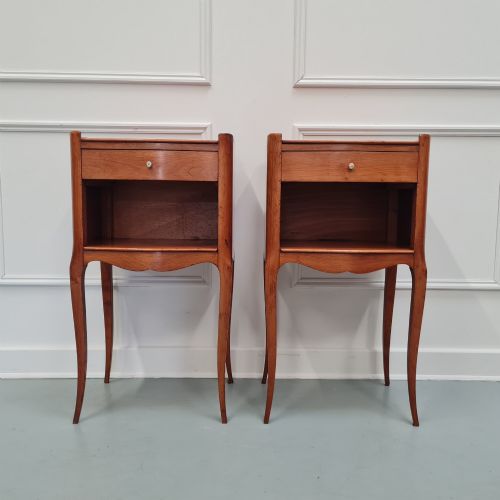
The furniture styles represented in these matches range from Art Deco geometry to French Louis XV revival curves.
Distinctions in quality and execution
Quality rests upon the selection of decorative veneers and the precision of the matching timber grain across both items in a set. Superior examples exhibit continuous grain patterns and careful bookmatching.
The integration of secondary materials such as marble, mirrored glass, or cast brass hardware dictates the refinement of the piece. Master ateliers employed heavier gauges of metal and finer parquetry than commercial workshops.
Gilbert Rohde·Maurice Adams·Hille
The 1930s Side Table Pair Glossary
- Art Deco
- A design style characterised by sleek geometric shapes, streamlined forms, and stylised ornamentation popular in the interwar period.
- Burr walnut
- A figured timber harvested from the burl growths of walnut trees, yielding intricate swirling grain patterns highly prized for veneer work.
- Kingwood
- A dense, heavy exotic hardwood with rich purple-brown tones, frequently utilised in fine French cabinetmaking.
- Demi-lune
- A half-moon shape applied to console tables and small cabinets designed to sit flush against a wall.
- Satinwood
- A pale, lustrous timber native to India and Sri Lanka, valued for its golden sheen and smooth texture.
1930s Side Table Pair: Frequently Asked Questions
What defines a 1930s side table pair?
A 1930s side table pair consists of two matching small tables or cabinets produced during the interwar decades, sharing identical materials, dimensions, and stylistic details.
They were typically manufactured for use as bedside companions, sofa tables, or display units, offering functional surface space with decorative symmetry.
How were these tables used originally?
These matched pieces served primarily in bedrooms as bedside cabinets to hold lighting and personal items, or in reception rooms as lamp and urn stands.
Their dual construction provided balance on either side of a bed or fireplace, reflecting the formal interior arrangements of the era.
How do I identify Art Deco pieces?
Art Deco items are recognised through their geometric symmetry, clean vertical lines, and minimal ornamentation compared to earlier revival styles.
Makers achieved this look through contrasting wood veneers, mirrored glass panels, and streamlined metal mounts in brass or chrome.
What woods should I expect to find?
Listings feature a variety of native and exotic timbers, with walnut and burr walnut appearing alongside kingwood, satinwood, cherry, and elm.
Many of these woods were sliced into thin veneers to create decorative geometric patterns across the top and drawer fronts.