



Curved Wood Side Tables
Curved wood side tables bring organic lines and rich timber grains into a room, spanning periods from Georgian design through to Art Deco.
Curved Wood Side Tables
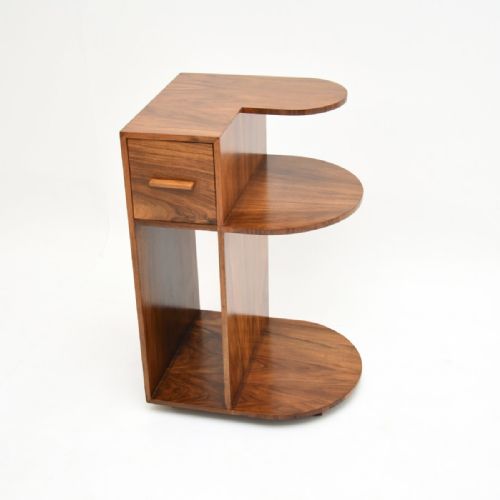
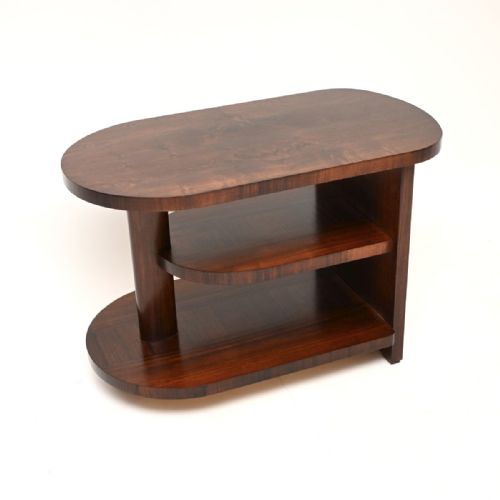
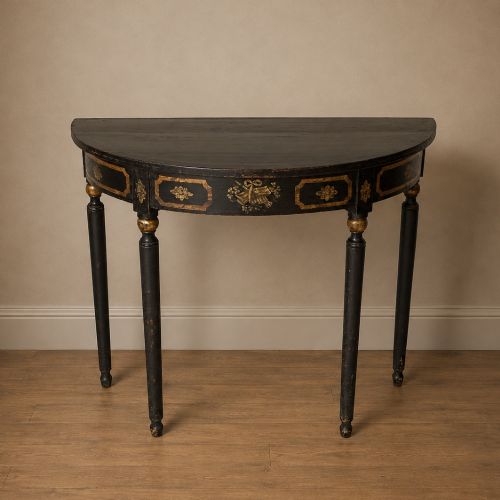
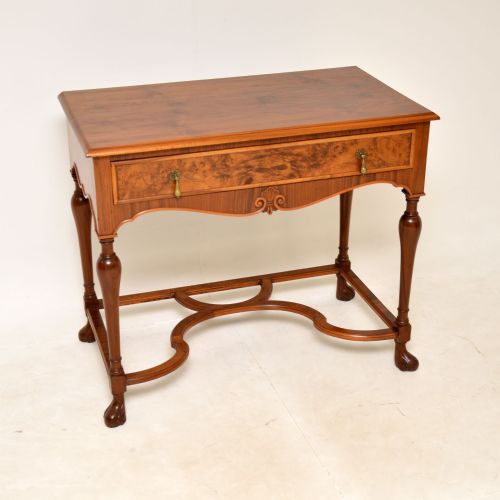
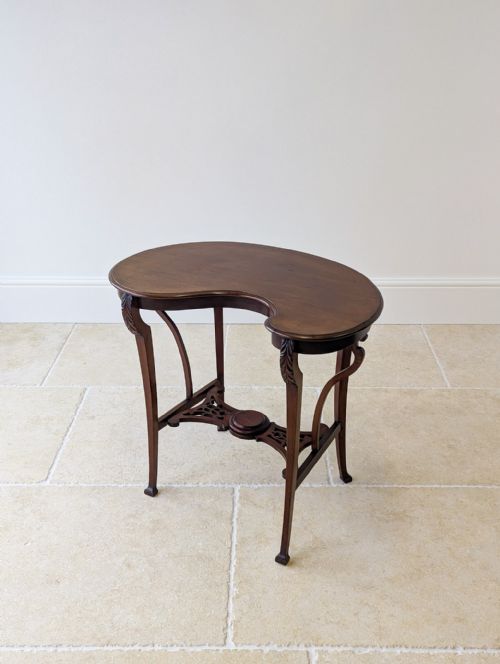
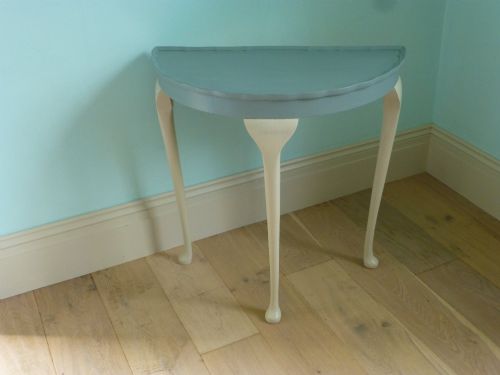
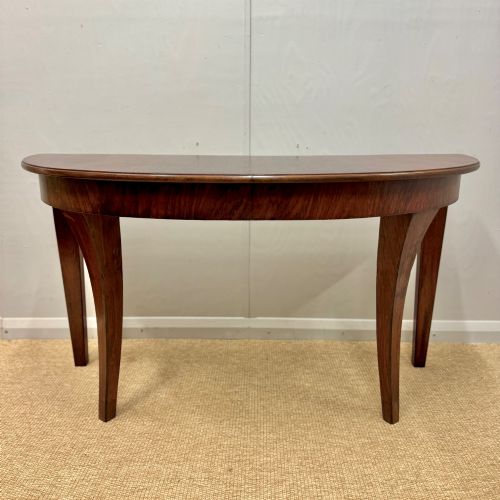
Curved wood side tables encompass a variety of forms including demi-lune consoles, kidney-shaped writing pieces, and round occasional tables. When exploring curved wood side tables, pieces from the Art Deco period and the nineteenth century appear frequently, alongside Georgian and Edwardian examples.
The selection ranges from smaller bedside tables and coffee tables to large console tables designed for hallways and reception rooms. Makers utilised shapes such as bowed fronts and serpentine edges to soften the geometry of domestic spaces.
Materials and construction methods
Cabinetmakers constructed these tables using solid timbers and decorative veneers such as mahogany, walnut, rosewood, satinwood, and burr maple. Ebonised wood and painted finishes also feature across various pieces, sometimes combined with brass fittings.
Curving the wood required specialised techniques such as steam bending or laminating thin layers over moulds. Marquetry inlay, parcel gilding, and marble inserts frequently decorate the surfaces of these items.
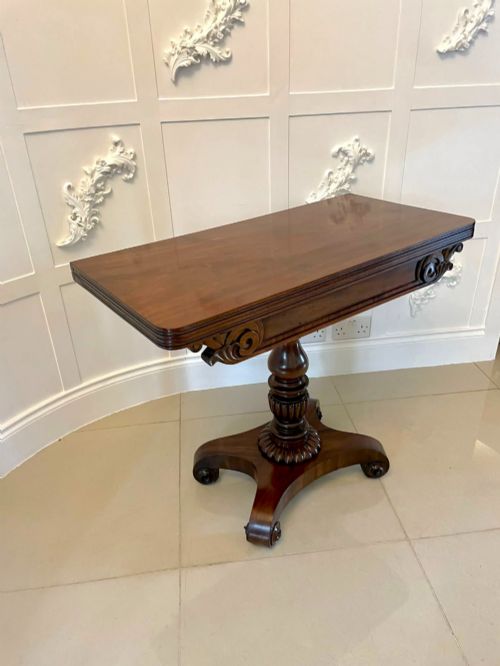
A triangular bentwood card table from around 1900 proves geometry can bend to any whim.
Distinguishing quality in construction
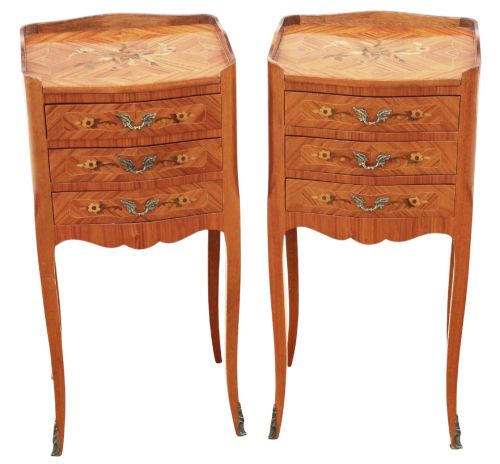
Quality rests in the precision of the curved joints and the selection of figured wood grains, such as burr walnut or figured mahogany. Superior pieces display seamless matching of veneers across bowed and serpentine fronts.
The integrity of the structural frame beneath the curved surface dictates longevity. Examples retaining original brass feet, marquetry details, and period-appropriate surface finishes demonstrate higher craftsmanship.
Gilbert Rohde·The Hille Furniture Company·Thonet·Fischel
The Curved Wood Side Tables Glossary
- Demi-lune
- Half-moon shape, commonly applied to console tables designed to stand flat against a wall. This profile became particularly popular during the Georgian and Art Deco periods.
- Serpentine
- A line curving inward centrally and outward at the ends, creating a gentle wave effect. Cabinetmakers utilised this contour on the fronts of chests and tables.
- Marquetry
- The art of applying pieces of veneer to a structure to form decorative patterns and pictures. Craftsmen employed contrasting timbers to achieve tonal depth.
- Bentwood
- Wood shaped by applying steam and pressure to force it into curved forms. This technique defines the output of makers like Thonet.
- Pembroke table
- A small table with hinged drop flaps on either side, often featuring a drawer. Georgian versions frequently display tapered legs and satinwood decoration.
Curved Wood Side Tables: Frequently Asked Questions
What periods do these tables come from?
The selection spans from the eighteenth century through the Victorian and Edwardian eras into the Art Deco period of the 1930s. Each era brought distinct stylistic interpretations to curved furniture.
Georgian and Regency pieces lean towards classical symmetry, whereas Art Deco examples embrace bold, streamlined curves in walnut and rosewood.
Where were these tables placed originally?
Console and demi-lune versions stood against walls in entrance halls and formal reception rooms. Smaller occasional and coffee tables served sitting areas.
Bedside tables and lamp tables functioned as practical bedside or corner supports in bedrooms and parlours.
How do I care for wood surfaces?
Maintain polished wood by keeping tables away from direct sunlight and sudden temperature changes. Use dry cloths for routine dusting.
Apply high-grade beeswax sparingly to nourish the timber and preserve the natural sheen of mahogany, walnut, or satinwood.
How do I identify Art Deco pieces?
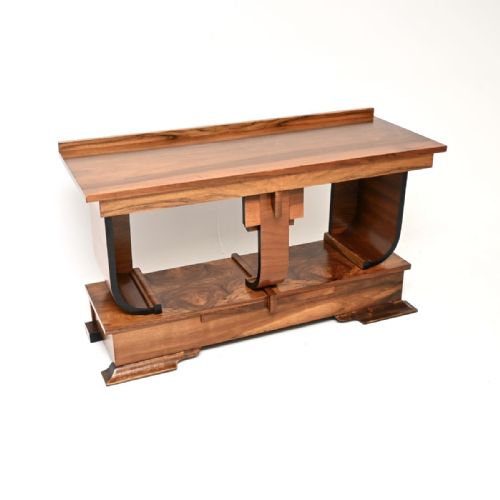
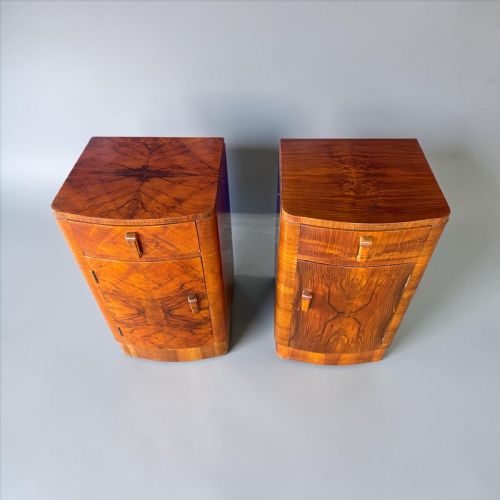
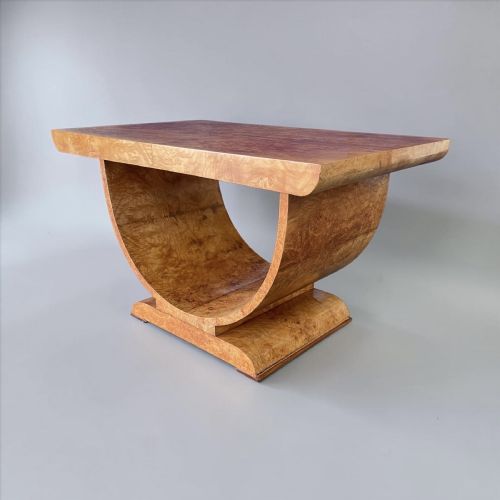
Art Deco pieces from the 1930s often feature striking figured walnut, burr maple, or rosewood veneers. The designs emphasise clean, sweeping curves without traditional ornamentation.
Pieces by specific makers like Gilbert Rohde or the Hille Furniture Company exemplify this modernist approach.