


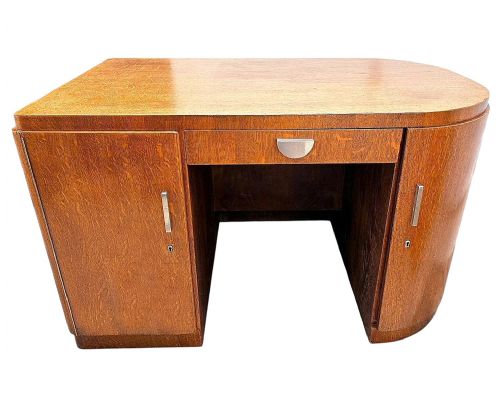
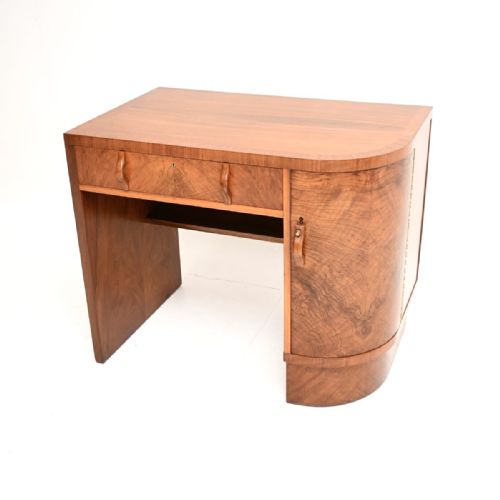
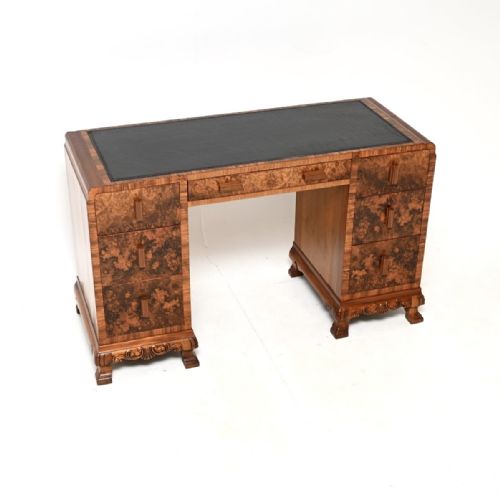

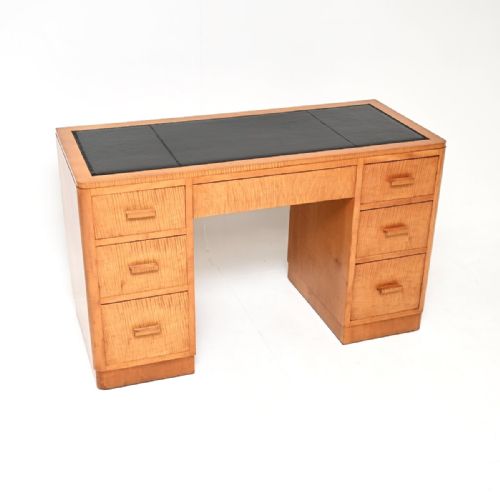

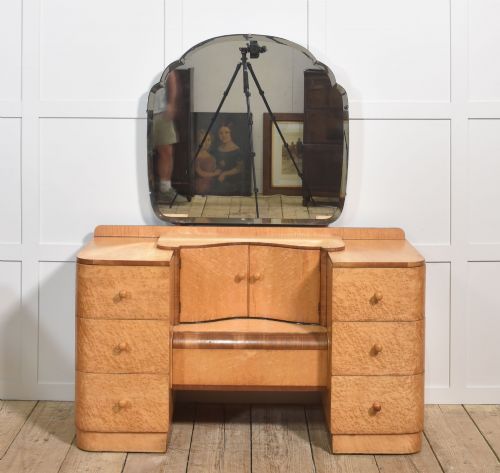
1930s Pedestal Desk
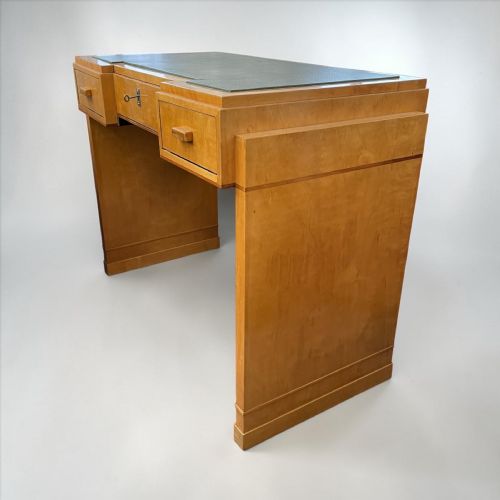
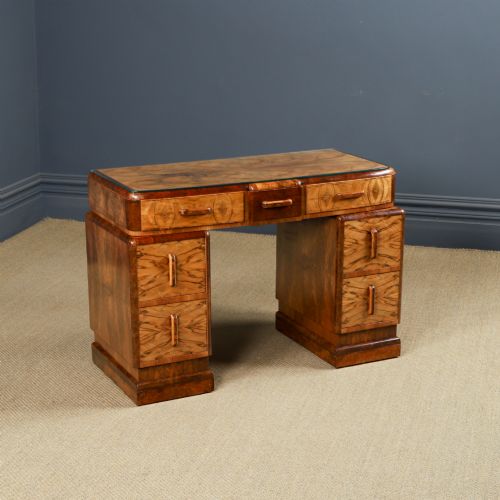
A 1930s pedestal desk brings architectural modernist lines and figured timbers into a home office.
1930s Pedestal Desk
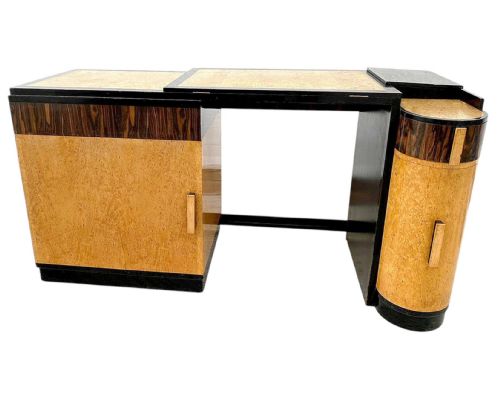
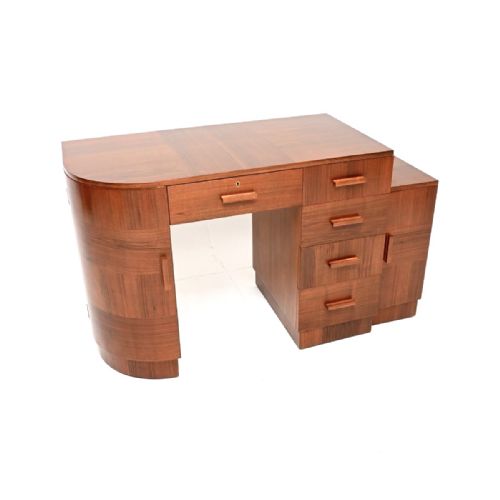
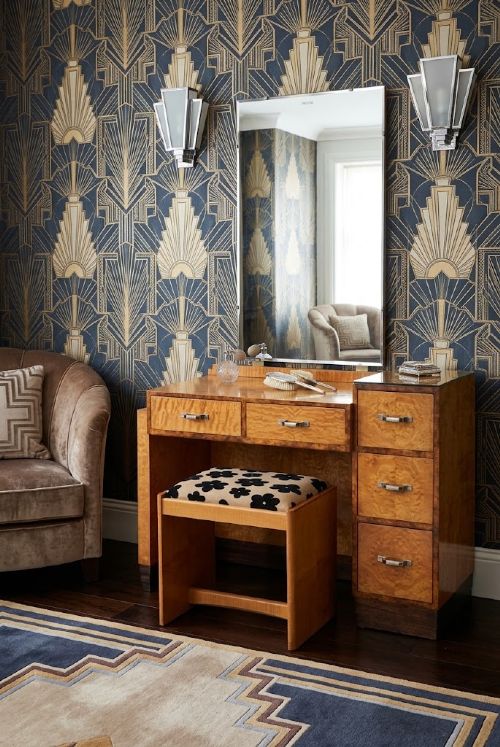
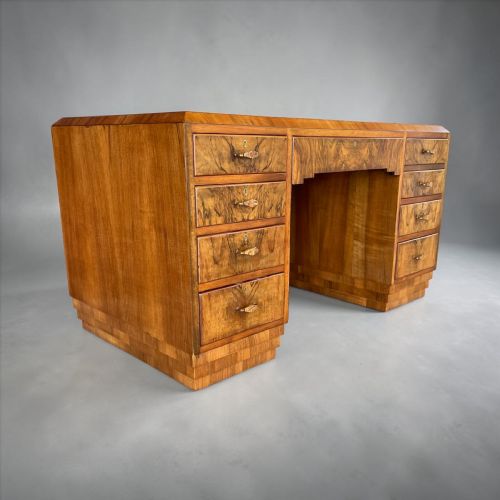
A 1930s pedestal desk comprises a central writing surface flanked by banks of drawers, designed with the clean geometry characteristic of the period. These forms emerge primarily from the Art Deco and interwar movements, though related pieces display influences from the Cotswold School and Swedish Grace.
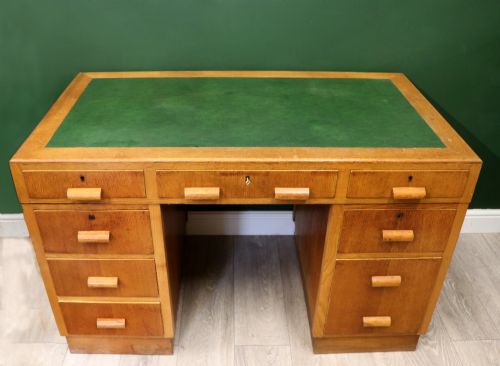
The version most commonly met on this page is constructed from walnut or burr walnut, often complemented by inset leather writing surfaces and polished metal details. Alongside traditional office desks, the selection includes writing tables and related twin-pedestal configurations produced during the 1930s, 1920s, and Edwardian eras.
How they were made
Makers of the period utilised figured and burr timbers such as walnut, oak, satin birch, birdseye maple, and rosewood, applying them as veneers over solid secondary woods to create striking grain patterns. Glass tops and elements of brass, white metal, and parchment appear alongside traditional wood construction.
Joinery techniques balance utilitarian office requirements with modernist decorative principles, incorporating clean architectural pedestals and two-sided configurations. Leather is frequently tooled and fitted into the writing surface as a contrasting tactile element.
1930s Pedestal Desk Retail Price Guide 2026
Typical asking prices for 1930s pedestal desk among the pieces listed under this phrase on Sellingantiques today, from the lower quarter to the upper quarter. They describe what is for sale here now, not the wider market.
An elusive mystery clock ticks quietly among the desks, guarding the exact method by which its hands move without visible connection.
What varies in quality
Quality rests principally in the selection and matching of wood veneers, where symmetrical burr walnut or figured maple displays a deliberate visual rhythm across the pedestals and drawers. Lesser examples rely on plain timber surfaces with minimal grain movement.
Construction integrity and the refinement of hardware distinguish standard production furniture from pieces associated with notable designers and workshops. The precision of the joinery and the treatment of secondary materials like glass and metal indicate the level of care invested in the piece.
Heal's·Betty Joel·Heal & Sons·Étienne Kohlmann·Maurice Adams·Harry and Lou Epstein
The 1930s Pedestal Desk Glossary
- Pedestal desk
- A freestanding writing table supported by two vertical banks of drawers rather than four separate legs. This format provides substantial storage capacity while maintaining a formal presence in an office.
- Burr walnut
- A timber harvested from walnut tree growths, producing swirling, intricate grain patterns highly prized for veneer work. It defines the surface aesthetic of many high-end pieces from this era.
- Art Deco
- A design style dominant in the 1920s and 1930s characterised by sleek geometric shapes, stylised motifs, and modern industrial materials. It represents the predominant aesthetic found across these listings.
- Cotswold School
- An arts and crafts inspired movement focusing on traditional craftsmanship and visible construction details in solid wood furniture. Pieces from this tradition favour honest joinery over applied surface ornament.
- Satin Birch
- A pale, lustrous hardwood utilised for its bright grain and reflective qualities in modernist cabinetry. It offers a distinct visual contrast to darker walnut and rosewood timbers.
1930s Pedestal Desk: Frequently Asked Questions
What is a pedestal desk?
A pedestal desk is a heavy writing desk featuring two independent columns of drawers supporting the main work surface. This layout creates an enclosed workspace with substantial storage flanking the user.
Such configurations became standard for executive offices and studies during the interwar decades, combining practical drawer capacity with an imposing architectural profile.
How do I identify a 1930s desk?
Identification relies on observing characteristic modernist geometry, stepped architectural profiles, and the widespread use of figured veneers like burr walnut. These pieces often discard Victorian ornamentation in favour of clean, streamlined silhouettes.
Makers' labels or stamps inside the drawer boxes frequently confirm the period of manufacture and occasionally point to specific workshops.
Are these desks suitable for daily work?
These desks were built to serve as functional office furniture and remain robust enough for daily use with modern equipment. The large twin-pedestal layouts provide ample room for contemporary writing and administrative tasks.
Care should be taken to protect original leather writing surfaces and polished wood finishes from excessive moisture and heat.
What woods were used on desks?
Makers predominantly utilised walnut, burr walnut, oak, and satin birch, often applied as decorative veneers over sturdy carcases. Exotic woods like rosewood and birdseye maple also appear on select examples.
Secondary materials such as glass, brass, and parchment frequently complement the primary timber structure.