

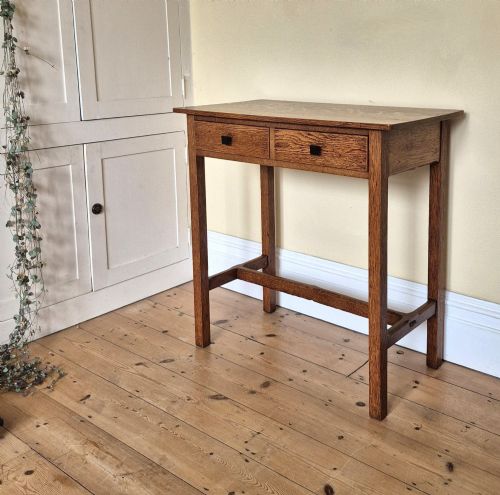
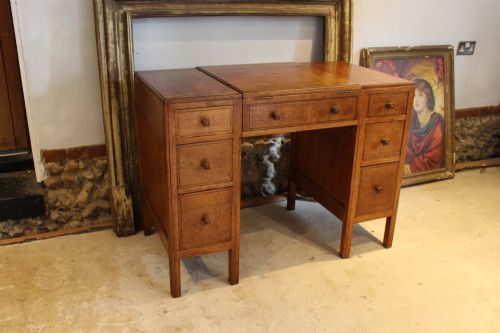
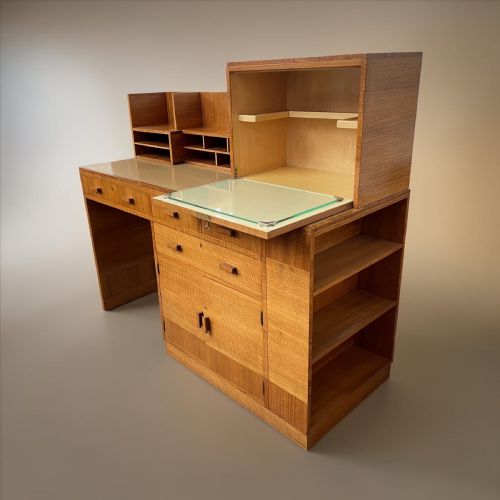
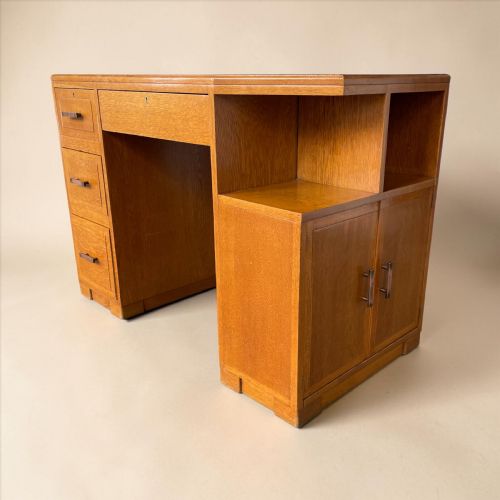


1930s Oak Writing Table
A 1930s oak writing table offers clean geometric lines and durable craftsmanship, making it a practical centrepiece for any study.
1930s Oak Writing Table
When you search for a 1930s oak writing table, you encounter practical furniture designed for domestic study or office work during the early twentieth century. These pieces combine utilitarian function with the modernist aesthetic developments of the period.
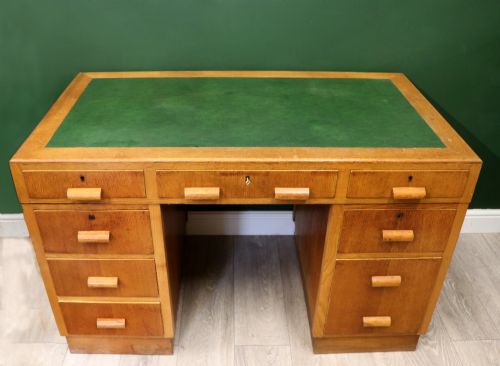
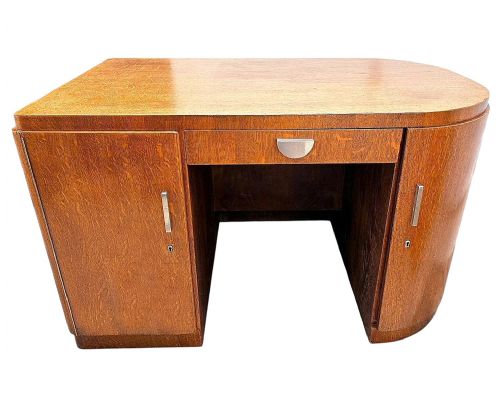
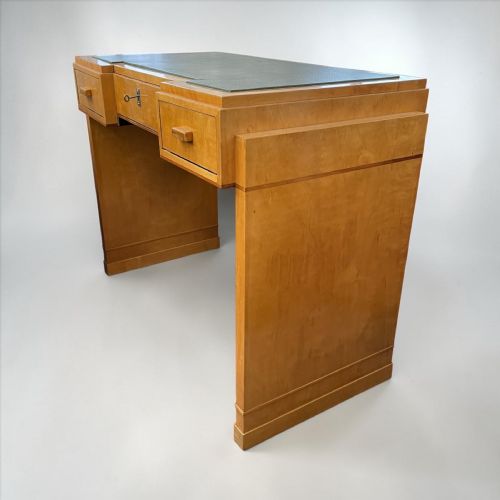
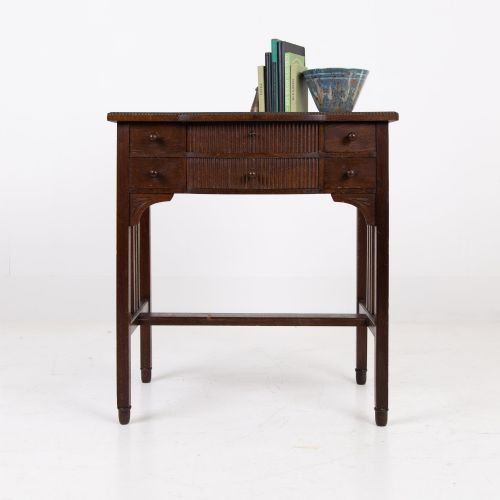
The selections available here lean heavily into Art Deco and Arts and Crafts styles, showing the transition from traditional craftsmanship to streamlined modernism. Desks, console tables, side tables, and pedestal office desks form the core of what you will find.
Examples originate from English and French workshops, occasionally bearing makers' labels or attributions to prominent firms. Oak serves as the primary timber, sometimes paired with contrasting materials like leather or chrome.
How they were made
Construction relies heavily on solid oak and oak veneers, selected for durability and pronounced grain patterns. Workshops employed traditional joinery alongside modern framing techniques to support multiple drawers and two-sided configurations.
Metal elements such as chrome, brass, and standard hardware are integrated into the designs to accent the geometric lines typical of Art Deco styling. Inset surfaces often feature leather writing pads, while related forms incorporate glass tops or mirror panels.
1930s Oak Writing Table Retail Price Guide 2026
Typical asking prices for 1930s oak writing table among the pieces listed under this phrase on Sellingantiques today, from the lower quarter to the upper quarter. They describe what is for sale here now, not the wider market.
Materials documented across the inventory include oak, leather, metal, chrome, birch, glass, and brass.
What varies in quality
The standard of a piece is determined by the refinement of its modernist proportions and the integration of secondary materials like chrome or brass. Pieces bearing documented attribution or original makers' labels generally represent more considered design execution.
Wood selection and drawer construction dictate durability, distinguishing standard utilitarian output from pieces commissioned through major retail furnishers. The condition of inset leather and metal hardware significantly affects the overall integrity of the object.
Hubert Simpson of Kendal·Heal's·Heal & Sons·Étienne Kohlmann
The 1930s Oak Writing Table Glossary
- Art Deco
- A design style characterised by sleek geometric shapes, streamlined forms, and modern industrial materials. It dominated decorative arts throughout the interwar period.
- Pedestal desk
- A heavy freestanding writing table featuring two supporting banks of drawers beneath the main work surface. This form provides substantial storage capacity.
- D-end
- A table end shaped in a semi-circle resembling the letter D. This configuration often appears on twin-pedestal or two-sided office desks.
- Veneer
- A thin layer of superior timber applied over a secondary wood base. It allowed makers to display attractive grain patterns without using solid hardwood throughout.
1930s Oak Writing Table: Frequently Asked Questions
What defines a 1930s writing table?
These tables are defined by their functional workspace layout, typically featuring integrated drawers and sturdy oak construction.
They reflect the transition toward cleaner modernist lines while retaining traditional timber craftsmanship.
Where were these tables made?
Originating primarily from English and French workshops, these pieces represent diverse regional interpretations of interwar design.
Some examples carry specific attribution to prominent London retailers or continental designers.
How do I incorporate one into a modern room?
A compact oak writing table functions effectively as a standalone desk in a home office or living space.
Pairing the piece with minimalist seating allows the geometric oak framing and metal details to stand out.
How do Art Deco and Arts and Crafts styles differ?
Arts and Crafts pieces emphasise visible timber construction and traditional handicraft methods.
Art Deco designs favour streamlined symmetry, polished surfaces, and industrial materials like chrome.