


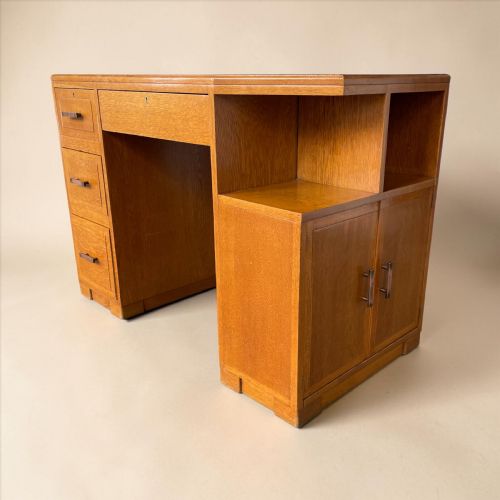


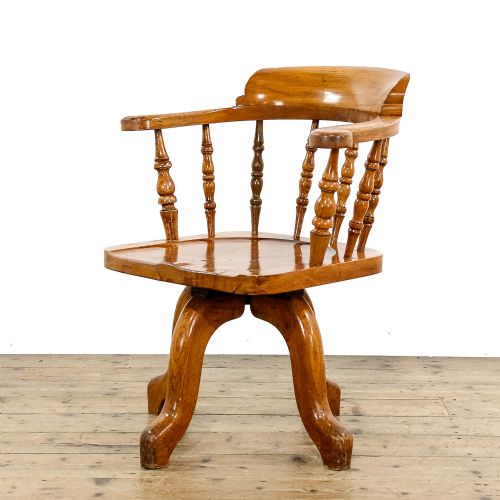

Warm Brown Office Desk
A warm brown office desk anchors a room with rich timber and history, offering a solid surface for daily work.
Warm Brown Office Desk
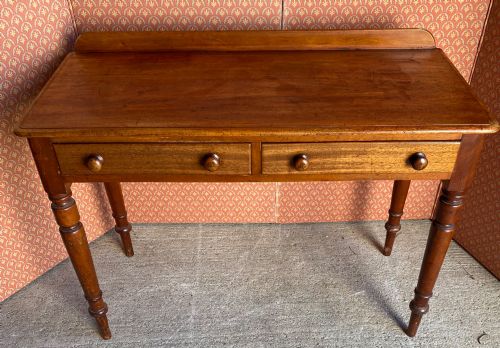
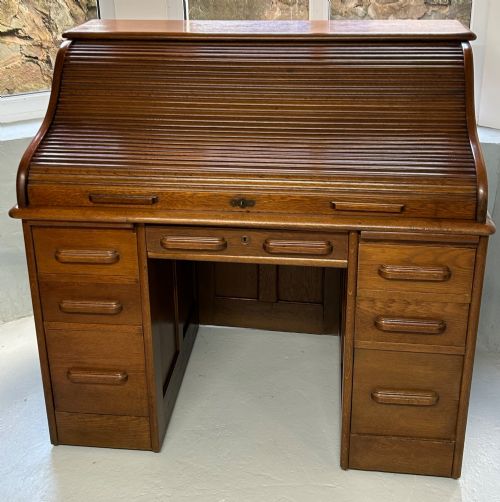
A warm brown office desk encompasses heavy writing tables, pedestal desks, and kneehole furniture designed for practical study and administrative tasks. These pieces arrive from various eras, including the eighteenth century, the Victorian period, and the early twentieth century.
Originating mostly from British workshops, these desks and chairs combine functional storage drawers with expansive writing surfaces. The materials lean heavily toward dark and medium hardwoods that display deep natural grain.
How they were made
Cabinet makers utilised dense timbers like mahogany, oak, walnut, beech, elm, and maple to build durable frames capable of enduring heavy daily use. Panels and drawer linings often incorporate secondary softwoods while primary surfaces display carefully selected veneers or solid boards.
Hardware elements such as brass handles, castors, and locking mechanisms provide structural reinforcement and functional movement to drawers and swivel seats. Joinery relied on traditional methods like dovetailing for drawers and mortise and tenon joints for chair frames.
Warm Brown Office Desk Retail Price Guide 2026
Typical asking prices for warm brown office desk among the pieces listed under this phrase on Sellingantiques today, from the lower quarter to the upper quarter. They describe what is for sale here now, not the wider market.
Listings feature timbers including mahogany, oak, walnut, beech, elm, ash, and pitch pine across pieces built from the eighteenth century to the twentieth century.
What varies in quality
Quality rests upon the selection of timber and the precision of the underlying joinery, particularly in the construction of drawer carcases and internal dividers. Finer examples display symmetrical grain patterns and substantial timber thickness without relying on excessive filler or poor repairs.
The condition of original working hardware, leather writing inserts, and swivel mechanisms dictates the level of craftsmanship preserved over time. Pieces retaining their original brasses and stable structural frames sit firmly at the higher end of the scale.
MAPLE AND CO·SHOOLBRED
The Warm Brown Office Desk Glossary
- Kneehole desk
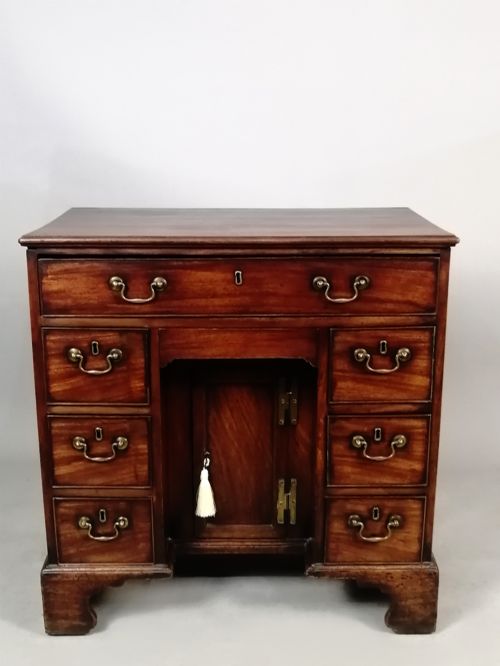
- A writing table featuring a central recessed space for the legs flanked by pedestals of small drawers. This form became popular during the eighteenth century and continued through the Victorian era.
- Pedestal desk
- A heavy freestanding writing desk supported by two banks of drawers running down to the floor. They often include leather insert tops and panelled sides.
- Smoker's bow
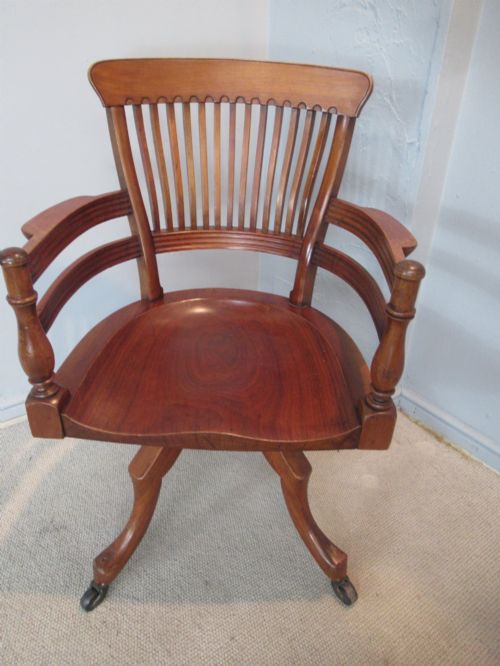
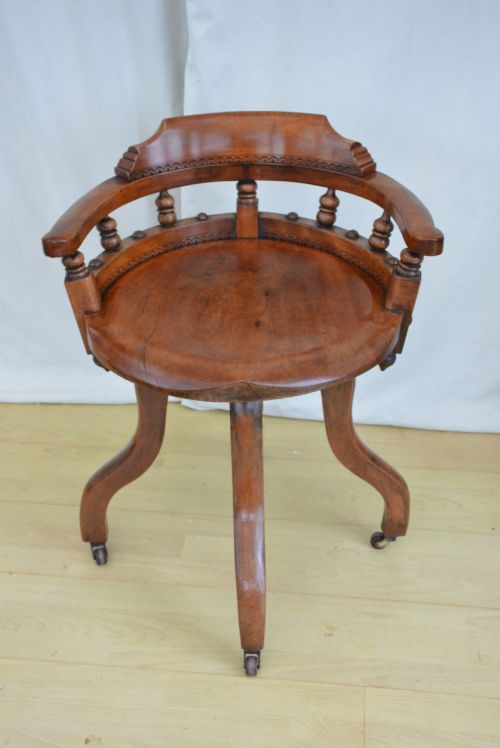
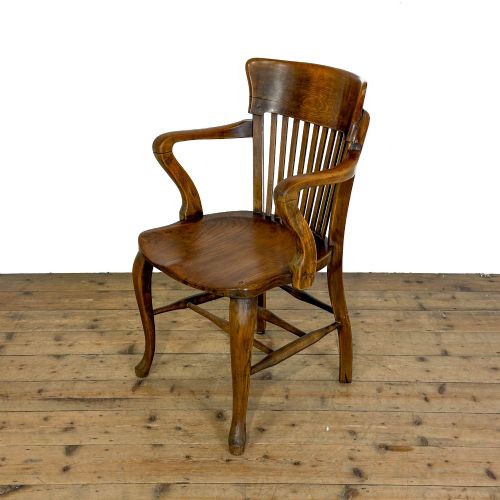
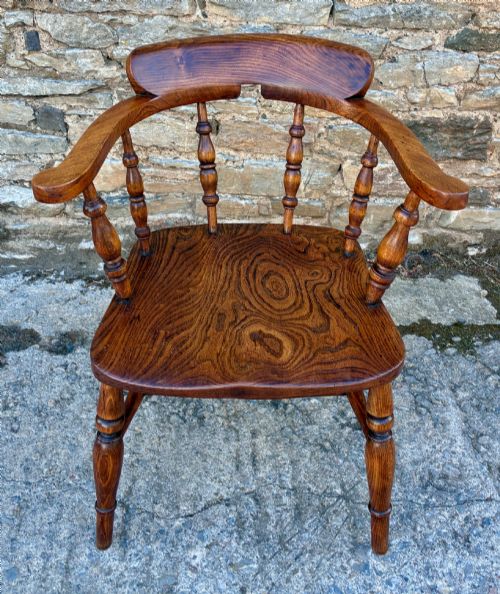
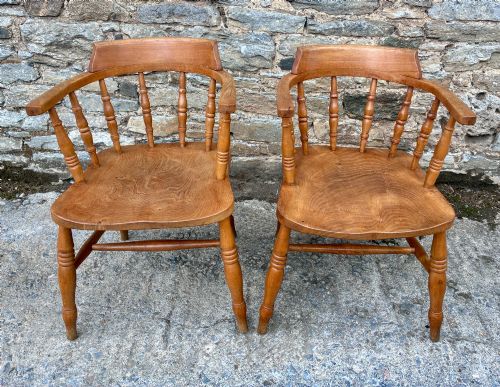
- A sturdy wooden armchair with a curved continuous backrail and turned spindles, commonly used at office desks during the nineteenth century. They are frequently built from elm and beech.
- Dovetail
- A traditional wood joint formed by interlocking wedge-shaped fingers that resist tension and pull-apart forces. It is commonly found on antique drawer construction.
- Captain's chair
- A low-backed wooden armchair designed for swivel mechanisms or fixed seating at a desk. These chairs usually feature steam-bent arm rails.
Warm Brown Office Desk: Frequently Asked Questions
What is a kneehole desk?
A kneehole desk is a traditional form of writing furniture featuring a central recess for the sitter's legs, flanked by two pedestals of drawers. These desks provide structured storage while maintaining a compact footprint against a study wall.
First developed in earlier centuries and continued through the Victorian period, these pieces balance decorative timber grain with practical drawers for paperwork and writing instruments.
How do I choose a chair for my desk?
Selecting a chair involves matching the height and style of your desk with a supportive antique seat, such as a captain's chair or a smoker's bow. These chairs offer curved backrests and sturdy wooden arms suited for long hours of seated work.
Many of these chairs utilise combinations of elm and beech for strength and flexibility in the bentwood rails, providing a comfortable posture that complements period writing furniture.
How do I date an antique desk?
Dating relies on observing the construction methods, such as hand-cut dovetails on drawer boxes, timber species, and stylistic details associated with periods like the Georgian or Victorian eras. Secondary woods and hardware also offer clues to the manufacturing decade.
Cabinet makers stamped or labelled certain pieces, though many rely on the physical characteristics of the timber and the evolution of hardware styles for proper chronological placement.
How do I care for a wood desk?
Maintaining a wooden desk involves keeping it away from direct heat sources and sudden humidity changes to prevent timber movement or veneer cracking. Regular dusting with a soft cloth preserves the natural finish without building up heavy chemical residues.
Leather writing surfaces benefit from occasional gentle cleaning and conditioning to maintain flexibility, avoiding harsh modern solvents that strip the original patina.