
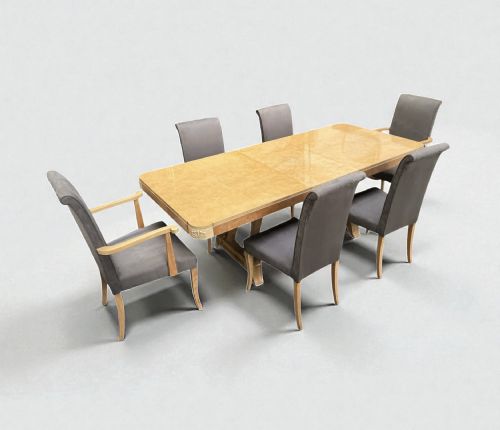


1930s Dining Table Chairs
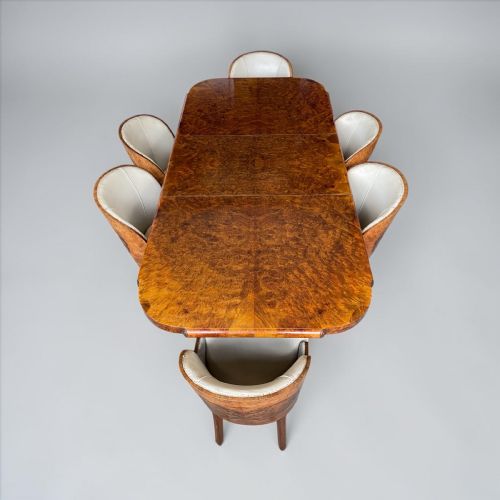
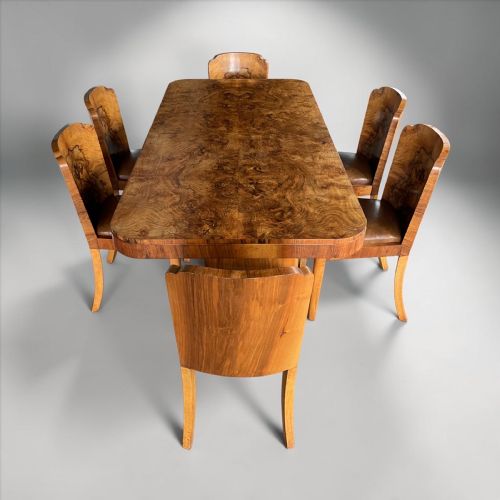
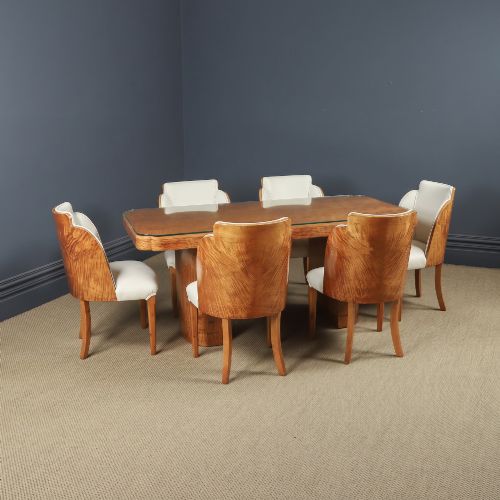
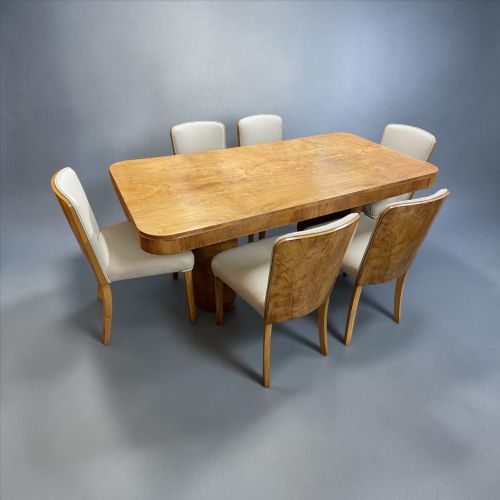
These 1930s dining table chairs bring striking Art Deco geometry and rich veneers straight into the modern dining room.
1930s Dining Table Chairs
These 1930s dining table chairs sit alongside matching tables as part of substantial dining suites, mostly designed in the distinct Art Deco style. You will most frequently meet complete sets designed to seat six diners, though larger eight-seater configurations also appear.
The forms typically emerge from the 1930 period, drawing on related pieces from the 1920s, Edwardian eras and occasional 1940 pieces. Makers grouped these chairs into suites incorporating side chairs alongside larger dining tables.
How they were made
Cabinetmakers constructed these frames from timber, incorporating decorative veneers such as burr walnut, birds eye maple, satinwood, calamander, macassar and ebony to achieve striking grain patterns. The woodwork relies on clean architectural lines that define the Art Deco movement.
Upholstery forms a vital component, with makers utilising leather and various traditional fabrics for the seat pads and backs. Stamped maker marks occasionally identify the workshop origin directly on the wooden frame.
Listings feature dining suites spanning the 1920s, 1930s and 1940s, alongside Edwardian examples.
What varies in quality
The choice of exotic timber veneer dictates much of the visual hierarchy, with burr maple, macassar ebony and satinwood sitting at the upper end of the scale. Figured grain selection and balanced matching across a suite of six or eight chairs show the maker's hand.
Attribution to documented workshops elevates certain sets above anonymous production pieces. The integration between the dining table and its accompanying chairs defines the cohesion of the suite.
Maurice Adams·Harry and Lou Epstein·Hille
The 1930s Dining Table Chairs Glossary
- Art Deco
- A design style characterised by streamlined geometric forms, sleek lines and rich materials, prominent during the interwar period. It influences the silhouette of nearly every chair in this selection.
- Burr Walnut
- A prized timber cut from the burl growth of a walnut tree, producing swirling, intricate grain patterns. Makers utilised this veneer on high-end dining suites.
- Birds Eye Maple
- A figure in maple timber that resembles tiny, swirling eyes, highly valued for decorative cabinetwork. This material creates a pale, luminous surface on dining furniture.
- Side Chair
- An upright chair without arms, designed specifically for placement around a dining table. These form the majority of the seating found within larger dining suites.
1930s Dining Table Chairs: Frequently Asked Questions
How many chairs come in a set?
Most suites provide seating for six diners alongside a matching dining table. Larger configurations accommodate up to eight or eleven people.
Individual side chairs also appear independently from complete dining suites.
What woods were used for these chairs?
Makers utilised timber frames adorned with exotic veneers including burr walnut, birds eye maple, satinwood, calamander, macassar and ebony. These figured woods defined the Art Deco aesthetic.
Plain timber and dark walnut also form the structural foundation of various suites.
Are these chairs part of dining suites?
The majority of listings present these chairs paired directly with a matching dining table as a unified suite. Complete sets ensure consistent timber selection and stylistic harmony across the room.
Individual seating pieces occasionally appear without their original table.
How do I identify maker marks?
Certain workshops stamped their company names directly into the timber frame or upholstery backing. Stamps from makers like Hille provide definitive proof of origin.
Many period pieces remain unlabelled while retaining distinct stylistic construction methods.