


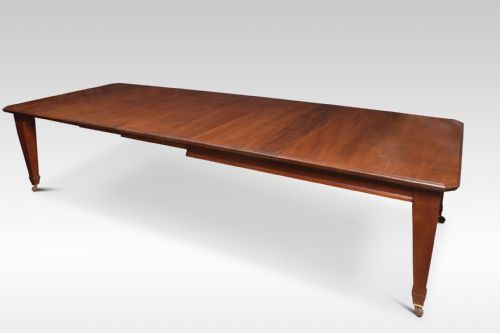


Walnut Extendable Dining Table
A walnut extendable dining table offers rich grain and practical size for hosting, grounding a room with warmth and enduring character.
Walnut Extendable Dining Table
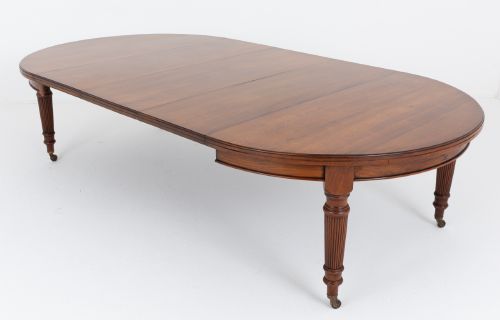
A walnut extendable dining table brings rich timber and practical versatility to a dining room, accommodating everyday meals and larger gatherings with equal ease. The selections span centuries of design, from eighteenth-century gateleg and drop-flap formats to nineteenth-century pull-out mechanism tables and twentieth-century pedestal designs.
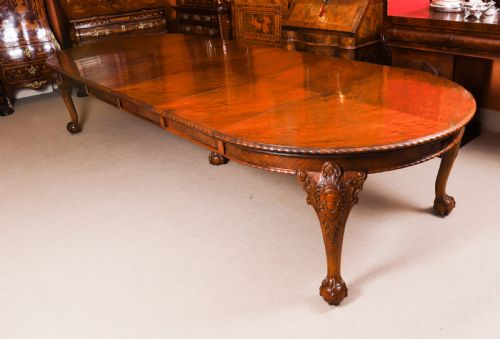
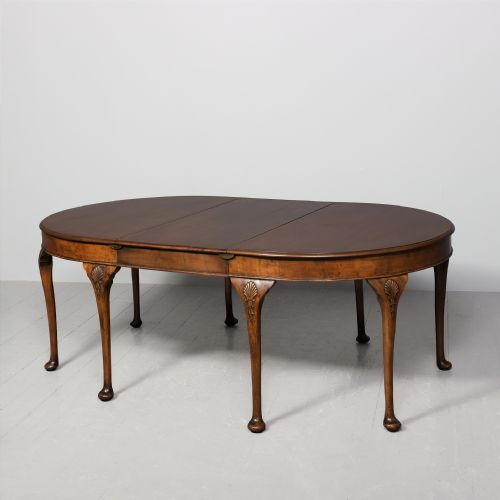
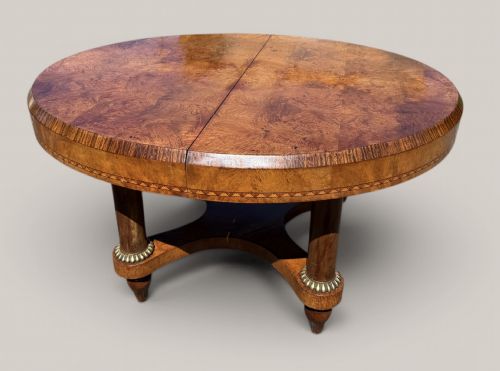
The versions most commonly met on this page include Victorian pull-out tables with extra leaves and twentieth-century iterations influenced by Georgian, George II, and Art Deco styles. Burr walnut and figured walnut feature prominently, showing distinct grain patterns across surfaces supported by oak and mahogany framework.
Makers and retailers such as Maple & Co and Whytock & Reid of Edinburgh appear alongside continental examples, demonstrating the wide scope of craftsmanship applied to this form. Buyers encounter formats ranging from three-leaf extending tables to drop-flap and gateleg variations designed to save space when not fully extended.
How they were made
Makers utilised solid walnut and applied burr walnut or figured walnut veneers over secondary timbers such as oak and mahogany to create striking surface patterns. Timber selection dictated the visual weight of the top, balancing rich dark tones with lighter grain movement.
Mechanical ingenuity defined the extending function, employing wooden runners, pull-out mechanisms, and drop-flap hinges that allowed leaves to be added or folded away securely. Brass fittings frequently reinforced joints and castors, supporting the substantial weight of extended leaves.
Carved bases, pedestals, and cabriole legs required skilled hand-carving to shape solid walnut into the curves associated with Queen Anne Revival and George II styles. Joinery relied on traditional methods, ensuring stability across centuries of expansion and contraction.
An eighteenth-century gateleg table hiding a single drawer proves our ancestors understood the eternal need to stash away stray cutlery.
What varies in quality
The depth of figure in the walnut veneer and the choice of primary timber set individual pieces apart, with burr and figured walnut demanding superior selection by the cabinetmaker. The matching of grain across added leaves demonstrates the care taken during construction.
The smoothness of the extending mechanism reveals the precision of the original engineering, distinguishing tables that operate effortlessly from those requiring heavy adjustment. Solid construction in the underframe and sturdy leg joints ensure the table remains stable when fully loaded.
Maple & Co·Whytock & Reid of Edinburgh·Jules Leleu
The Walnut Extendable Dining Table Glossary
- Burr walnut
- A figured wood grain obtained from walnut tree growths, prized for its swirling patterns. It is typically sliced into thin veneers for tabletops.
- Gateleg table
- A table with hinged leaves supported by swing-out legs that resemble a gate. This design allows the table to fold down compactly when not in use.
- Drop-flap table
- A table featuring hinged side flaps that drop down when unsupported. It provides adjustable surface area for smaller rooms.
- Pedestal table
- A table supported by one or more central pillars rather than four corner legs. This configuration allows for greater legroom around the perimeter.
- Pull-out extending table
- A dining table designed with internal runners that slide apart to accept one or more loose leaves. It increases seating capacity rapidly.
Walnut Extendable Dining Table: Frequently Asked Questions
How do I care for walnut veneer?
Walnut benefits from regular dusting with a soft cloth and occasional feeding with quality beeswax to nourish the timber. Avoid placing tables near direct heat sources to prevent veneer lifting.
Use heat mats and coasters to protect the polished surface from moisture rings and thermal shock.
How do I tell Victorian from Georgian tables?
Georgian tables often feature simpler gateleg or drop-flap constructions in solid timber, alongside early pedestal formats. Victorian examples frequently utilise complex pull-out runner mechanisms for multiple leaves.
Carving styles also shift, with George II styles showing distinct cabriole influences compared to later nineteenth-century proportions.
Can I seat eight people comfortably?
Tables featuring three leaves or large pull-out extensions easily accommodate eight or more diners when fully opened. The presence of pedestals rather than corner legs further improves seating arrangements.
Check the length of the table when fully extended against your dining room dimensions before seating guests.