


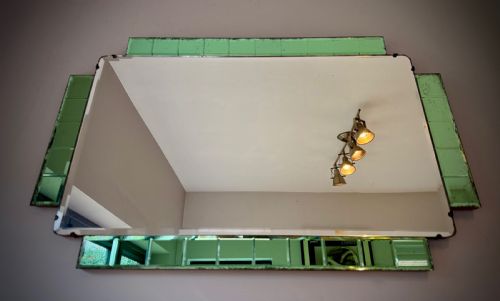


1930s Deco Glass Mirror
A 1930s deco glass mirror brings geometric clarity and reflected light into a room, capturing the modernist spirit of the interwar years.
1930s Deco Glass Mirror
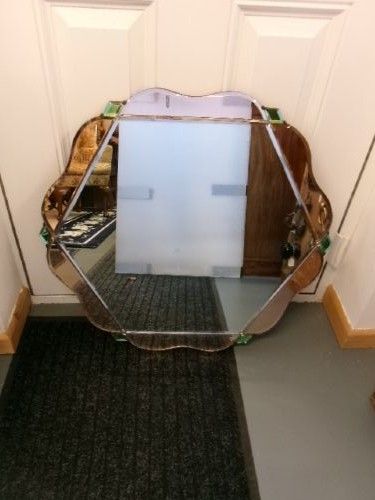
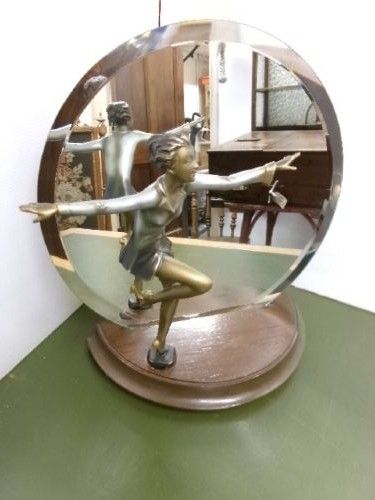
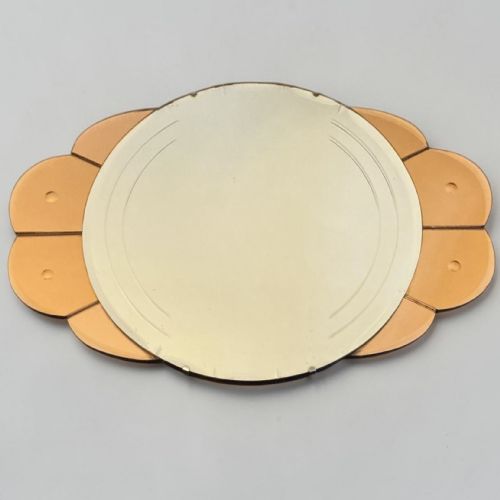
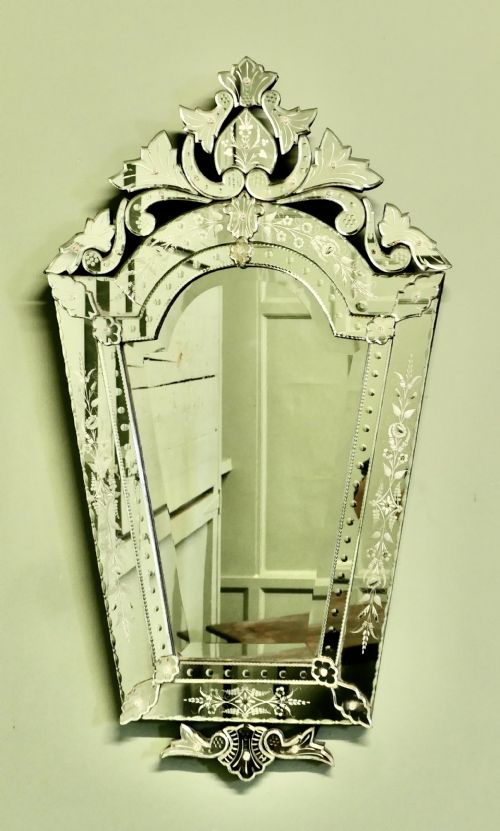
When searching for a 1930s deco glass mirror, buyers encounter wall-hanging plates, overmantel designs, and smaller vanity or dressing table pieces defined by distinct geometric lines and contrasting tinted glass sections.
The selections span round, circular, diamond, and rectangular formats, often utilising peach, blue, or green coloured glass panels alongside traditional clear mirror glass.
While the majority of items align with the 1930 and 1920 periods, French Art Deco and English interpretations dominate the forms, frequently incorporating bevelled edges and etched details.
How they were made
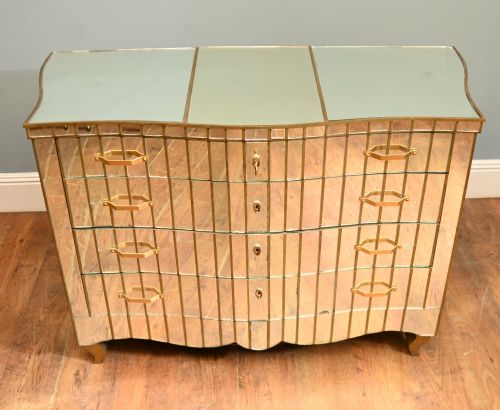
The construction relies heavily on mirrored glass and plate glass mounted onto wooden or metal backings, frequently utilising brass, chrome, or copper for structural supports and decorative accents.
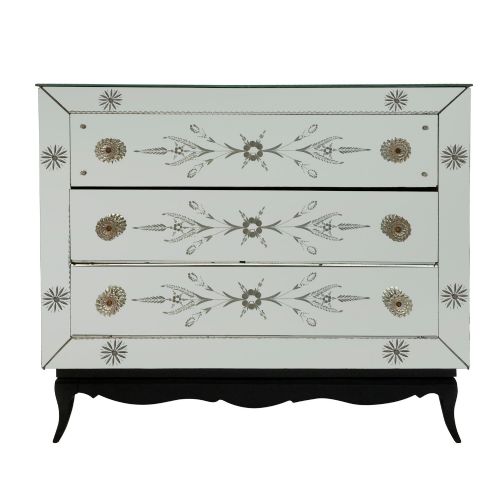
Craftsmen applied bevels to glass edges and employed etching techniques to create surface patterns, while coloured glass components in peach, blue, emerald green, and pink were assembled to form layered, multi-toned visual compositions.
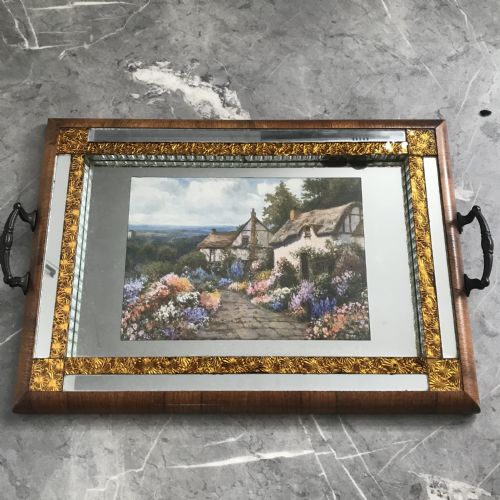
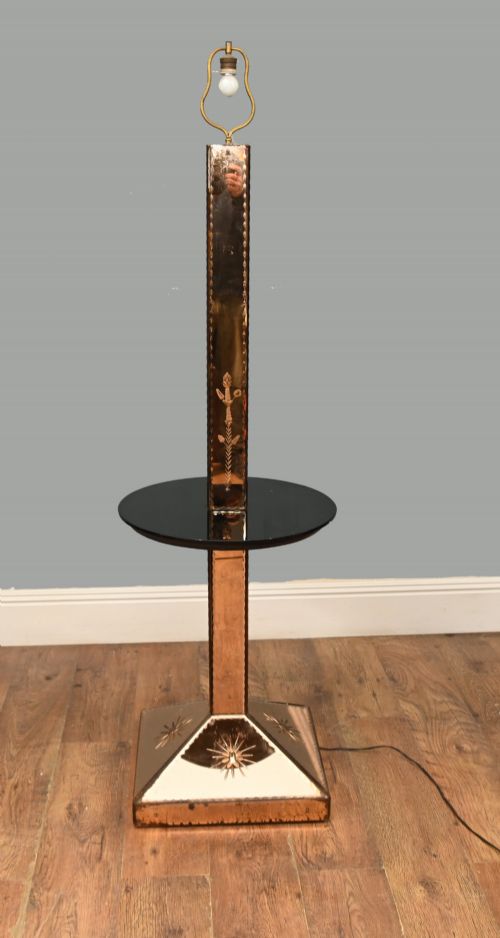
Objects span wall mirrors, cocktail trays, dressing tables, side tables, fire screens, and vending machine mirrors from the early twentieth century.
What varies in quality
Quality rests upon the complexity of the glass assembly, distinguishing simple frameless plates from multi-panel mirrors featuring contrasting coloured glass sections and intricate metal mounts.
The precision of the bevel work and the depth of the etching separate standard production items from finer examples, as do integrated functions such as mechanical clock movements or flanking light branches.
Smiths Clock Company
The 1930s Deco Glass Mirror Glossary
- Overmantel mirror
- A large horizontal mirror designed specifically to be hung above a fireplace mantelpiece. These pieces often span significant lengths to fill the wall space.
- Bevel
- An angled edge cut along the perimeter of the glass plate. This technique catches and refracts light to create a decorative framing effect without a physical border.
- Etched
- A surface decoration created by acid or abrasive methods to cut designs into the glass. It produces frosted patterns that contrast with the clear reflective areas.
- Girandole
- A decorative wall mirror that incorporates candle branches or electric lights attached to the frame. The reflective glass magnifies the illumination in the room.
- Veneer
- A thin layer of decorative wood applied to a backing material, such as walnut or mahogany. It provides rich grain patterns on frames and associated furniture pieces.
1930s Deco Glass Mirror: Frequently Asked Questions
How do I hang a heavy wall mirror safely?
Heavy wall mirrors require secure fixings anchored directly into structural wall studs or solid masonry using appropriate brackets.
Ensure the weight is distributed evenly across the frame to prevent distortion of the glass plate over time.
Where should I place an overmantel mirror?
Position an overmantel mirror centrally above a fireplace at a height that balances the proportions of the mantel and the room.
This placement reflects natural light from opposing windows and anchors the visual weight of the hearth.
How do I clean antique mirrored glass?
Clean antique mirrored glass gently with a soft microfibre cloth and a mild, ammonia-free cleaning solution sprayed onto the cloth rather than the glass.
Avoid spraying directly onto the edges or the back where moisture can seep behind the silvering and cause deterioration.
What is peach glass?
Peach glass is a tinted decorative mirror glass produced during the interwar period that yields a warm, rosy reflection.
It was frequently used alongside clear glass, copper, or brass to create contrasting geometric panels on Art Deco pieces.