






Frameless Glass Wall Mirror
These frameless glass wall mirror pieces deliver clean geometric lines and reflective depth to an interior scheme.
Frameless Glass Wall Mirror
A frameless glass wall mirror provides a reflective surface without a traditional timber or metal border, relying instead on the cut of the glass itself to define its silhouette. The selection spans the Victorian period through to the 1920 and 1930 decades, showcasing how domestic design shifted towards unadorned reflective planes.
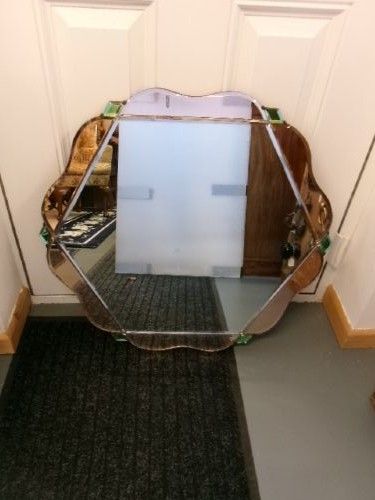
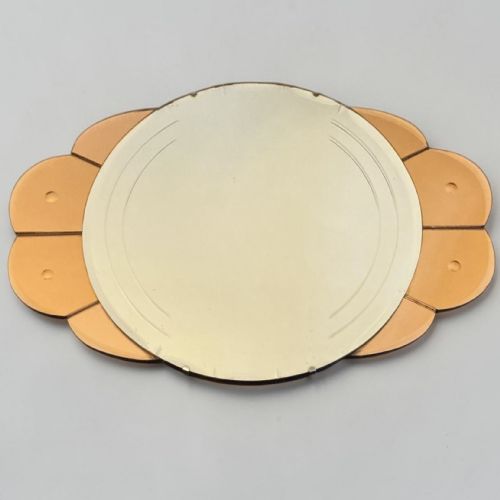
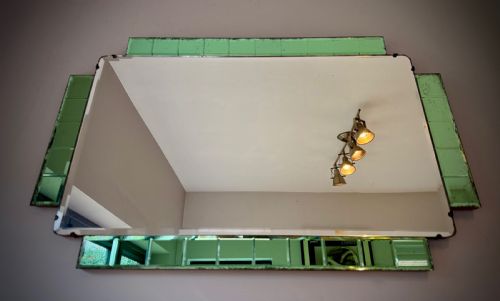
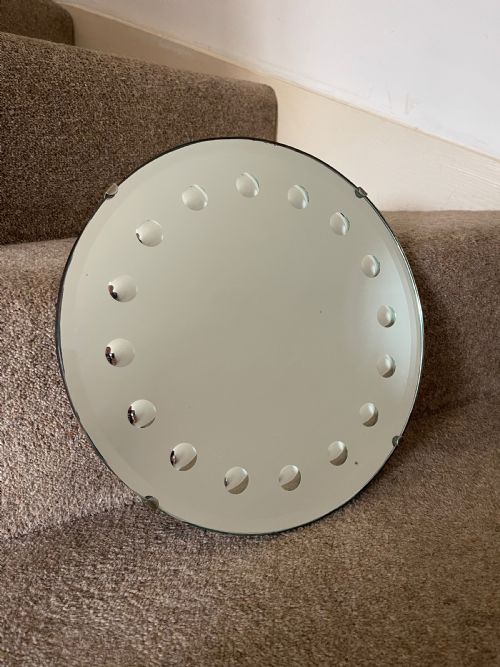
Most examples you encounter on this page belong to the Art Deco movement, manifesting in circular, octagonal, diamond and overmantel configurations. These pieces frequently incorporate bevelled edges, coloured panels, or etched details rather than relying on exterior frames for decoration.
Earlier Victorian items appear alongside these twentieth-century forms, represented by bevelled glass mirrors with original fittings. The forms range from small wall displays to large overmantel mirrors designed to anchor a room.
Materials and construction
Construction relies heavily on glass, mirror glass, and silvered glass, often supported by backing wood and metal fittings to secure the piece to the wall. Makers utilised specialised cutting and bevelling techniques to create angled edges that catch the light without a surrounding frame.
Colour variations are achieved through the integration of peach glass, emerald green glass panels, and two-tone combinations. Surface ornamentation includes etching and embossing directly onto the glass, adding texture and pictorial elements such as soldier motifs or sorcerer designs.
Evaluating quality and execution
The distinction between tiers rests upon the complexity of the glass cutting, the presence of multi-coloured or tinted panels, and the preservation of original metal fittings. Simple circular or octagonal plates demonstrate functional restraint, whereas examples featuring peach or emerald green inserts and intricate etching show greater ambition.
Survival of original backing materials and mounting hardware preserves the integrity of the piece. The depth and clarity of the silvering and the precision of the bevels separate standard production from more distinctive studio or continental work.
The Frameless Glass Wall Mirror Glossary
- Bevelled edge
- An edge cut and polished to an angle thinner than the rest of the glass plate. This technique creates a prismatic border that catches and refracts light.
- Overmantel mirror
- A large mirror designed to hang specifically above a fireplace mantelpiece. These pieces often span a significant horizontal width to balance the hearth below.
- Silvered glass
- Glass coated with a reflective metallic compound on the rear surface to create a mirror. The ageing of this layer produces characteristic patination.
- Peach glass
- Tinted glass with a warm pinkish-orange hue popular in twentieth-century interior design. It imparts a softer reflection than standard silvered plates.
Frameless Glass Wall Mirror: Frequently Asked Questions
How do I hang a heavy frameless mirror safely?
These mirrors require robust wall fixings that correspond to the weight of the glass plate and its timber backing. Ensure the mounting brackets utilise appropriate rawlplugs or fix directly into wall studs.
Original fittings should be inspected for stability before hanging. If original hardware is absent or compromised, consult a professional framer to source secure replacement brackets.
What causes dark spots on antique mirrors?
Dark spots and fading occur when moisture penetrates the protective backing over decades, causing the silvered layer to oxidise. This process is a natural part of ageing in older glass.
While modern mirrors are chemically sealed against this degradation, antique examples often exhibit some degree of patination. Collectors view these minor imperfections as evidence of age rather than a fault.
How should I clean antique mirror glass?
Clean the surface gently using a soft microfibre cloth and a mild, ammonia-free glass cleaner applied to the cloth rather than directly to the glass. Avoid harsh scrubbing near the edges where the silvering is exposed.
Take care around etched or embossed areas to prevent moisture from seeping behind the plate. Gentle maintenance preserves both the glass and the original backing materials.
Are these mirrors suitable for bathrooms?
High humidity and steam in bathrooms accelerate the deterioration of antique silvering and timber backings. Excessive moisture causes the backing to warp and the reflective coating to flake.
It is best to place these pieces in dry living spaces, hallways, or bedrooms where environmental conditions remain stable. This placement protects the fragile materials from moisture damage.