



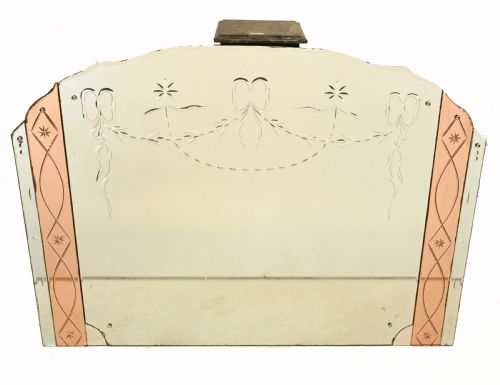
Geometric Wall Mirror Glass
These geometric wall mirror glass pieces bring sharp lines and striking period angles into a room.
Geometric Wall Mirror Glass
A geometric wall mirror glass piece offers clean architectural lines, distinct shapes, and period character for your interior spaces. When you search for geometric wall mirror glass, you encounter items shaped by rigorous design movements from the late nineteenth century through the interwar years.
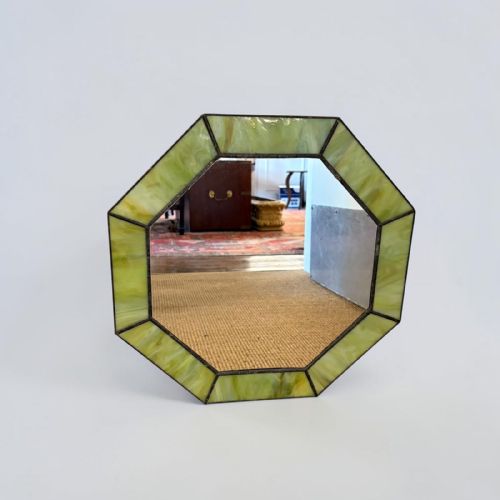
The selections available here showcase the structured forms typical of Art Deco design alongside earlier nineteenth century aesthetics. You will frequently find octagonal, diamond, and multi-section formats that emphasise geometry over traditional ornate curves.
Origins span British and French workshops, encompassing wall-mounted mirrors and occasional combination pieces like mirror clocks. Each object utilises specific period silhouettes to catch light and define wall space.
Materials and construction methods
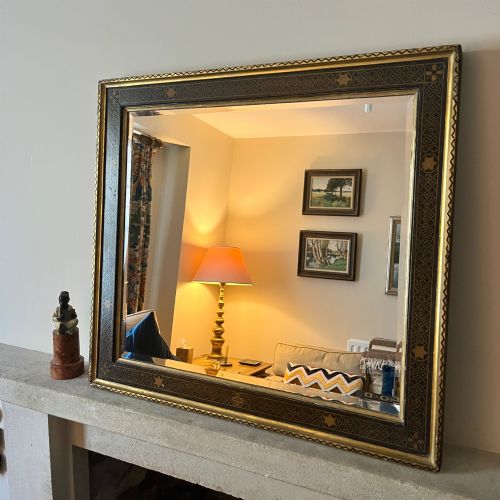
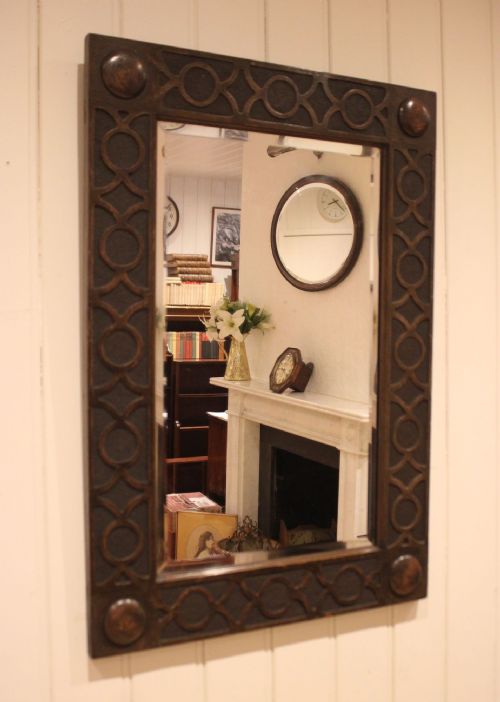
These pieces combine plain and tinted mirror glass with structural supports of wood and metal. Chrome framing and gilt touches often accentuate the perimeters, while painted elements and ebonised details define the surfaces.
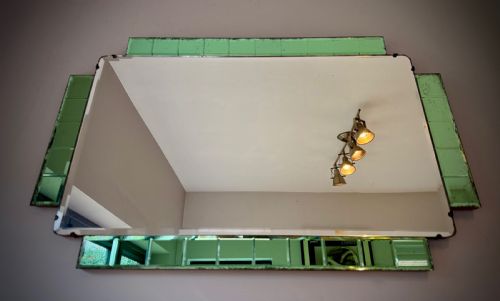
Construction relies on precise cutting of glass panels, sometimes incorporating beveled edges or emerald green glass segments. Frameless designs depend on secure backing structures to hold multi-section layouts together securely.
One unusual item combines timekeeping with reflection, arriving as a mirror clock from the 1920s.
Assessing the range of quality
Quality in these mirrors rests upon the precision of the glass cutting and the integrity of the multi-section assembly. Finer examples display complex sectional geometry and specialised coloured glass panels rather than simple single panes.
The sophistication of the framing, whether part ebonised wood or polished chrome, distinguishes standard utility items from more ambitious decorative works. Original conversion states and the survival of secondary materials like painted highlights also shape the standing of a piece.
The Geometric Wall Mirror Glass Glossary
- Art Deco
- A design style dominant in the 1920s and 1930s characterised by sleek geometric shapes and stylised motifs. It moves away from floral curves toward bold angles and modern industrial materials.
- Beveled
- A glass edge cut at an angle rather than straight through the thickness. This technique creates a prismatic border that catches and refracts light.
- Ebonised
- Wood treated with a chemical or dark finish to imitate ebony. This dark staining provides a stark contrast against reflective glass surfaces.
- Frameless
- A mirror construction style without an outer perimeter frame. The glass itself forms the complete edge, often held by hidden clips or mounted backings.
- Victorian Aesthetic Movement
- A nineteenth century design philosophy prioritising beauty and form over strict utility. It introduced simplified structures and decorative restraint before the rise of Art Deco.
Geometric Wall Mirror Glass: Frequently Asked Questions
How do I hang a heavy geometric mirror safely?
These mirrors often carry substantial weight due to multi-section glass and wooden backings. Secure fixings suited to your wall type are essential.
Consult a professional if the hanging points on the frame require specialised weight-bearing brackets.
Are these mirrors suitable for bathrooms?
Many period pieces feature original backing materials and metallic elements that react poorly to damp environments. Dry placement preserves the original wood and metal components.
Consider the condition of the edges and backing before exposing the piece to moisture.
How do I clean antique mirror glass?
Gentle cleaning prevents damage to the silvering behind the glass and any painted or ebonised surfaces. Avoid harsh chemical sprays that might seep beneath the edges.
Use a soft cloth and mild solution, wiping carefully around the bevels and joints.
What distinguishes Art Deco mirrors from Edwardian ones?
Art Deco pieces favor sharp geometric angles, emerald green glass panels, and chrome framing. They represent the modernist push of the 1920s and 1930s.
Edwardian designs tend to rely more on traditional timber frames and softer, domestic proportions.