
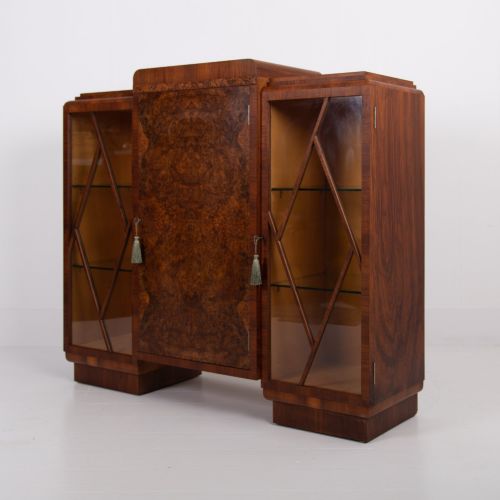


1930s Burr Walnut Bookcase
A 1930s burr walnut bookcase brings unmistakable Art Deco geometry and rich, swirling wood grain into a modern room.
1930s Burr Walnut Bookcase
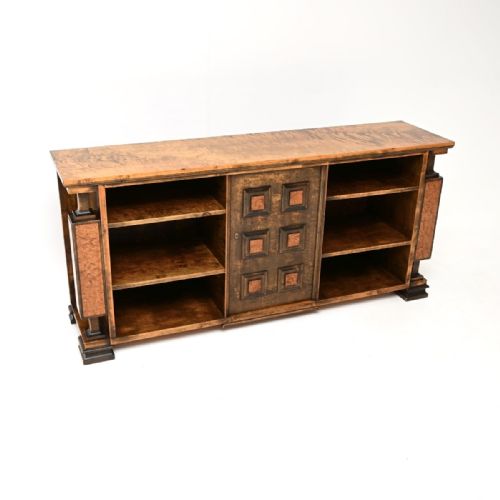
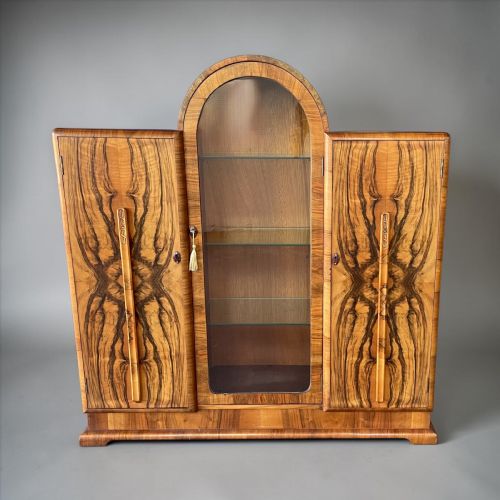
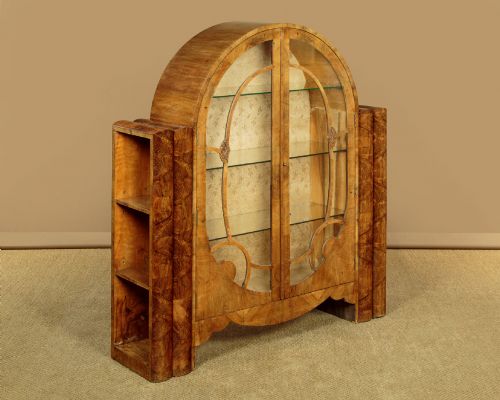
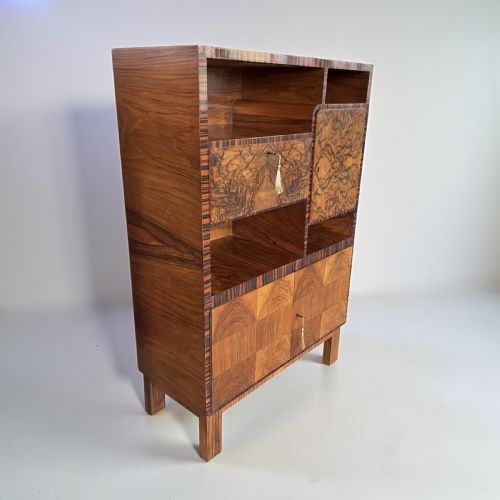
When searching for a 1930s burr walnut bookcase, buyers encounter pieces that double as display cabinets, bureaus and sideboards from the Art Deco period. These items typically combine storage space with glazed compartments, showcasing the distinctive figuring of the wood.
The versions most commonly met on this page are upright glazed bookcases, circular and octagonal display cabinets, and hybrid bookcase cabinets. They originate from British makers as well as Swedish and Italian workshops, reflecting a diverse European output of the era.
Makers of the period utilised secondary timbers like sycamore and satin birch alongside walnut veneers to create striking contrasts in tone and texture. These pieces often serve as focal points in a room, designed to display books and decorative objects behind glass doors.
How they were made
Cabinet makers applied thin slices of burr walnut veneer over solid carcass timbers to achieve dramatic patterns on the exterior surfaces. This technique allowed craftsmen to mirror and match the grain across doors and drawer fronts for a balanced visual effect.
Glazing featured heavily in these designs, set within wooden frames alongside brass fittings such as hinges and locks. Secondary woods like sycamore and satin birch appeared in interiors and smaller details, providing a pale contrast to the dark walnut figures.
Materials recorded on this page include uncommon secondary timbers such as satin birch and sycamore alongside primary burr wood veneers.
What varies in quality
The standard of a 1930s burr walnut bookcase rests on the selection and matching of the veneer grain across the primary surfaces. Pieces featuring symmetrical grain patterns and harmonious contrasts with secondary woods like satin birch demonstrate a higher level of workshop execution.
Construction methods and the integration of specialised forms, such as circular or octagonal frames, also distinguish the output. Works attributed to notable makers display refined handling of geometric proportions and hardware details.
Maurice Adams·Epstein
The 1930s Burr Walnut Bookcase Glossary
- Burr walnut
- A thin slice of wood taken from a growth on a walnut tree, prized for its swirling and knotty grain patterns. This material forms the primary decorative surface on Art Deco cabinets.
- Art Deco
- A design style of the 1930s characterised by sleek geometric shapes, streamlined forms and modern materials. It heavily influences the silhouette of these bookcases and display units.
- Veneer
- A thin layer of superior wood applied to a base timber to create a decorative exterior. Makers used burr walnut veneer to cover large panel areas without warping solid wood.
- Sycamore
- A pale hardwood utilised by period makers for contrasting interior linings and details. It provides a bright visual counterpoint to the dark walnut grain.
- Glazed cabinet
- A storage piece featuring glass-fronted doors designed to show off books or ornaments. These units often incorporate internal shelving and curved glass panels.
1930s Burr Walnut Bookcase: Frequently Asked Questions
How do I clean burr walnut?
Dust regularly with a soft, dry cloth to prevent dirt accumulation on the delicate veneer surface. Avoid abrasive cleaners and excess moisture, applying a quality beeswax sparingly when the wood appears dry.
Keep the cabinet away from direct sunlight and heat sources to prevent the burr walnut veneer from drying out and lifting over time.
Can these hold heavy books?
Most pieces feature fixed or adjustable wooden shelving designed for standard book collections and display items. The internal structure supports moderate loads typical of a home library.
Uneven weight distribution should be avoided, particularly in circular or glazed cabinets where internal frames follow curved geometric designs.
What rooms suit these cabinets?
Living rooms and studies provide a natural home for these statement items, housing books while displaying decorative objects behind glass. Their compact footprint also suits smaller apartments.
Pairing the cabinet with neutral walls allows the swirling burr walnut grain and Art Deco geometry to stand out visually in the space.
Are all 1930s pieces Art Deco?
The pieces listed from this decade firmly belong to the Art Deco movement, defined by clean lines, geometric shapes and modern veneers. Regional variations from Sweden and Italy share these stylistic markers.
Makers of the era embraced symmetrical wood figuring and circular forms, distinguishing their work from earlier revivalist furniture styles.