
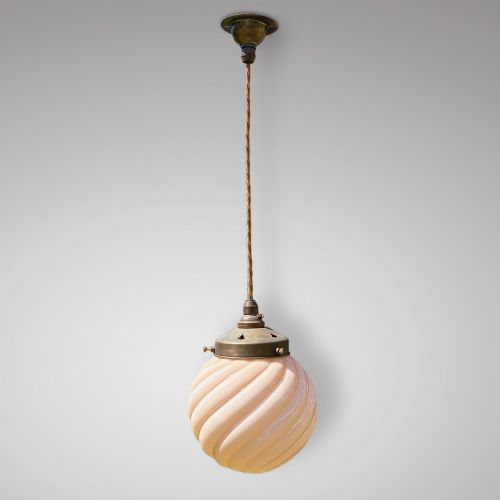
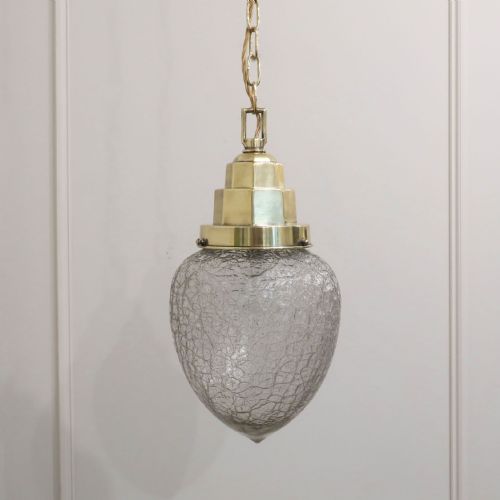


1930s Brass Pendant
These 1930s brass pendant lights bring direct period illumination and striking geometry to a room.
1930s Brass Pendant
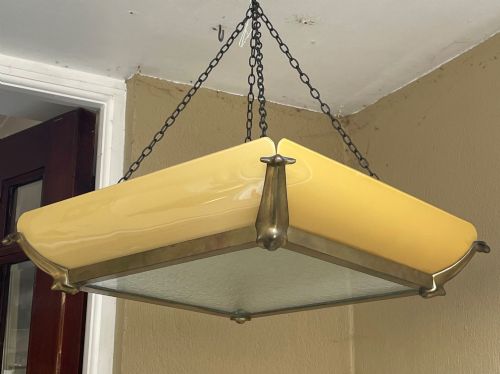
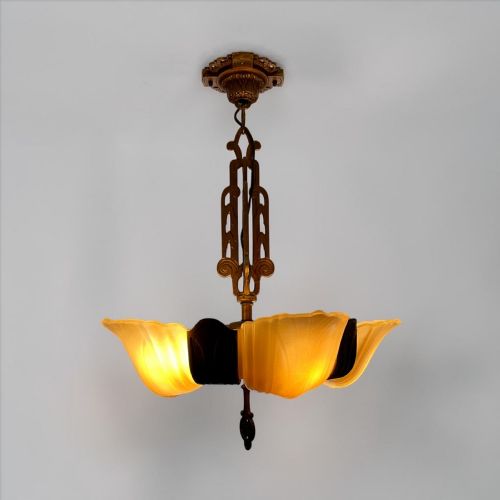
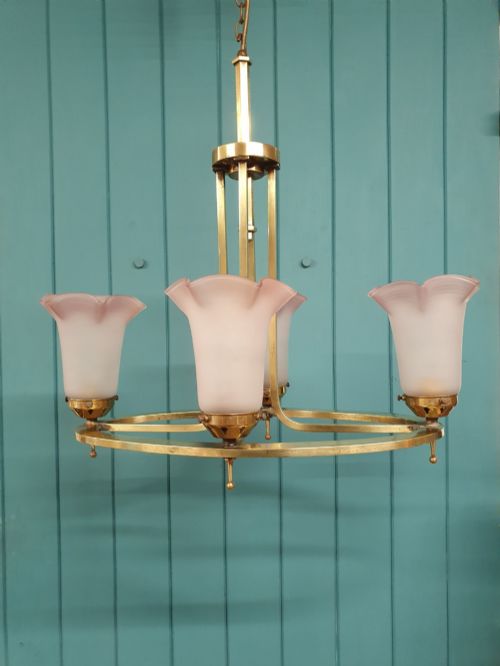
When you search for a 1930s brass pendant, you are looking at ceiling lights and hanging fixtures defined primarily by the Art Deco style and the 1930 or 1920 periods. The most common versions on this page are single pendant lights, hallway lanterns, and multi-light chandeliers featuring metal frames.
Makers and designers of these items produced varied forms, including pear-shaped shades, slip shade ceiling lights, and flat plafonniers. French Country and Dutch Revival styles also appear among the predominantly Art Deco offerings.
The objects serve as functional ceiling lighting that relies on suspended drops, chains, or fabric flex. Buyers choose them to anchor a room with period metalwork and distinctive glass diffusers.
How they were made
Construction relies heavily on brass, copper, and cast metal structures combined with glass components. Workshops formed rigid hanging frames to support heavier glass bowls, slip shades, and lanterns.
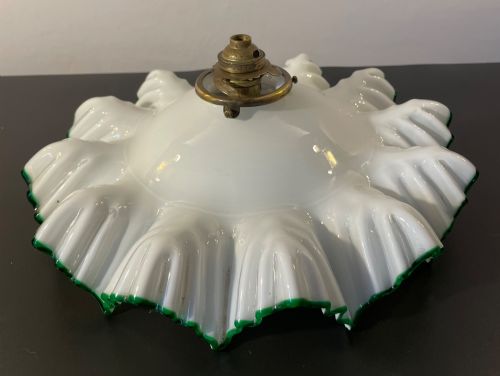
Glass elements range from frosted, crackle, opalescent, and opaline glass to crystal and alabaster. These shades were moulded, pressed, or blown into specific geometrical or organic shapes before mounting into the metal framework.
Listings feature brass, frosted glass, and opaline glass predominantly within Art Deco designs from the 1920 and 1930 periods.
What varies in quality
Quality in these hanging fixtures rests in the substantial weight of the cast metal and the clarity or colour of the glass. Heavier brass frames and thick moulded glass shades indicate higher manufacturing standards.
Proportion and scale distinguish standard domestic lighting from monumental chandeliers or large hall lanterns. The integration of specialised glass, such as pink clam shell panels or carved alabaster, marks out finer examples.
The 1930s Brass Pendant Glossary
- Pendant Light
- A single light fixture suspended from the ceiling by a cord, chain, or metal rod. These direct illumination downwards into a space.
- Slip Shade
- A type of glass shade designed to slip directly into a metal frame or arms without complex hardware. They are typical of Art Deco ceiling fixtures.
- Plafonnier
- A flush or semi-flush ceiling light where the glass bowl sits close to the ceiling plate. It directs light outwards and downwards.
- Opaline Glass
- A milky, semi-translucent glass that diffuses light softly without harsh glare. It was frequently used in early twentieth-century lighting.
- Hall Lantern
- An enclosed hanging light designed for corridors and entranceways. They combine brass frames with glass panels to protect the bulb.
1930s Brass Pendant: Frequently Asked Questions
How do I hang a heavy brass chandelier?
These chandeliers require secure ceiling joists or a proper metal ceiling hook to support the weight of the brass and glass components. Professional installation ensures the electrical wiring and hanging chain meet safety standards.
Adjusting the drop involves altering the length of the chain or fabric flex before fixing the canopy flush against the ceiling surface.
What rooms suit a 1930s pendant light?
Pendant lights and lanterns fit well in hallways, dining spaces, and high-ceilinged rooms where the drop length can be fully appreciated. Smaller plafonniers work in spaces with lower clearance.
Matching the brass finish and glass type to existing architectural details helps integrate the fixture into the interior scheme.
How do I clean old glass shades?
Remove the glass shade from the brass frame if possible and wash it gently in warm soapy water using a soft cloth. Avoid abrasive materials that can scratch frosted or opaline surfaces.
Dry the glass thoroughly before reassembling it into the metal mount to prevent moisture contact with older internal wiring.
Can I replace the fabric flex?
Replacing old fabric flex is standard practice when restoring vintage lighting to ensure electrical safety. Modern wiring can be threaded through the original brass tubes and loops.
Keep the original length and style of the flex in mind to maintain the correct proportions of the hanging fixture.