
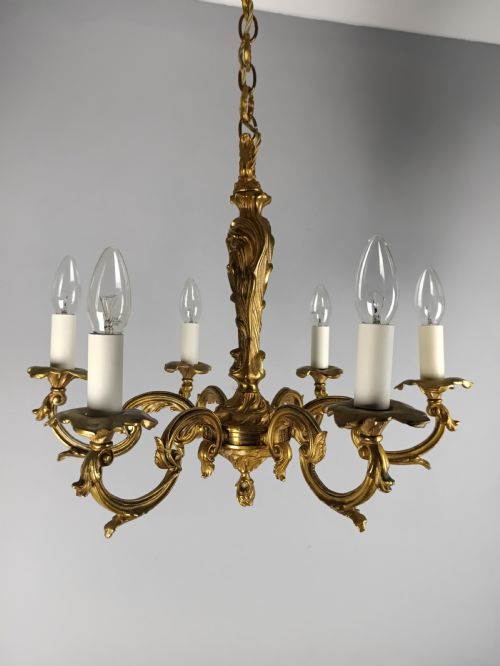
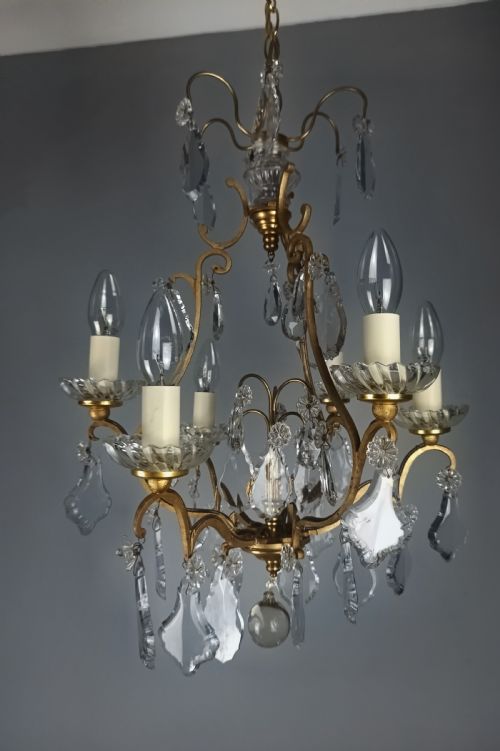
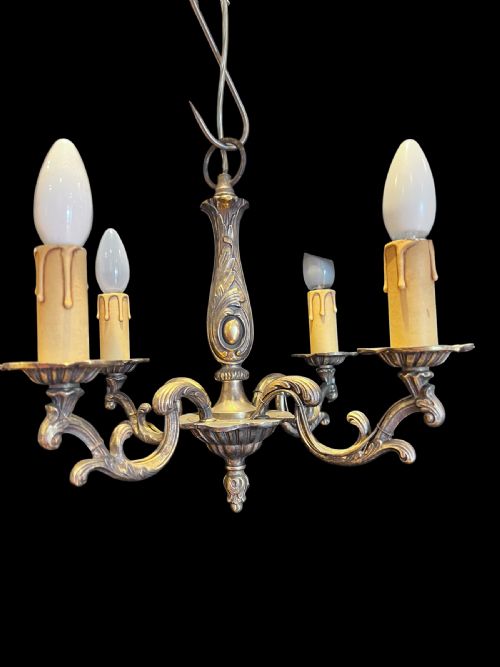
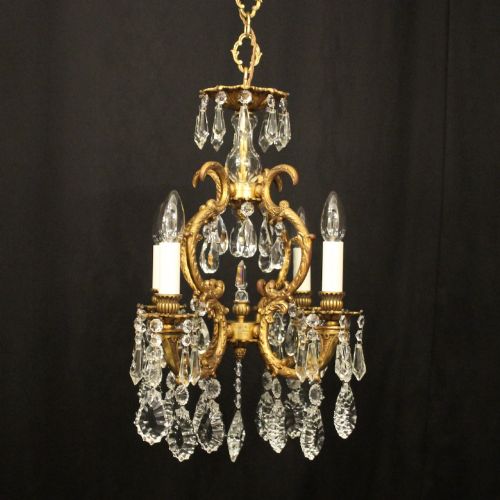
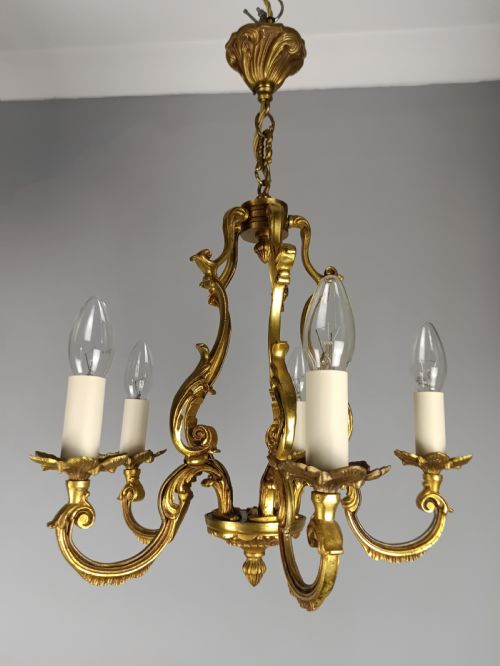
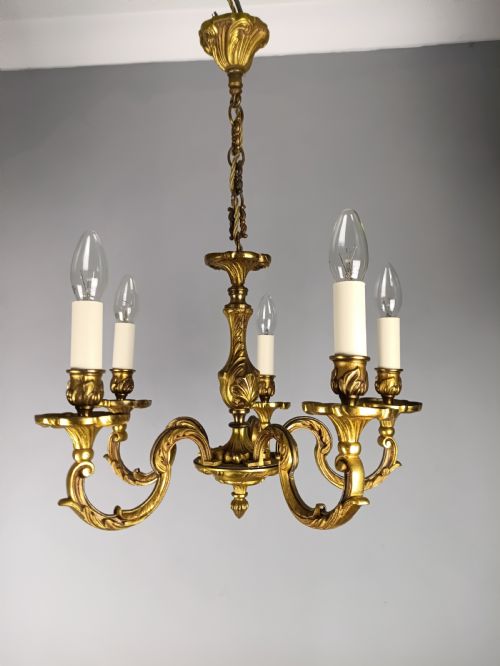
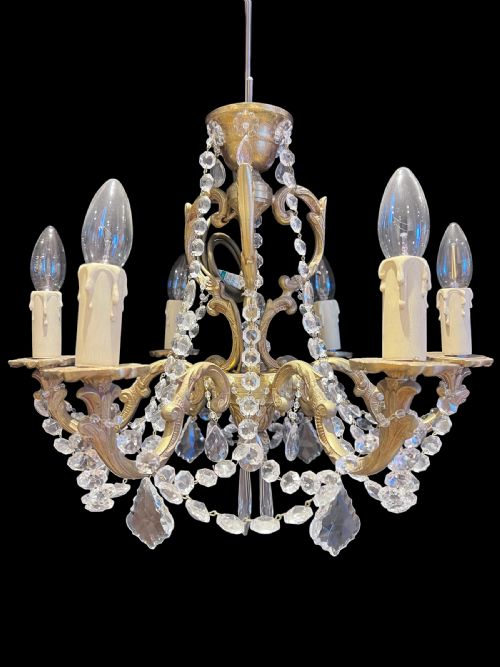

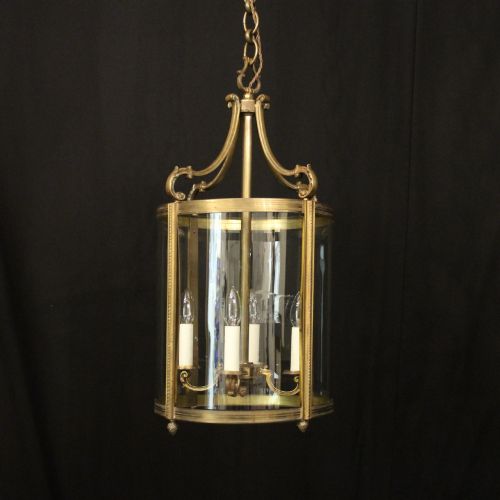



Brass Pendant Chandelier
These brass pendant chandeliers span the nineteenth and early twentieth centuries, offering refined illumination through historic metalwork and cut glass.
Brass Pendant Chandelier
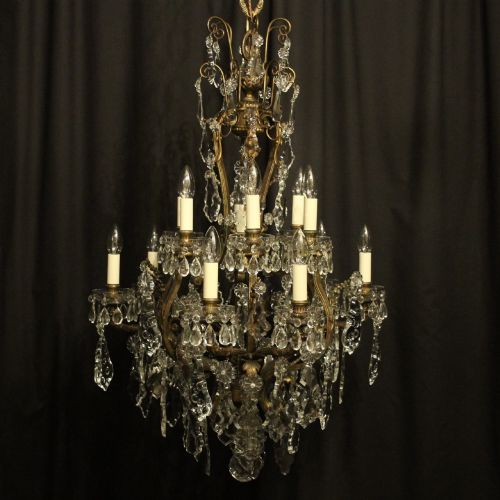
A brass pendant chandelier combines metal framing with suspended lighting, frequently taking the form of multi-armed candle configurations, hall lanterns, or basket fixtures. The pieces listed now originate primarily from French, English, and Italian workshops spanning the Victorian, Edwardian, and Art Deco periods.
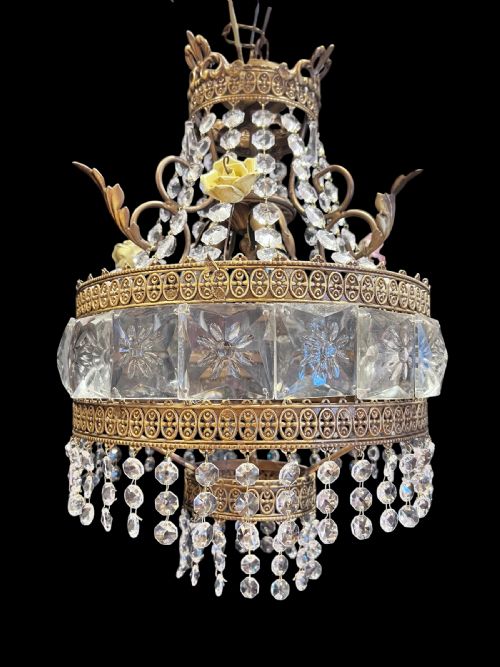
Buyers encounter distinct regional styles, from French gilded bronze birdcage and tent-and-waterfall chandeliers to English Arts and Crafts lanterns and Moorish pierced brass designs. The selection relies heavily on early twentieth-century production alongside nineteenth-century revival pieces.
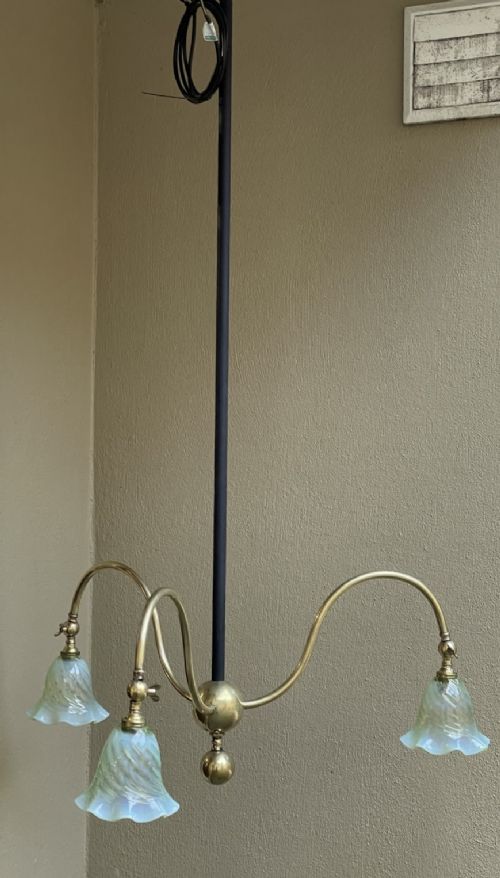
Ceiling lighting within this selection ranges from simple single-bulb pendants and billiard lights to grand twelve-light fixtures adorned with porcelain flowers or opalescent glass shades.
Materials and Construction
Makers shaped structural components from brass, bronze, and copper, frequently applying gilding to bronze and brass surfaces to enhance reflectivity. Cast metal frames provide the load-bearing rigidity required for multi-branched arms and heavy hanging lanterns.
Crystal and cut glass elements, including pendeloques, lustres, and bevelled glass panels, refract light outward from the central source. Specialised techniques such as piercing, as seen in Moorish lanterns, and leaded glass construction create intricate shadow patterns.
Early electrical adaptations sit alongside gasolier fittings, integrating metal tubing and sockets into frames originally engineered for candles or gas.
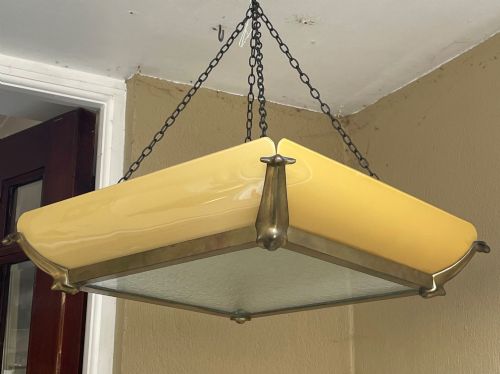
Edwardian and Victorian hall lanterns utilise bevelled glass and pierced brass to cast intricate patterns across entrance hallways.
Assessing Craftsmanship
The refinement of cast metal ornamentation dictates the upper tiers of the category, where chased details on gilt bronze exhibit crisp relief rather than soft edges. Heavier gauge brass and solid bronze framing maintain structural integrity across larger multi-light configurations.
The integration of glass components establishes tier distinctions, separating machine-cut crystals from hand-cut prisms and uniform bevelled glass panes. Superior fixtures maintain balanced proportions between the primary metal armature and the hanging glass adornments.
The Brass Pendant Chandelier Glossary
- Birdcage chandelier
- A metal frame shaped like an avian cage, supporting interior candle branches and external crystal swags. This specific armature design appears frequently in French lighting from the early twentieth century.
- Tent and waterfall chandelier
- A fixture featuring a conical upper section of beaded crystal strings descending into a looser, cascading lower skirt. This configuration maximises light refraction across large reception spaces.
- Gasolier
- A light fixture originally designed to burn piped coal gas before later conversion to electricity. These pieces often retain characteristic key valves and heavy drop stems.
- Pendeloque
- A drop-shaped pendant of cut glass or crystal suspended from the arms or rim of a chandelier. They catch and scatter ambient light.
- Slip shade
- A moulded piece of art glass that slots directly into an inverted metal frame, common in American Art Deco ceiling lights. The glass diffuses the internal bulb illumination evenly.
Brass Pendant Chandelier: Frequently Asked Questions
How do I clean a crystal chandelier?
Maintenance involves wiping individual glass drops and metal arms with a lint-free cloth dampened in a mild water and alcohol solution. Technicians detach fragile crystal elements only when extensive restoration requires deep cleaning of the bronze armature.
Harsh chemical cleaners damage gilded finishes and degrade vintage lacquers applied to the brass frame over the decades.
Can these antique lights use modern bulbs?
Most surviving fixtures accept standard modern LED or incandescent screw-fit bulbs once rewiring meets current safety standards. Electricians update internal wiring channels while preserving the exterior historic metal components.
Matching the appropriate wattage ensures the historical sockets and surrounding glass shades remain protected from excess heat.
What is a hall lantern?
Hall lanterns are enclosed pendant lights designed specifically to illuminate entranceways, stairwells, and narrow corridors. Glazed panels protect the internal flame or bulb from draughts while directing light outward.
Examples on this page feature bevelled glass, pierced brass frames, and convex brass mountings dating from the Victorian and Edwardian eras.
How do I distinguish French styles?
French lighting often incorporates gilt bronze, elaborate Rococo scrollwork, or Neoclassical symmetry with crystal swags and birdcage frames. Empire style pieces emphasise classical urn motifs, heavy drapery crystals, and tent formations.
English and Italian makers favoured alternative aesthetics, ranging from structural Arts and Crafts brasswork to delicate porcelain floral embellishments.