
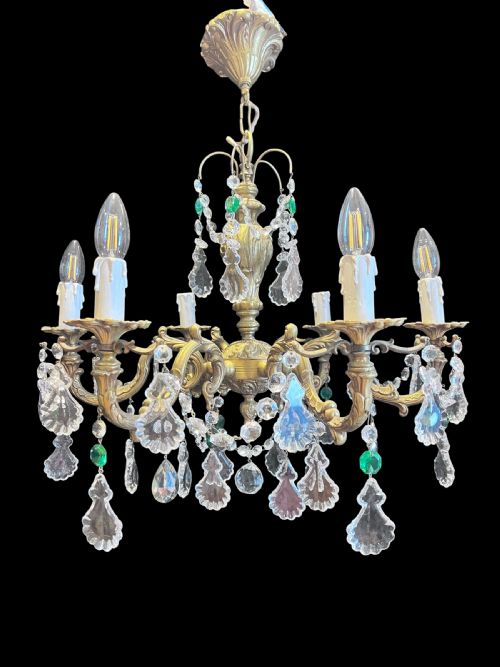


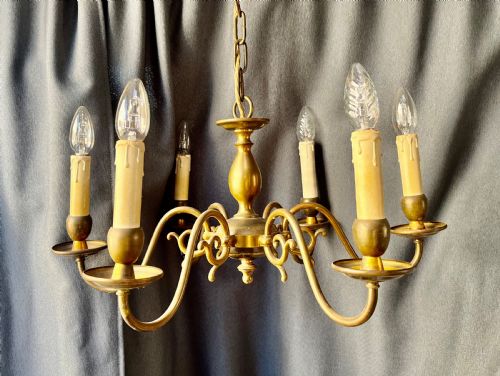
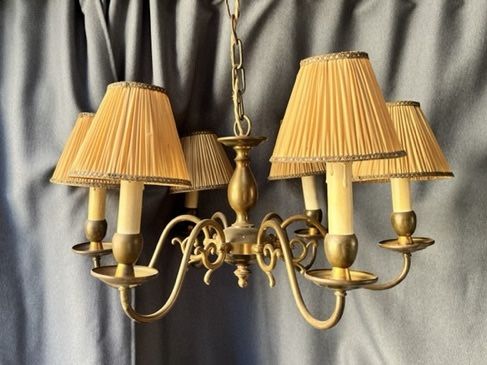
Vintage Six Branch Light
A vintage six branch light transforms a room with layered illumination, offering the grand scale and distinct character of earlier European lighting.
Vintage Six Branch Light
A vintage six branch light typically takes the form of a grand chandelier, ceiling light, wall light, or table lamp designed to support six individual light sources. When searching for a vintage six branch light, buyers encounter pieces spanning from the late nineteenth century through to the mid twentieth century, with a strong representation of French origins.
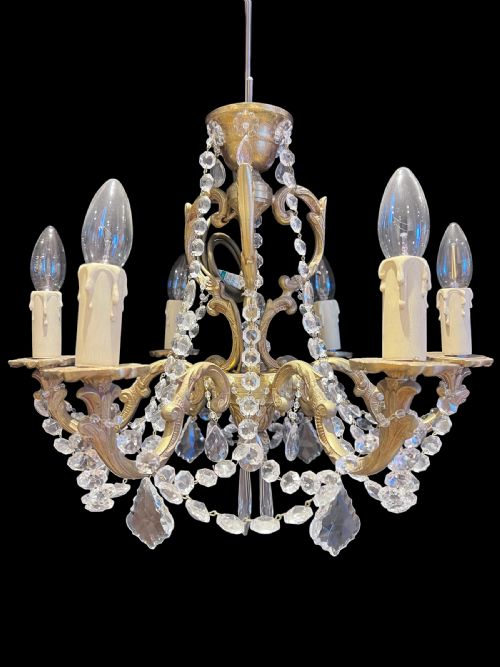
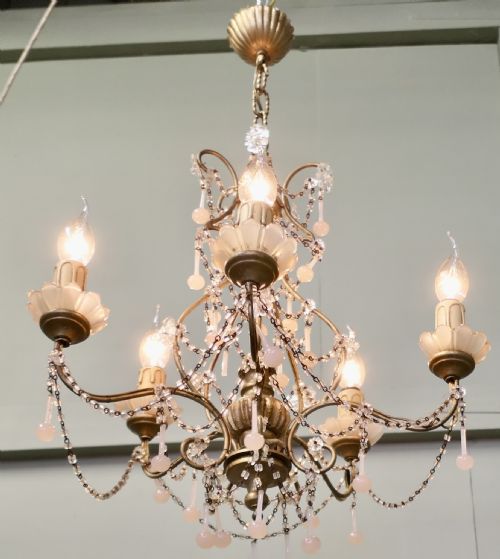
Beyond ceiling fixtures, the grouping includes pairs of wall lights, girandoles, and billiard lights configured with six arms. These pieces incorporate diverse decorative elements such as gilt toleware, floral ceramics, and coloured crystals suspended from brass or silver frames.
Materials and construction
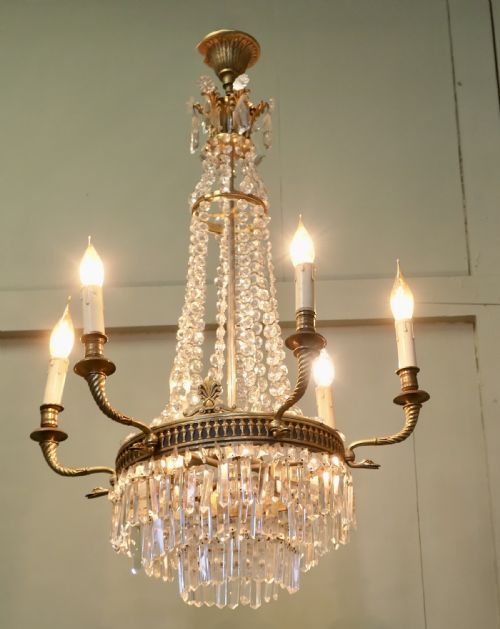
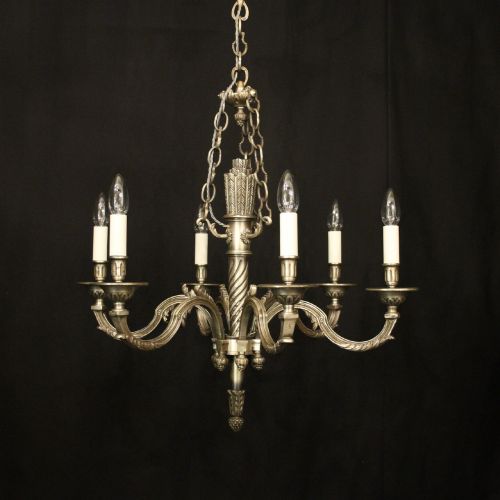
These fixtures rely on a foundation of cast brass, gilded bronze, silver plate, or plain metal to form the structural arms and central frames. Artisans combined these metallic bases with delicate glass components, incorporating cut crystal drops, waterfalls, and tents to diffuse the illumination.
Surface decoration involves traditional techniques including silver gilding, gilt toleware finishes, and hand-shaped ceramic floral elements. Structural glass components include pink Venetian glass and nineteenth-century cut glass prisms secured directly to the metal armature.
Listings feature pieces from the Victorian era up to the 1940s, with a strong concentration of French design origins.
Judging execution and finish
The standard of a fixture rests on the crispness of the metal casting and the complexity of the glass components. Finer examples display intricately chased bronze work, substantial crystal drops with sharp facets, and cohesive decorative schemes such as integrated toleware foliage and ceramics.
Construction methods also distinguish output, with superior pieces showing integrated arm assemblies and heavier gauge metals. Simpler brass and glass combinations present a more restrained execution while maintaining the functional six-branch format.
The Vintage Six Branch Light Glossary
- Chandelier
- A branched ceiling-mounted lighting fixture designed to hold multiple bulbs or candles. These large centrepieces dominate a room and provide substantial overhead illumination.
- Girandole
- An ornamental branched candlestick or light fixture, often incorporating mirrors or reflective crystal drops. They frequently appear as wall-mounted or table-standing pieces.
- Toleware
- Painted or lacquered sheet metal items popular in period decorative arts. The technique provides durable coloured surfaces for floral and leaf motifs on chandelier arms.
- Tent and waterfall
- A chandelier configuration where strings of crystal beads form a tent shape at the top above a cascading tier of drops. This arrangement maximises the reflection of light.
- Billiard light
- A long, multi-branched lighting fixture historically designed to illuminate a game table evenly. These utilitarian pieces feature extended linear frames rather than compact central bowls.
Vintage Six Branch Light: Frequently Asked Questions
How do I hang a heavy vintage chandelier safely?
Suspending a heavy bronze or crystal fixture requires securing the weight directly to ceiling joists using an appropriate steel hook and electrical box. Professional installation ensures the ceiling structure safely supports the substantial combined weight of metal and glass.
Electrical wiring must also be inspected and updated to meet current safety standards before mounting the fixture in position. An electrician can verify that the supply wires safely handle the load of six lit branches.
What rooms suit a six branch ceiling light?
A six branch lighting fixture provides significant presence and light output, making it well-suited for dining rooms, living spaces, or grand entrance halls. The scale commands attention and establishes a focal point in rooms with adequate ceiling height.
Smaller spaces can accommodate wall-mounted variants or matching pairs of sconces to achieve a balanced lighting scheme without crowding the floor plan. Table lamp versions offer a way to bring the same decorative vocabulary to side tables.
How do I clean crystal and brass safely?
Cleaning requires removing dust with a soft brush and wiping metal surfaces with a dry or lightly damp cloth to preserve patination. Harsh chemical polishes should be avoided on gilded or plated finishes to prevent wearing away the surface layer.
Crystal drops can be washed individually in warm soapy water and dried thoroughly before reattachment. Leaving the drops on the fixture while cleaning risks damaging the delicate wire fixings that secure them.
How do I identify French Empire and Revival styles?
French Empire and Neoclassical lighting relies on classical motifs, symmetrical arrangements, and heavy use of cast bronze and brass. Tent and waterfall crystal configurations are typical of this tradition.
Revival pieces from later decades often imitate these classical proportions using slightly different manufacturing techniques and standardised casting methods. Examining the weight of the metal and the precision of the crystal cutting helps reveal the period.