
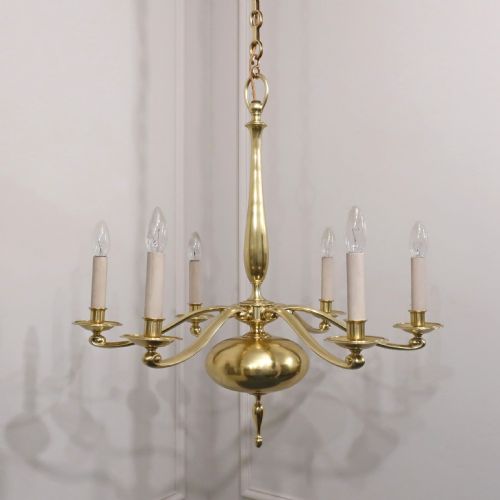
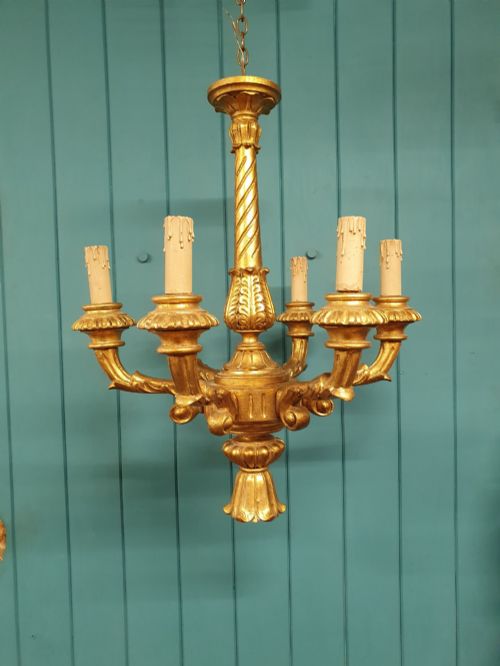
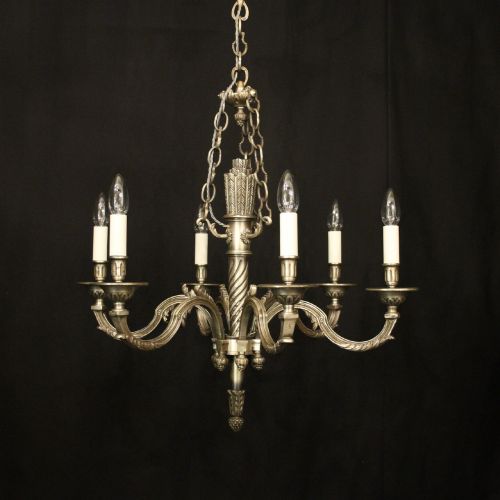
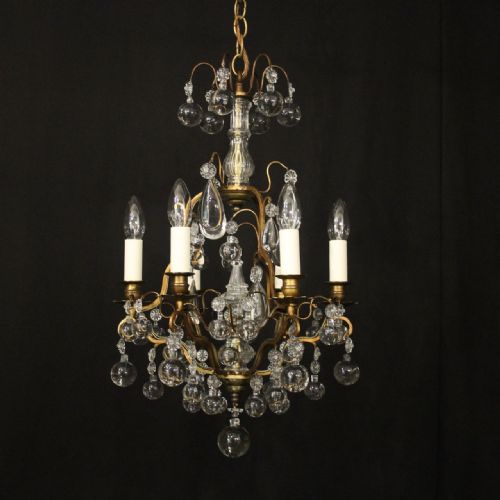
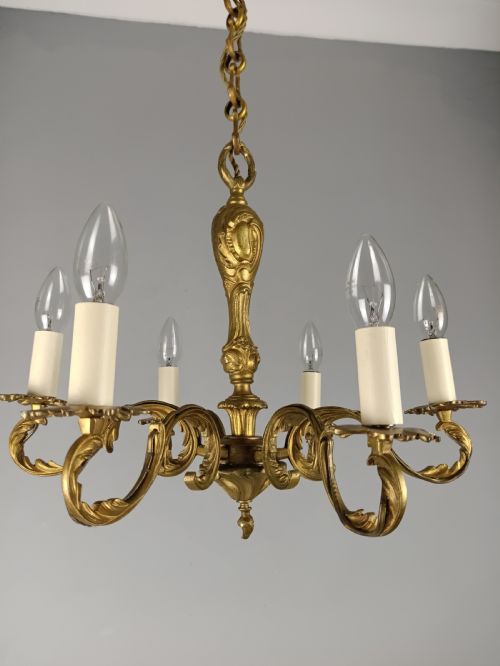

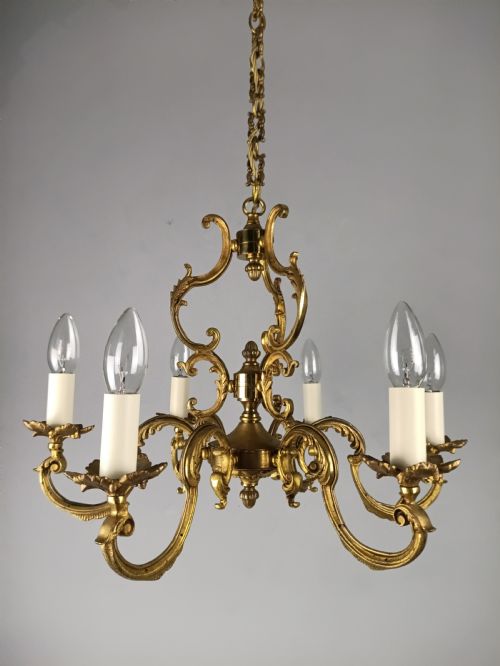

Six Arm Brass Light
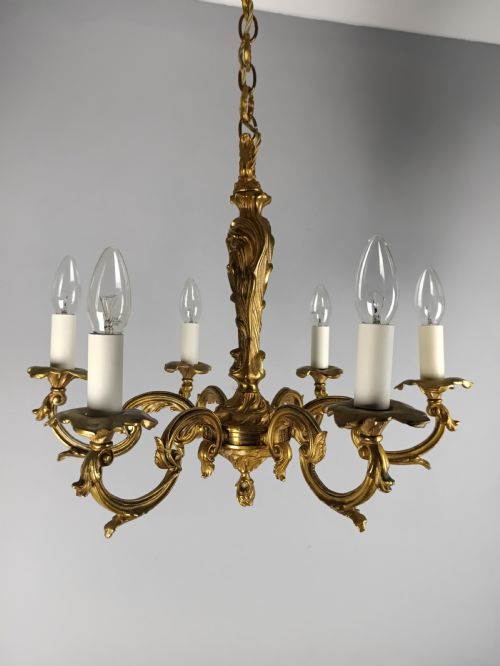
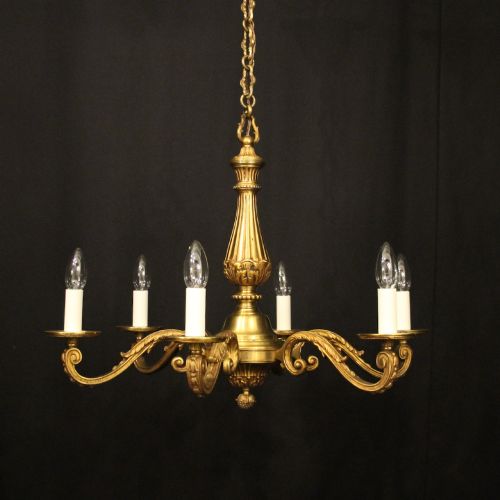
A six arm brass light brings warmth and structure to a room through balanced metalwork and evenly spaced points of illumination.
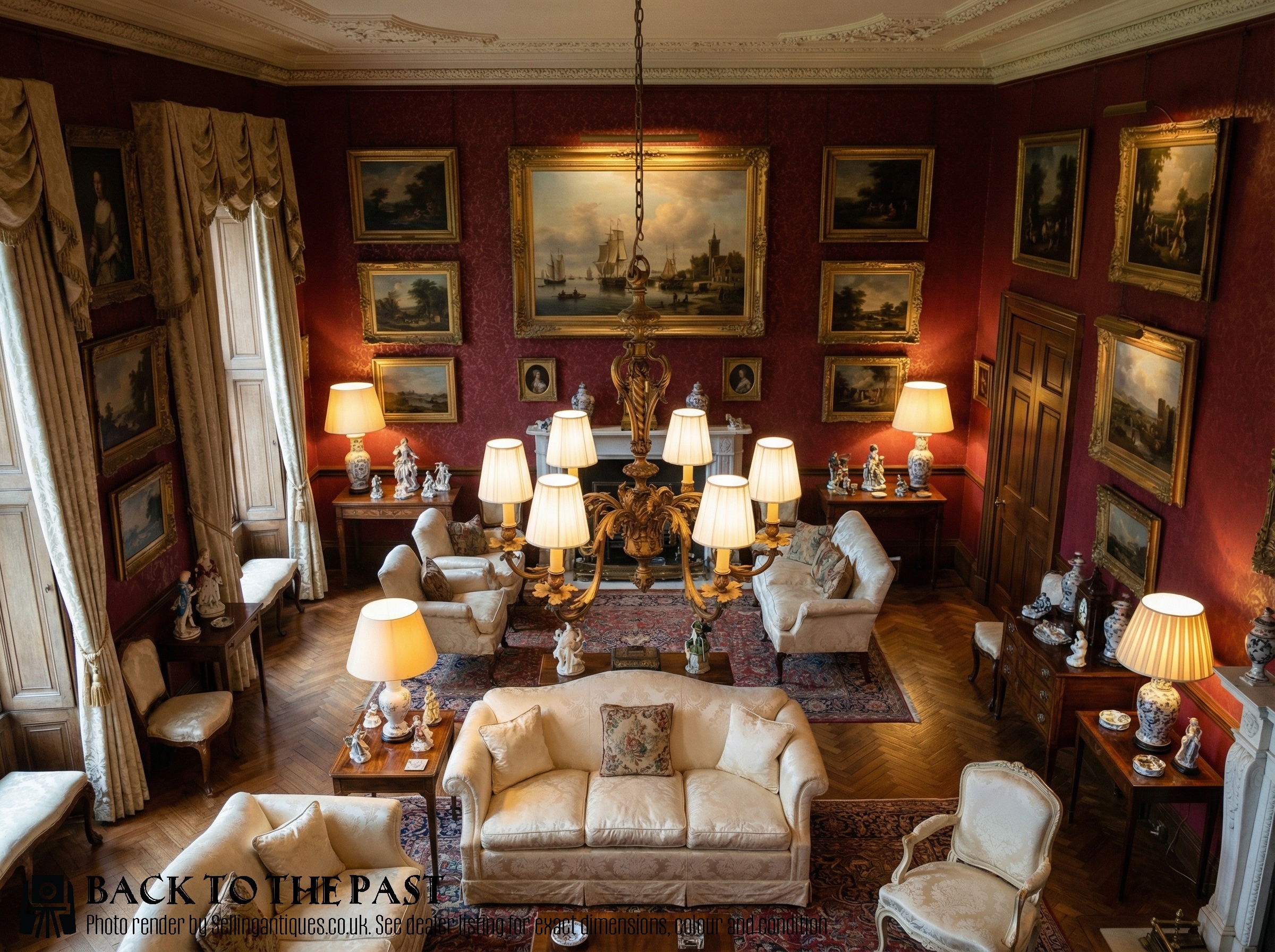
Six Arm Brass Light
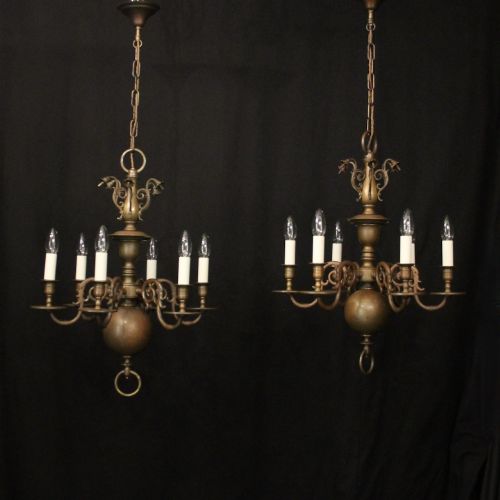
When you search for a six arm brass light, you encounter a selection spanning the nineteenth century through the early twentieth century. These pieces predominantly take the form of chandeliers, alongside candelabras and table lamps.
French workshops produced many of the surviving examples, often rendered in styles such as Rococo, Empire, and Art Deco. Alongside continental pieces, English and Dutch variants appear frequently in brass, bronze, and gilt metal.
Materials and construction methods
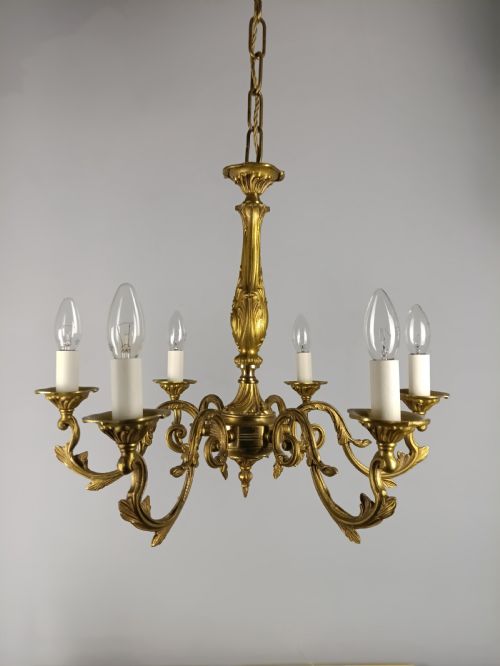
Makers utilised cast brass, bronze, and gilt metal for the structural frames, often applying fire gilding or silver plating to the surfaces. Heavy cast components provided the necessary rigidity to support six arms extending outward from a central column.
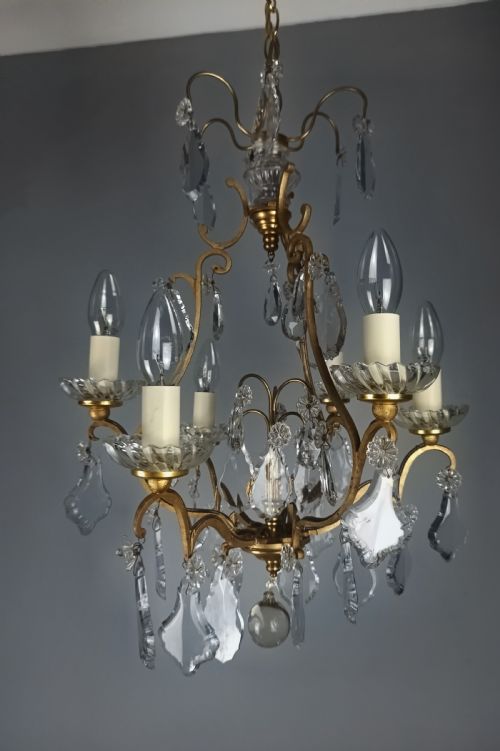
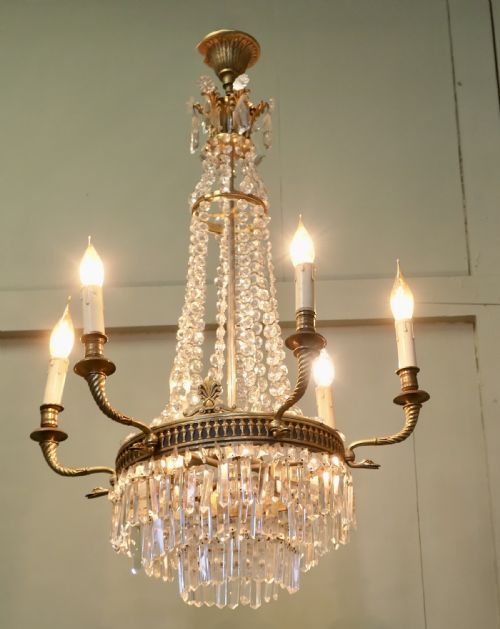
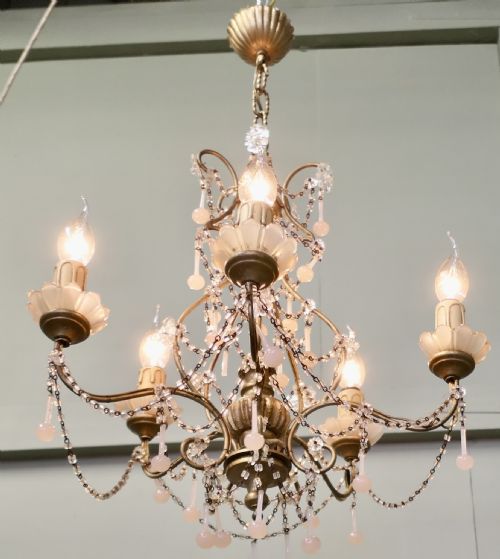
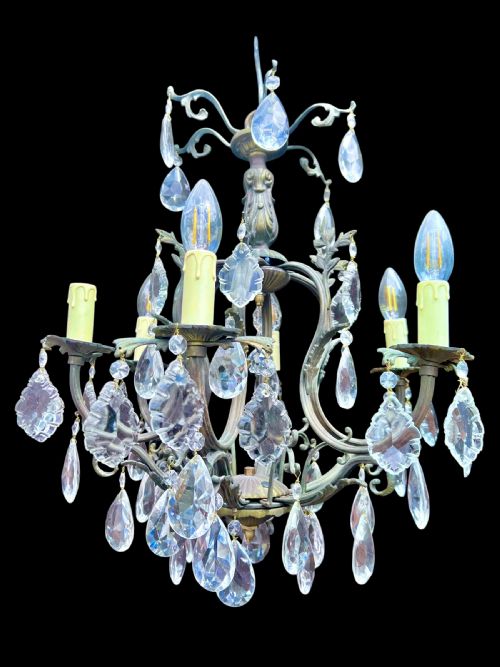
Many examples incorporate glass and crystal drops, beads, or tent and waterfall formations to refract the light. Where specified, birdcage frames and gesso details enrich the silhouette before final assembly.
Some mid-period chandeliers manage to smuggle brightly coloured artificial fruits directly into their crystal drops.
Distinctions in standard and execution
Quality rests in the crispness of the casting and the weight of the metal utilised in the arms and centre body. Finer examples show careful hand-chiselling on bronze elements rather than flat, uniform machine finishes.
The integration of glass components also dictates standing; cut crystal drops and intact birdcage wires reflect superior workshop standards compared to plain pressed glass replacements.
G.E.C
The Six Arm Brass Light Glossary
- Ormolu
- Gilded bronze, where a gold amalgam is applied to a bronze base through heat. This technique creates a durable, warm metallic surface found on French examples.
- Girandole
- A branched candleholder or light fitting, often featuring a mirrored backplate or designed to sit on a table. These fixtures amplify illumination through reflected surfaces.
- Birdcage
- A framework of curved metal straps enclosing the central stem of a chandelier. Crystal drops often hang within or drape around this open structure.
- Tent and waterfall
- A chandelier configuration where strings of crystal beads form a cone shape above a wider cascading skirt of drops. This arrangement directs the distribution of light across the room.
- Gesso
- A plaster-like mixture applied to a wooden or metallic base to create a smooth surface for gilding. It allows for crisp moulded ornament on the frame.
Six Arm Brass Light: Frequently Asked Questions
How do I clean a brass chandelier?
Dust the metal gently with a soft dry cloth to remove surface particles without disturbing the underlying finish. Avoid harsh chemical polishes that strip away historical gilding or patina.
Crystal drops benefit from careful washing while detached from the frame, using warm water and mild soap before drying thoroughly with a lint-free cloth.
How do I determine the period?
Stylistic indicators such as Art Deco geometric lines or heavy French Empire casting provide initial clues to the decade of manufacture. Construction methods, screw threads, and the composition of the metal further narrow down the era.
Comparing the casting sharpness against documented pieces from workshops helps confirm whether a light originates from the nineteenth century or the early twentieth century.
Where should I hang a six arm light?
A six arm light suits medium-sized reception rooms, dining areas, or hallways where balanced illumination is required. The physical diameter of the chandelier should proportion well with the floor space and ceiling height.
Ensure the hanging height allows adequate clearance beneath the lowest point of the frame or crystal drops for foot traffic.