
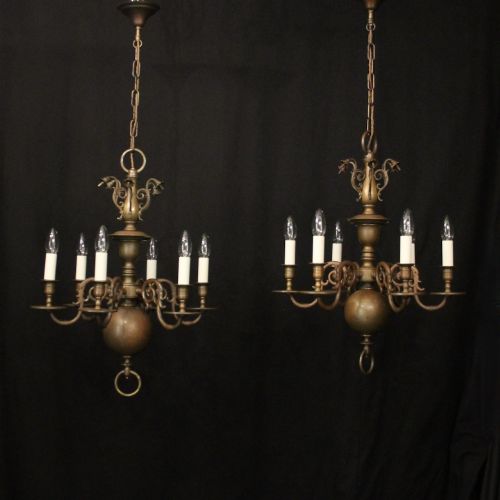
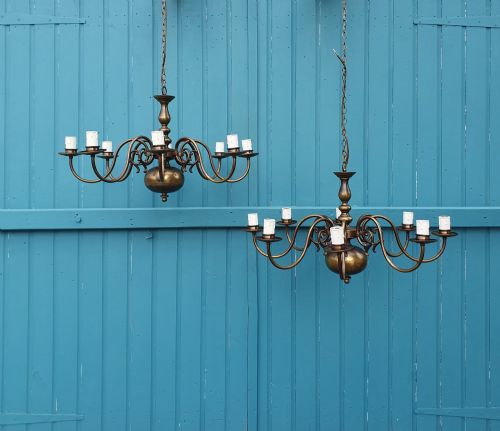
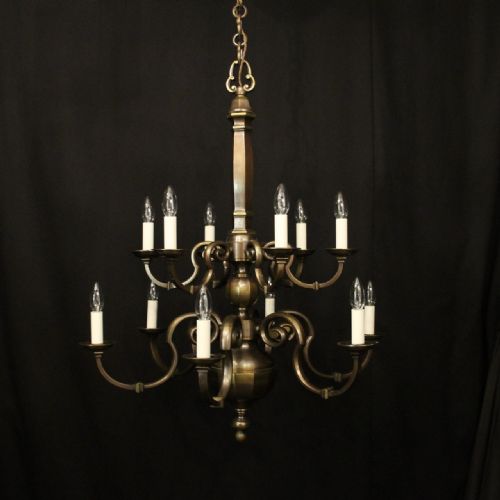
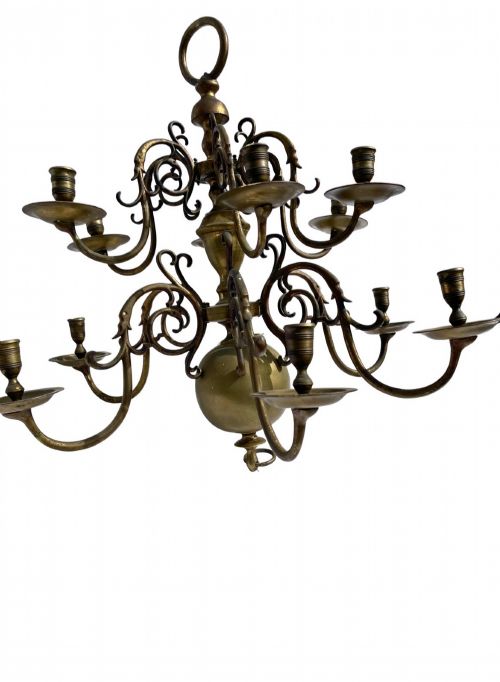


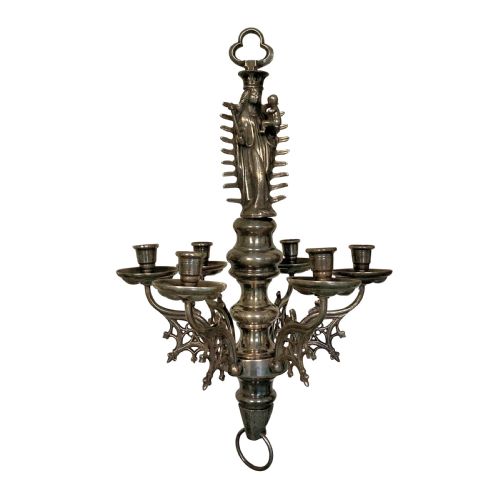
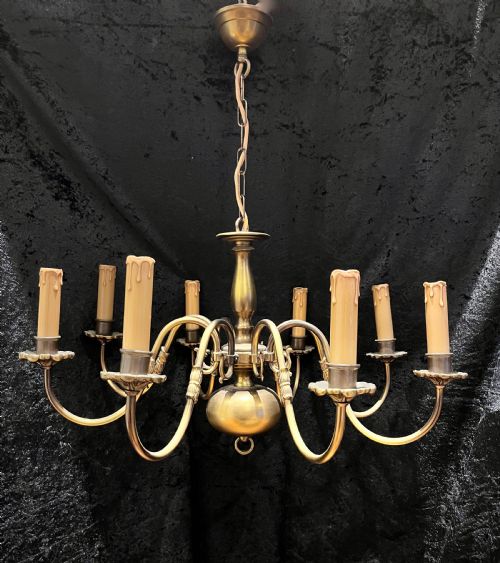
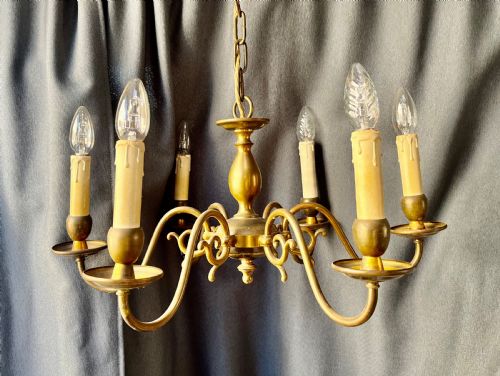
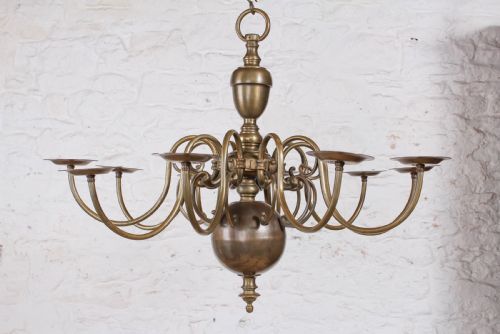


Flemish Brass Chandelier
A flemish brass chandelier brings warm, polished metal and sweeping branch arrangements into a room.
Flemish Brass Chandelier
A flemish brass chandelier is a multi-branched hanging light fixture defined by its metal construction and Continental heritage. Buyers searching for a flemish brass chandelier will find examples spanning from the eighteenth century through to the nineteen thirties, encompassing Edwardian interpretations and revival pieces.
The most common variants on this page are mid to late nineteenth-century and early twentieth-century pieces, including Edwardian and nineteen twenties productions. These range from modest six-arm setups to large, tiered twelve-branch fixtures designed for high ceilings.
Materials and construction
These fixtures are constructed predominantly from brass, solid brass, and bronze, with occasional silver-plated surfaces and glass details. Cast brass components form the structural body and arms of the chandeliers, providing the weight and rigidity necessary for multi-branch designs.
Metalworking techniques involve casting individual arms and central stems, then joining them to create symmetrical arrangements holding multiple lights. Oxidised brass finishes and polished surfaces appear across the inventory, reflecting different period preferences for metal patination.
Listings feature brass, bronze, solid brass, and silver plate across periods spanning the eighteenth, nineteenth, and early twentieth centuries.
Distinctions in quality
Quality in these chandeliers is determined by the crispness of the brass casting and the complexity of the arm configuration. Tiered designs and multi-arm setups require precise balancing and intricate metalwork that distinguish finer workshop output from simpler production.
The thickness of the brass and the finish of the metal surface show the standard of the piece. Solid brass construction and detailed chasing on the central stem elevate the visual weight and presence of the hanging fixture.
The Flemish Brass Chandelier Glossary
- Brass
- A metal alloy of copper and zinc used extensively for the body and arms of these chandeliers. It provides a bright golden appearance that develops a deeper patina over time.
- Arm
- A curved branch extending from the central stem of a chandelier to hold a light source. These fixtures feature arrangements containing between three and twelve arms.
- Tier
- A horizontal level of lights on a chandelier. Larger examples incorporate multiple tiers, such as two-tier structures, to support a greater number of branches.
- Cast brass
- Molten brass poured into a mould to create shaped components like arms and decorative bosses. This technique allows for repeating ornamental details across the fixture.
- Silver plate
- A thin layer of silver applied over a base metal surface. Certain pieces utilise this finish to alter the silvery-white appearance of the metal.
Flemish Brass Chandelier: Frequently Asked Questions
How do I hang a heavy brass chandelier?
These metal fixtures require secure anchoring into ceiling joists using rated fixings to support the combined weight of the brass arms and central column.
Professional installation by an electrician ensures the hanging point and wiring safely accommodate multi-branch chandeliers.
What periods do these chandeliers come from?
The selection includes eighteenth-century examples alongside nineteenth-century pieces and twentieth-century productions from the nineteen tens, twenties, and thirties.
Edwardian and revival styles frequently appear, reflecting later interpretations of earlier Dutch and Flemish designs.
How many lights do these fixtures have?
Branch configurations vary significantly, ranging from compact three or six-light arrangements up to eight, ten, and twelve-light formats.
Larger spaces often utilise tiered twelve-branch chandeliers to provide adequate illumination and visual proportion.
How should I clean polished brass?
Maintenance involves gentle dusting with a soft cloth to remove surface particles without disturbing the underlying metal finish.
Avoid harsh chemical abrasives that strip the historic patination accumulated on older brass and bronze surfaces.