





Dutch Style Ceiling Pendant
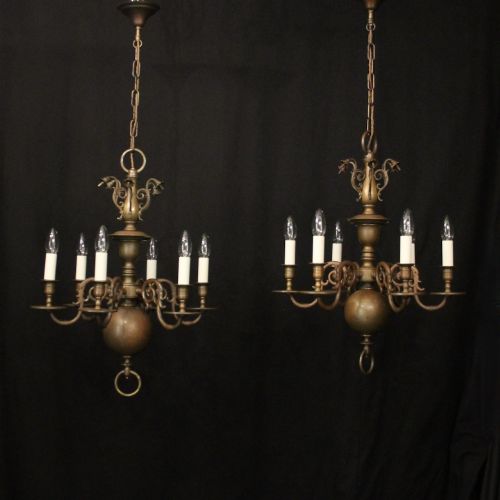
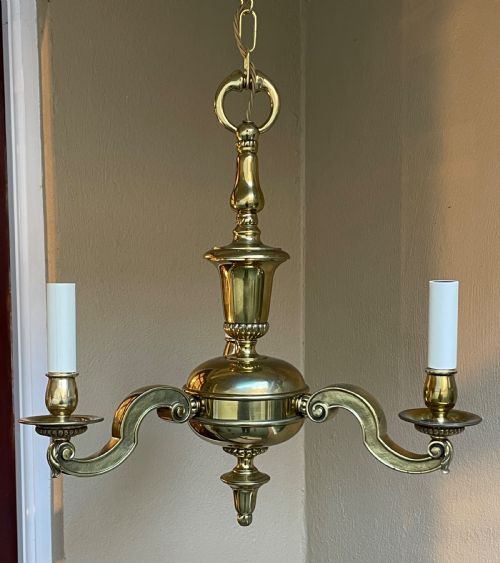
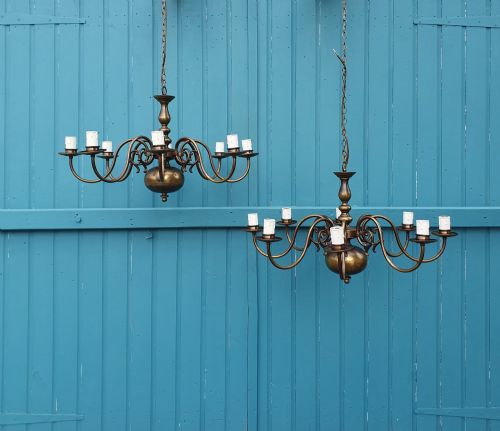
These Dutch style ceiling pendant pieces are substantial brass and bronze chandeliers offering character and warmth to a room.
Dutch Style Ceiling Pendant
When searching for a dutch style ceiling pendant, a buyer encounters multi-branched chandeliers cast from brass or bronze. The pieces available span several eras, reaching from the eighteenth century through to the early twentieth century.
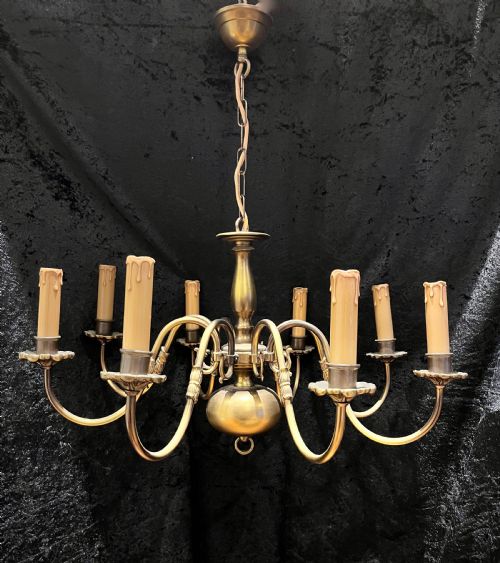
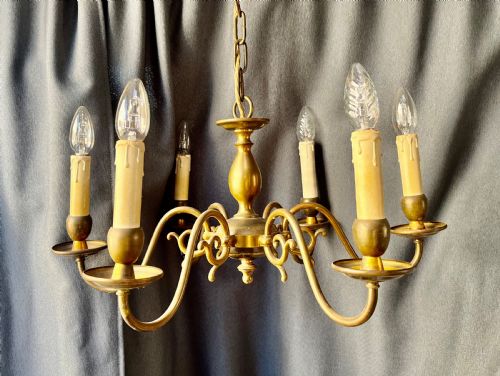
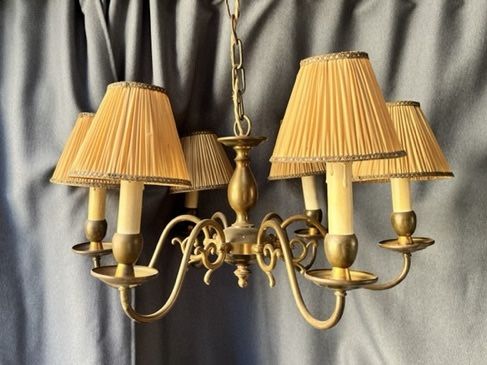
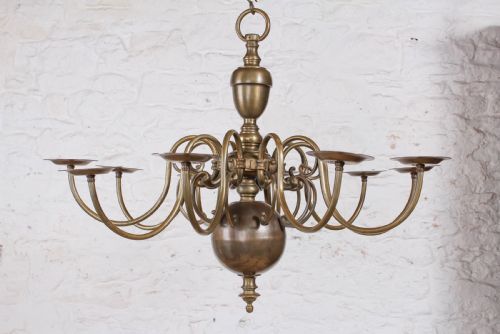
Most examples found on this page date from the Edwardian period and the nineteen-twenties, showing styles rooted in Dutch Baroque, Flemish Renaissance, and Dutch Revival traditions. These multi-arm light fittings generally feature three, five, six, or eight branches radiating from a central stem.
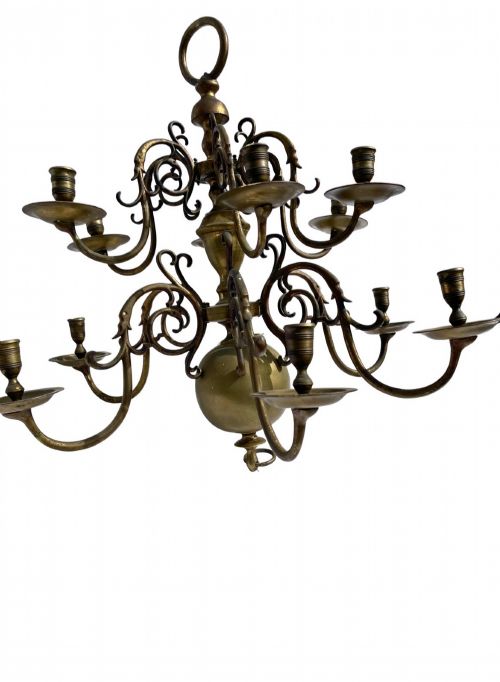
Larger formats appear too, including twelve-branch tier configurations and impressive pairs suitable for high ceilings. Copper details and silver-plated finishes occasionally supplement the dominant brass and bronze construction across these chandelier forms.
How they were made
The construction relies heavily on cast brass, solid brass, and bronze, yielding robust metal frames capable of supporting multiple candle-style arms. Founders shaped these metals through traditional casting methods, producing substantial stems and sweeping branch components.
Fabric elements occasionally accompany the metalwork in specific lighting designs, while copper and silver plate provide contrasting surface finishes. The assembly of these multi-arm chandeliers involves precise fitting of branches around a central turned or cast column.
Listings span periods from the eighteenth century to the nineteen-thirties, with brass, bronze, and copper as the primary materials.
What varies in quality
Quality in a dutch style ceiling pendant rests on the crispness of the metal casting and the architectural balance of the branching arms. Heavier solid brass and bronze formations provide superior structural integrity compared to lighter alternatives.
The sophistication of the period revival style dictates the visual merit, with finer castings displaying sharper chased detail along the stems and drip pans. Surface patination naturally develops over centuries or decades, distinguishing older brass components from modern replacements.
The Dutch Style Ceiling Pendant Glossary
- Chandelier
- A branched ceiling-mounted lighting fixture designed to hold multiple lamps or candles. These hanging fittings serve as both primary illumination and decorative centrepieces in large rooms.
- Cast brass
- An alloy of copper and zinc poured into moulds to create shaped components. This method produces the sturdy structural frames and ornate arms seen on period light fittings.
- Dutch Baroque
- An artistic style originating in the seventeenth century characterised by robust forms and exuberant detail. Revival pieces from later centuries emulate these elaborate proportions in metalwork.
- Flemish Renaissance
- A design movement known for architectural richness and ornate craftsmanship. Chandeliers of this style feature complex scrolling branches and substantial central columns.
Dutch Style Ceiling Pendant: Frequently Asked Questions
How many lights do they have?
These chandeliers typically feature three, five, six, or eight branches radiating outwards from the central stem.
Larger historical examples can extend to twelve branches arranged across multiple tiers for expansive spaces.
What periods do they date from?
The selection includes genuine eighteenth-century examples alongside nineteenth-century and early twentieth-century revival pieces.
Edwardian items and items from the nineteen-twenties and nineteen-thirties are particularly common across the current listings.
Are they made of solid brass?
Many of the pieces are constructed from solid brass, cast brass, or bronze metalwork.
Some variants incorporate copper elements or silver plating over the brass base to achieve a different metallic finish.
What styles are represented here?
The designs draw heavily on Dutch Baroque, Flemish Renaissance, and Dutch Revival aesthetic traditions.
These styles replicate the heavy, ornate metalwork of historic continental European lighting fixtures.