
1930s Art Deco Drawers
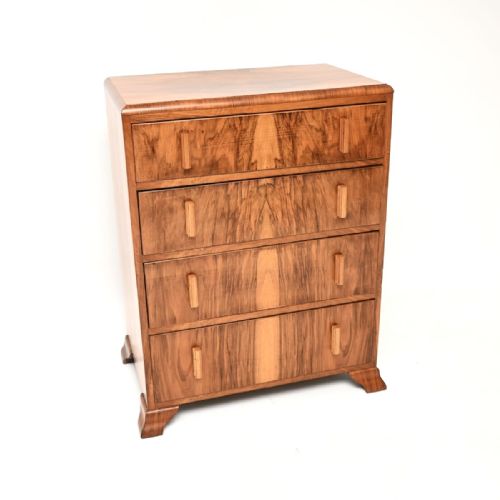
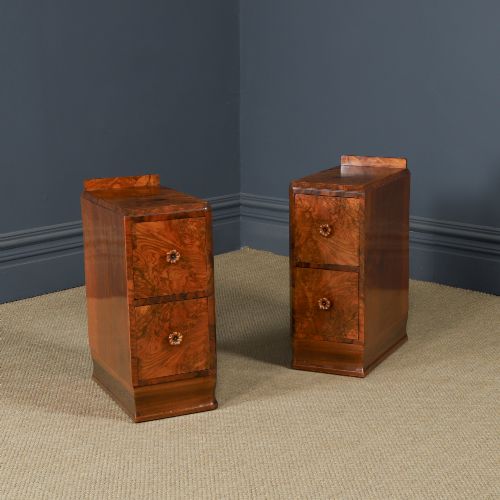
These 1930s art deco drawers offer clean geometric lines and rich figuring, bringing architectural symmetry and practical storage to a modern room.
1930s Art Deco Drawers
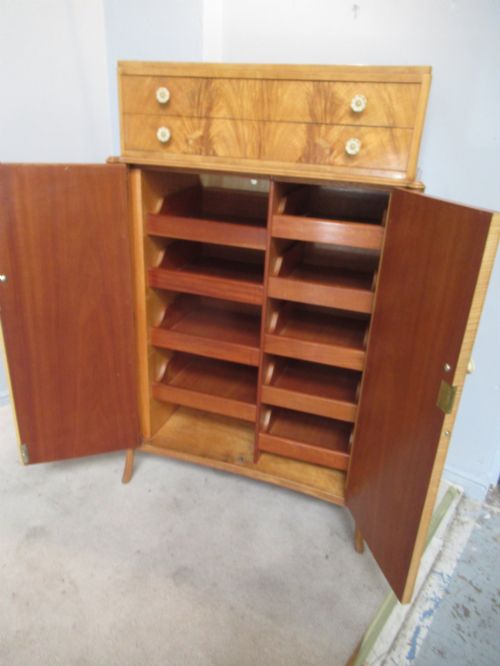
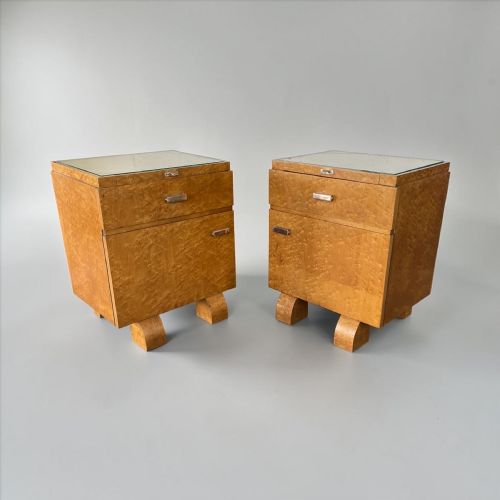
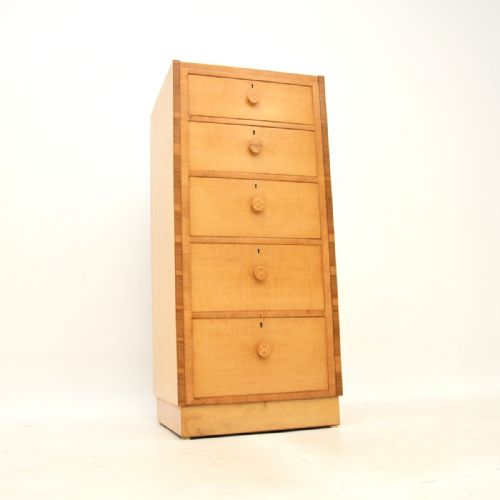
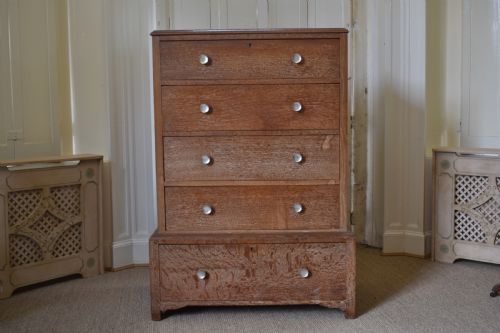
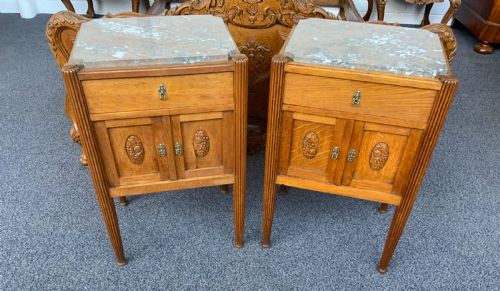
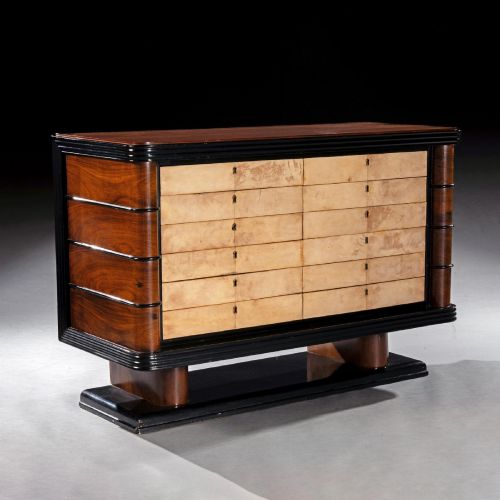
When you search for 1930s art deco drawers, you encounter a variety of storage pieces ranging from compact bedside cabinets and tallboys to large chests of drawers and commodes. The pieces reflect the design ethos of the interwar period, combining utility with distinct geometric silhouettes and symmetrical drawer arrangements.
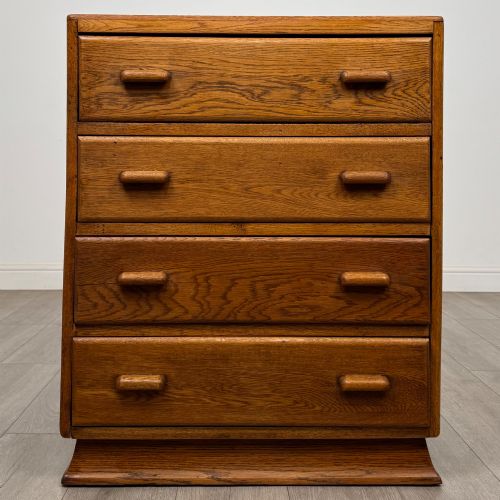
You are most likely to meet oak and walnut variants on this page, alongside pieces rendered in figured burr walnut or pale maple. Many items originate from English workshops or French studios, spanning styles from traditional Art Deco and French Art Deco to Art Deco Modernist.
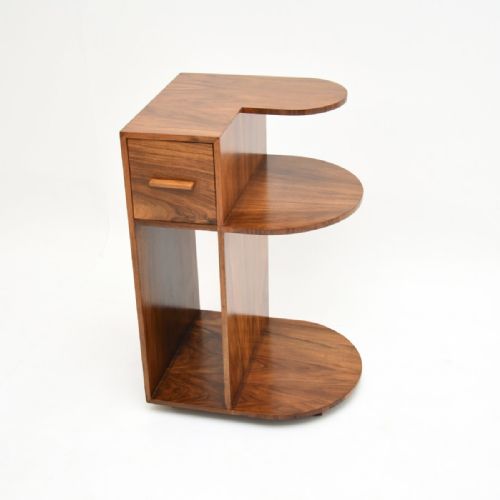
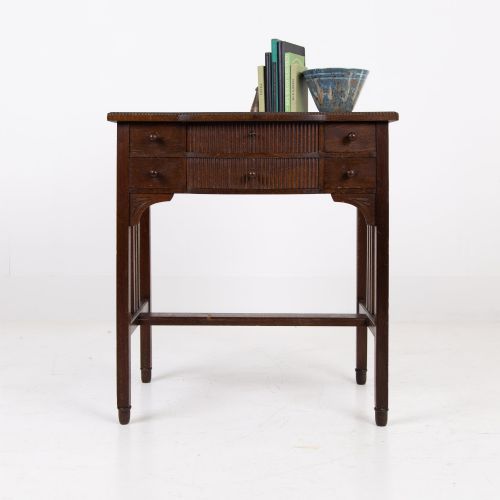
The selection extends beyond standard bedroom chests to include bedside tables, side tables, console tables, and multi-drawer tallboys. Each piece demonstrates the characteristic architectural proportions and functional compartmentalisation typical of twentieth-century cabinetmaking.
Materials and construction methods
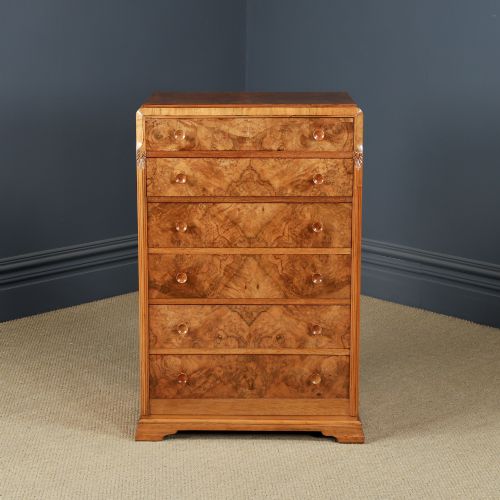
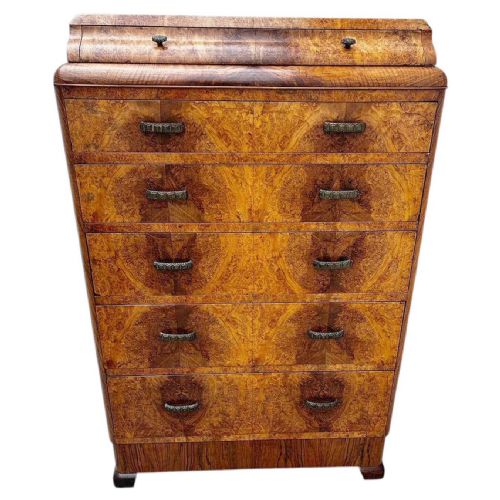
Cabinetmakers constructed these pieces using solid foundational timbers such as oak, mahogany, and walnut, frequently applying decorative veneers like burr walnut, sycamore, satinwood, and macassar ebony to create striking surface patterns. Grain alignment was carefully considered to accentuate the geometric fronts of the drawers and cabinets.
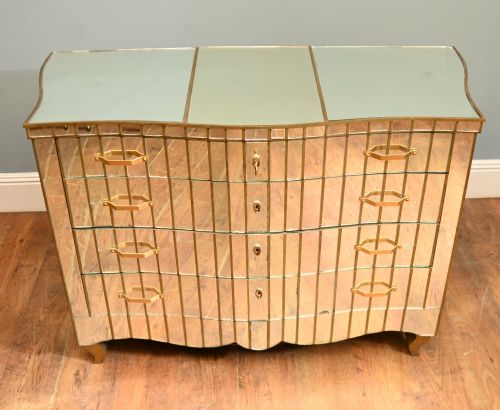
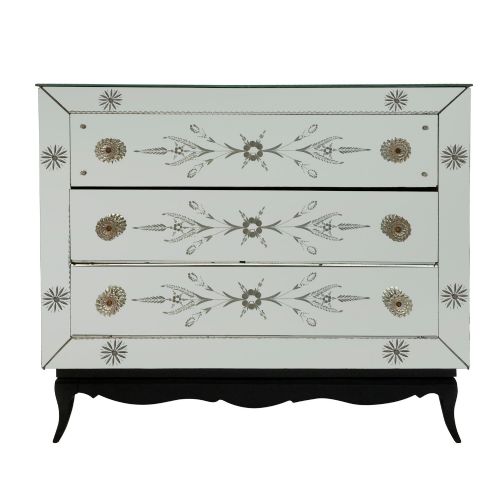
Metal accents in chrome, brass, and plain steel were integrated into handles, drawer pulls, and structural framing to complement the wood. Specialised touches such as parchment-covered drawer fronts, mirrored glass panels, and inlaid details appear across various French and English examples from the era.
Listings feature pieces spanning four decades, with the 1930 date dominating the selection alongside examples from the 1920s, 1940s, and the Edwardian period.
Factors that define quality
The division between standard production and exceptional work rests on the selection of face veneers and the precision of the cabinet joinery. Pieces featuring book-matched burr walnut, exotic macassar ebony, or carefully banded satinwood display a higher degree of artisan planning than plain utilitarian carcases.
Hardware integration and internal execution also separate grades of manufacture. Solid brass or chrome fittings, dovetailed drawer construction, and original maker labels indicate workshops that maintained strict standards of production.
Hille·Dudley & Co·Gomme·Frank Taylor & Co·Fortnum and Mason·Maurice Adams·Betty Joel·The Bowman Brothers
The 1930s Art Deco Drawers Glossary
- Tallboy
- A tall chest of drawers, often combining a wardrobe section or multiple smaller drawers stacked vertically above larger ones to maximise vertical storage. These pieces were frequently utilised in interwar bedrooms for space efficiency.
- Burr walnut
- A prized timber harvested from the irregular growths on walnut trees, yielding complex swirling grain patterns. Cabinetmakers sliced this wood into thin veneers for decorative drawer fronts.
- Commode
- A low chest of drawers or cabinet originating from French design traditions. These items often feature substantial surface space above multiple deep drawers.
- Macassar ebony
- A dense exotic hardwood characterised by distinctive dark brown and yellowish stripes. It was deployed as a contrasting inlay or banding material on high-end British and continental pieces.
- Haberdashery counter
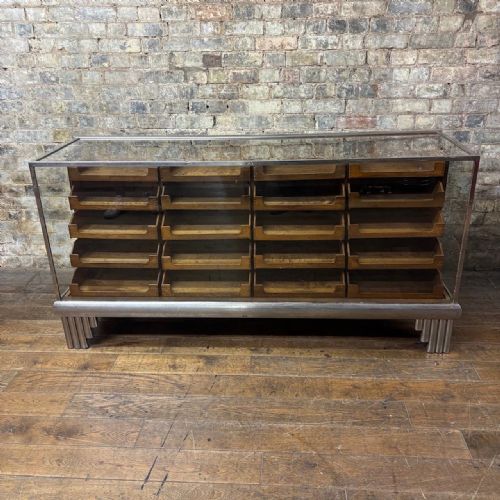
- A multi-drawer storage unit originally designed for retail display, featuring shallow drawers for organised stock. Domestic adaptations incorporate these units into studies and living spaces.
1930s Art Deco Drawers: Frequently Asked Questions
How do I identify a true 1930s piece?
Examine the timber species, veneer patterns, and hardware construction characteristic of the interwar period. Look for traditional joinery methods combined with geometric proportions typical of the era.
Check for maker labels, stamps, or retail tags located inside the drawers or on the back panels. Material choices such as chrome, burr walnut, and sycamore further ground the piece in this timeframe.
Were these drawers used only in bedrooms?
While chests of drawers and bedside cabinets served sleeping quarters, many related forms functioned as console tables, side tables, and serving furniture. Tallboys and haberdashery units were also adapted for various domestic and commercial interior spaces.
Compact cabinets and commodes provided versatile storage in hallways, living rooms, and dining areas. The clean lines allowed them to integrate easily into different domestic contexts.
What is the difference between a chest and a tallboy?
A standard chest of drawers is built wide and low, providing a top surface at a comfortable height for display or mirror placement. Proportions prioritise horizontal spread and easy reach.
A tallboy is vertically elongated, combining a greater number of drawers or stacking a cupboard section on top of a chest base. This form was designed to maximise storage capacity while occupying a smaller floor footprint.
How should I care for veneered walnut surfaces?
Keep walnut and burr walnut surfaces away from direct sunlight and strong heat sources to prevent the underlying veneers from drying or cracking. Dust regularly with a dry, soft cloth and avoid chemical polishes.
Maintain stable humidity levels in the room to protect the wood and glue joints. Apply occasional appropriate wax feeds only when the timber appears dry.