
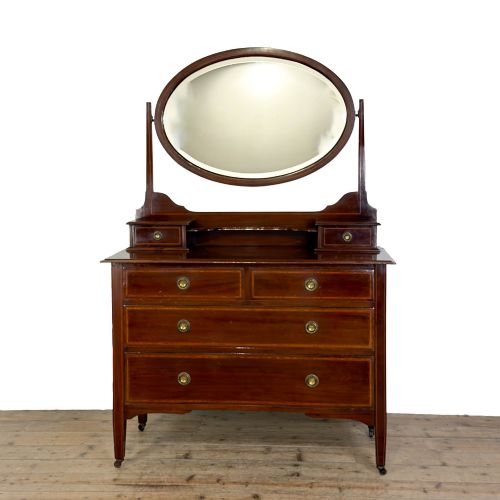
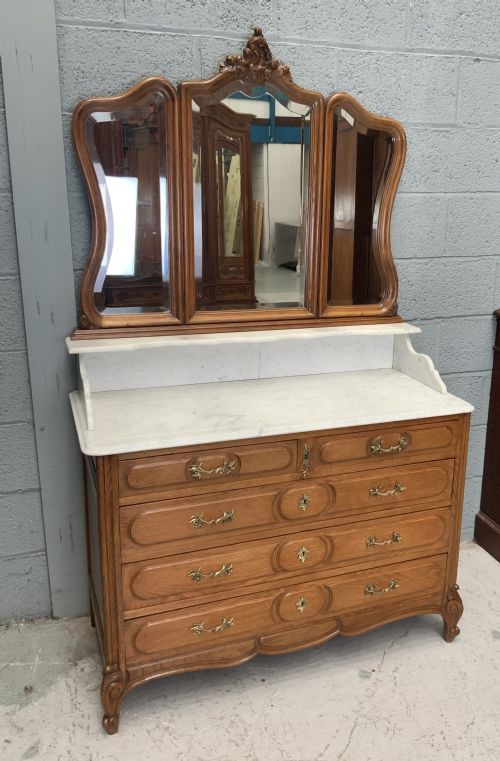


Mirrored Chest Drawers
Mirrored chest drawers combine practical storage with reflecting glass, bringing light and utility into the bedroom.
Mirrored Chest Drawers
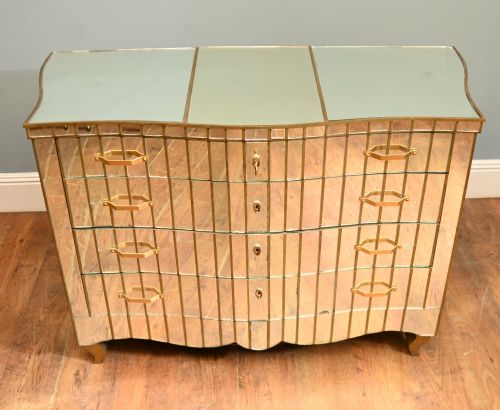
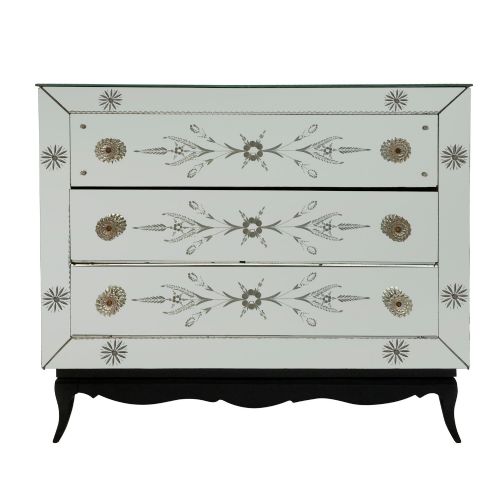
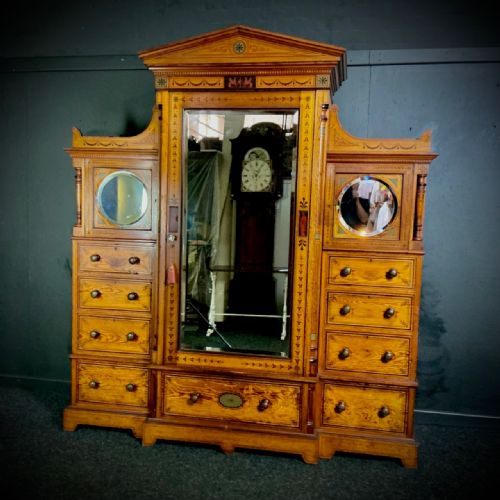
When searching for mirrored chest drawers, buyers encounter a specific intersection of bedroom storage and reflective glass, drawing primarily from Victorian, Edwardian, and Art Deco periods.
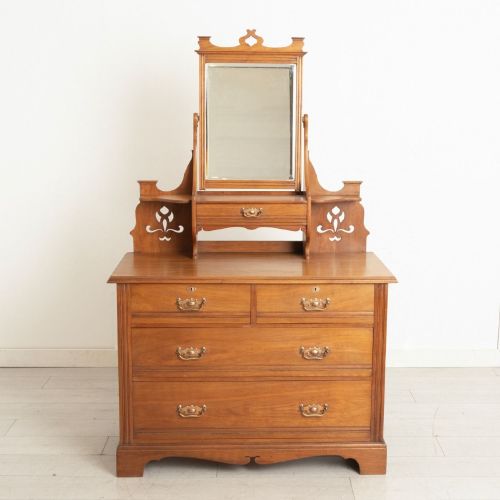
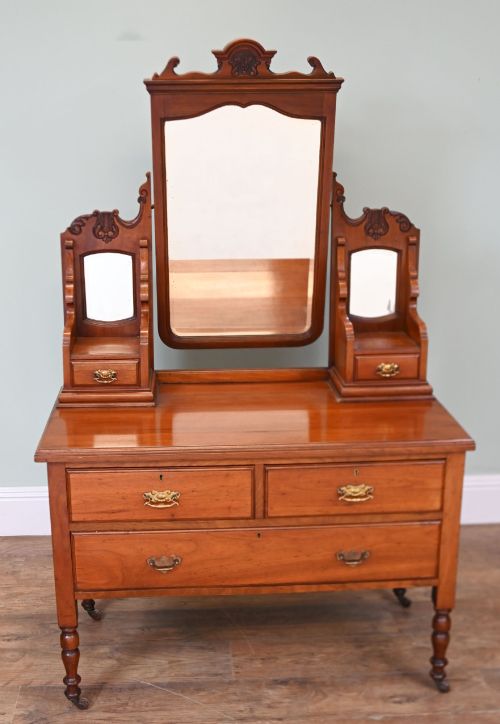
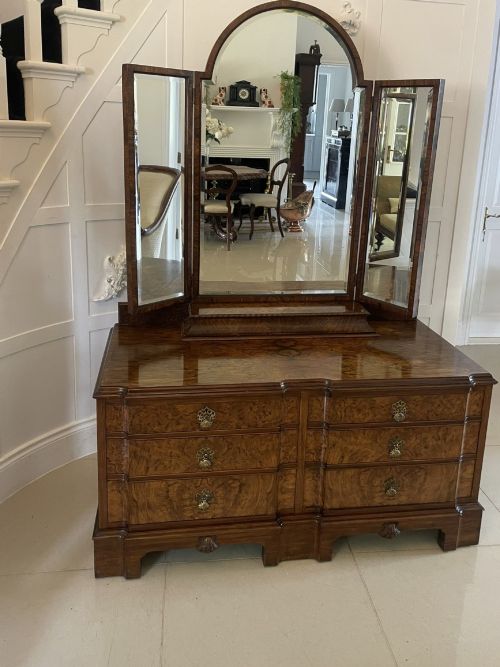
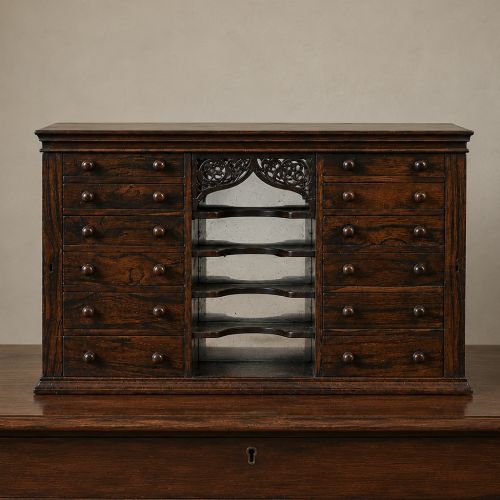
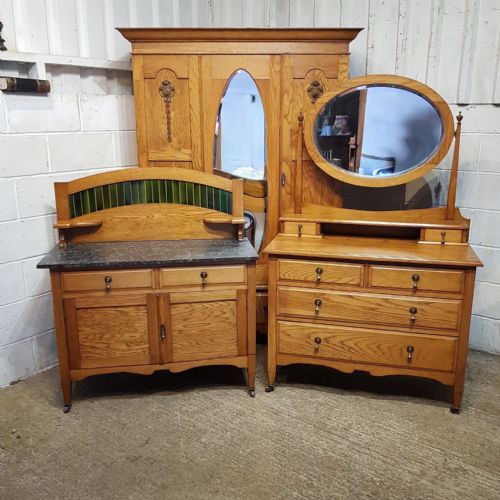
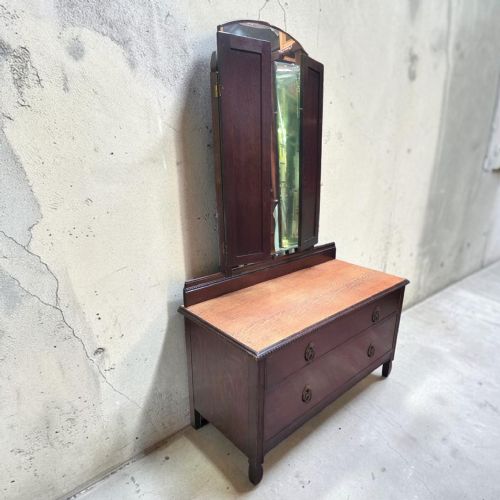
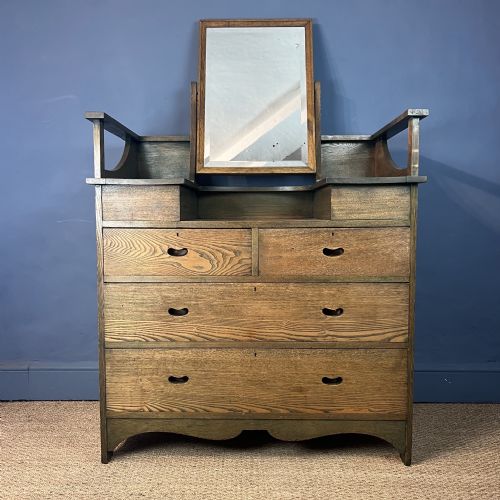
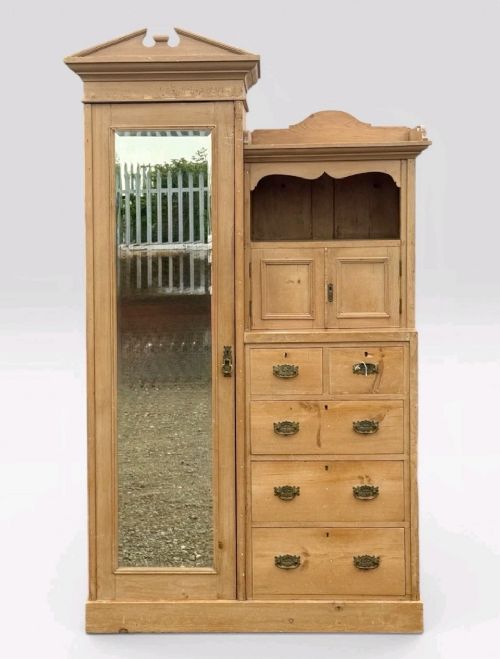
The selections span distinct forms including standard chests with raised dressing compartments, dressing chests fitted with swing or triple mirrors, and French pieces from the 1930s.
Makers and workshops of the nineteenth and early twentieth centuries produced these items in various woods such as mahogany, oak, walnut, and pine, often incorporating marble tops or brass hardware.
Materials and Construction
Cabinet makers utilised solid and veneered timbers including mahogany, oak, walnut, ash, and pine, building carcases with traditional joinery methods suited to bedroom furniture.
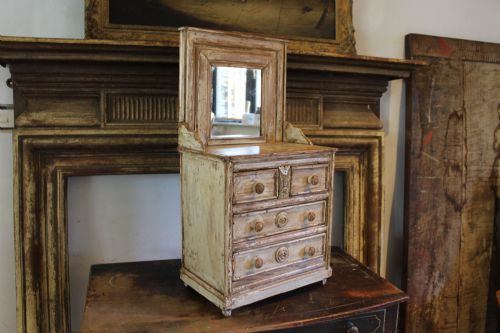
Glass mirrors were integrated into pivoting frames, compartment lids, or door panels, sometimes accompanied by brass fittings, marble surfaces, or hand-painted and scumble-glazed finishes.
Listings feature oak, mahogany, walnut, and pine across Victorian, Edwardian, and Art Deco periods, alongside French provincial styles.
Judging Quality and Execution
The standard of timber selection and cabinet construction dictates the grade of a piece, distinguishing robust hardwood carcases from simpler painted pine examples.
The clarity and original condition of the mirror glass, alongside the refinement of carved details, marquetry, or brass mounts, separate standard utility furniture from finer workshop productions.
George Walton·Shapland and Petter·Wright and Hunter of Belfast·Harris Lebus of London·B Cohen and Sons
The Mirrored Chest Drawers Glossary
- Dressing chest
- A lower chest of drawers fitted with an attached mirror, designed for grooming and bedroom storage. These often feature smaller trinket drawers above the main tier.
- Chifferobe
- A tall wardrobe-style storage unit combining drawer space with hanging compartments. They provide substantial capacity while retaining a compact footprint.
- Scumble glaze
- A decorative painted surface treatment applied to mimic the grain of more expensive woods. This technique was popular on nineteenth-century pine furniture.
- Marquetry
- The art of applying pieces of veneer to a structure to form decorative patterns and pictures. It appears frequently on finer Edwardian and Art Deco suites.
- Compactum
- A multi-functional wardrobe offering varied internal storage such as linen slides, drawers, and hanging space. They maximise utility within a single piece of furniture.
Mirrored Chest Drawers: Frequently Asked Questions
How do I date a mirrored chest drawers?
Dating relies on combining the timber choice, construction methods, and overall style evident in the piece. Victorian examples often utilise heavy mahogany or stencilled pine, while Edwardian and later pieces show lighter oak, walnut, or specific Art Deco geometry.
The bevel and silvering of the mirror glass also offer clues, as older plates display distinct hand-beveling or signs of ageing compared to twentieth-century replacements.
Are these pieces suitable for modern bedrooms?
These items serve well in contemporary spaces by providing functional drawer storage alongside the light-reflecting qualities of an integrated mirror. Their historical character adds a distinct focal point to modern interiors.
Buyers often place them in bedrooms or dressing rooms where the reflective glass helps brighten smaller layouts without requiring separate wall mirrors.
What woods were commonly used?
Makers relied heavily on native and imported timbers, with mahogany and oak appearing frequently across the Victorian and Edwardian periods. Walnut, ash, and satinbirch also feature in specific regional designs and high-end bedroom suites.
Pine served as the primary base wood for painted, scumble-glazed, or country-style pieces intended for everyday household use.
Can the mirror be removed easily?
Most mirrors on these chests are secured to upright wooden arms with traditional screw fittings or pivot pins designed for straightforward detachment. This makes moving or transporting large dressing chests significantly easier.
However, some integrated compartments or wardrobe doors house fixed mirror plates that are built permanently into the surrounding framework.