




Glass Fronted Drawers
Glass fronted drawers bring together timber cabinetry and transparent display, offering a practical way to store collections while keeping contents visible.
Glass Fronted Drawers
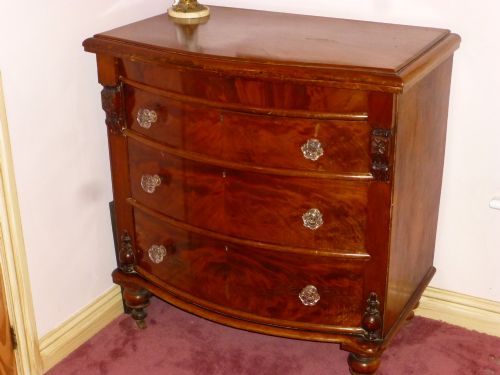
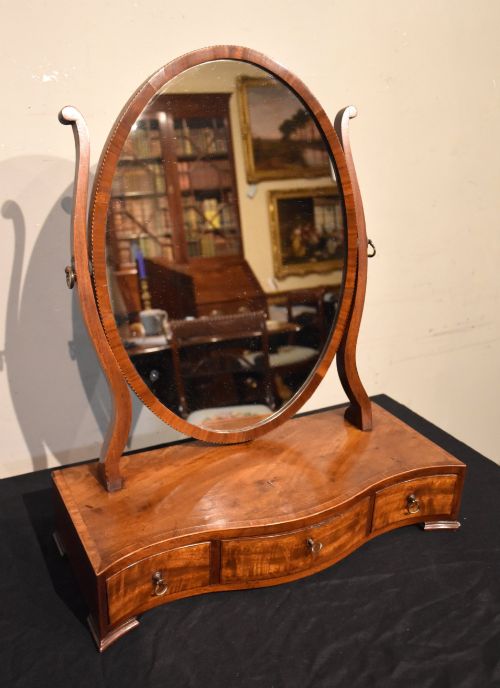
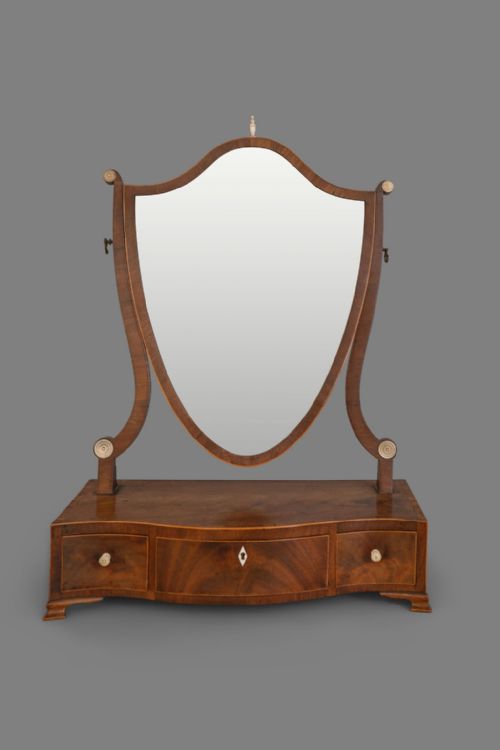
When searching for glass fronted drawers, buyers encounter pieces spanning the 18th century to the 1930s, including bureau bookcases, collectors cabinets, haberdashery counters, and dressing mirrors. These items serve multiple domestic and commercial functions, uniting drawer storage with glazed compartments or mirrored glass.
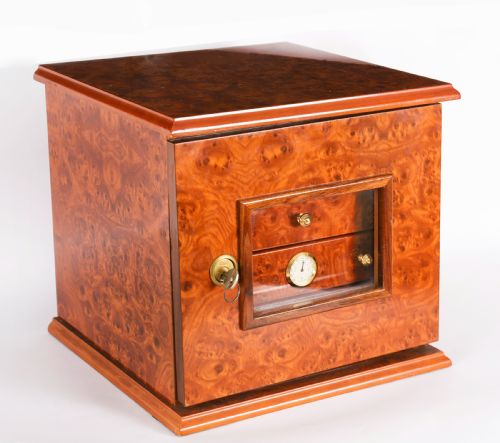
The selection on this page relies heavily on mahogany, oak, and walnut structures, taking forms from Georgian serpentine designs through to Art Deco haberdashery units. Cabinets with glass fronts often house specialist items like microscope slides or cigars, while larger furniture incorporates secretary desks and bookcases.
How they were made
Makers constructed these cabinets using hardwoods such as mahogany, oak, walnut, and burr elm, often paired with brass hardware and mirrored glass. Timber sections were shaped into serpentine, bow-front, or straight profiles depending on the period and style.
Glazing techniques secured glass panes within timber doors for display purposes, while internal drawers utilised secondary timbers and sometimes incorporated bone or chrome details, particularly in later 20th-century items.
Listings feature items built from mahogany, oak, and walnut, spanning periods from the 18th century to the 1930s.
What varies in quality
Quality in these pieces rests upon timber selection and the precision of the cabinetwork, visible in figured veneers, well-fitted drawers, and the integration of glazing bars. Finer examples display balanced proportions, clean serpentine lines, and matching grain patterns across the front.
Early items from the Georgian and Regency periods rely on traditional joinery methods and high-grade mahogany, whereas later Edwardian and Art Deco pieces demonstrate shifts toward utilitarian display or specialised storage such as microscope slide compartments.
Dudley & Co
The Glass Fronted Drawers Glossary
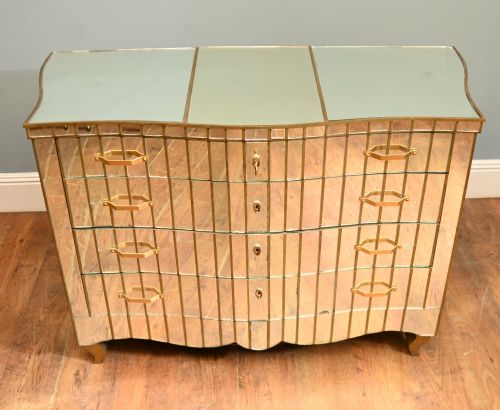
- Serpentine
- A curved furniture front featuring a convex centre flanked by concave sides. This shape appears frequently on dressing mirrors and chests from the Georgian period.
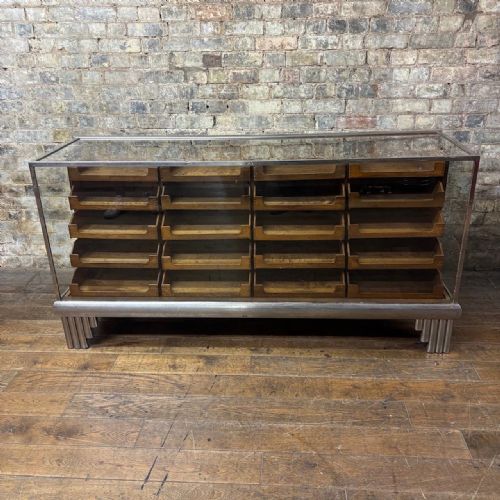
- Haberdashery counter
- A shop display unit featuring multiple drawers, often with glass panels or fronts. These pieces originated in retail environments for storing small goods.
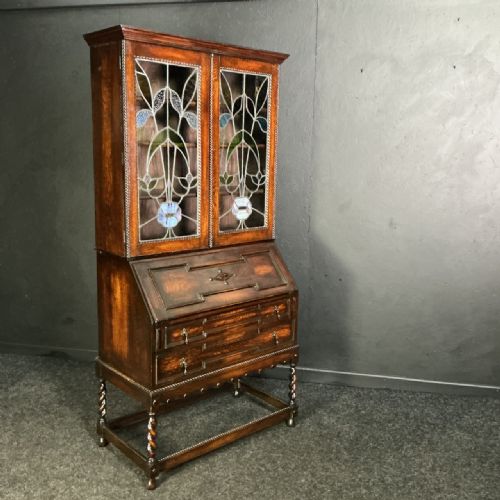
- Secretaire
- A cabinet or bookcase incorporating a pull-down writing drawer fitted with small compartments and pigeonholes. It combines a desk with drawer storage.
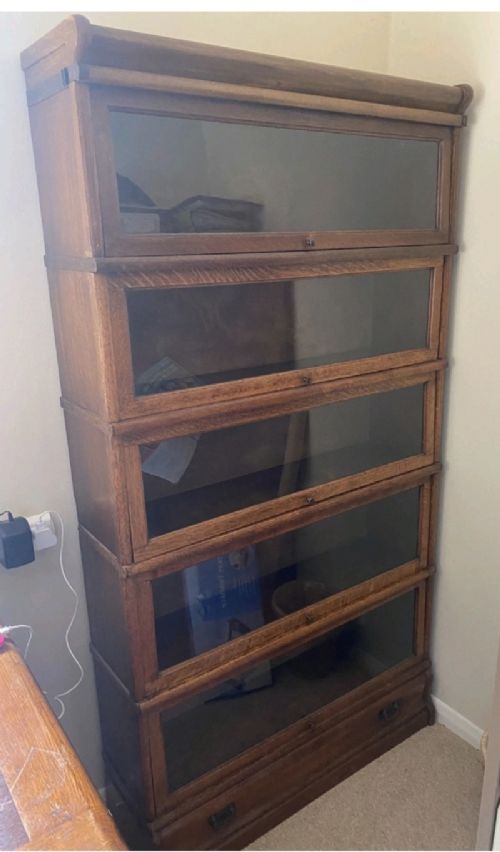
- Globe Wernicke
- A modular bookcase system composed of stacked, glass-fronted sections. These units use a patented lifting mechanism for the glazed doors.
Glass Fronted Drawers: Frequently Asked Questions
What are glass fronted drawers used for?
These pieces function as storage and display units, accommodating items ranging from books and microscope slides to clothing and haberdashery goods.
The glazed or mirrored doors allow contents to remain visible while protected from dust, combining utility with visual presentation.
How do I identify a Georgian piece?
Georgian cabinets and mirrors typically feature solid mahogany construction, hand-cut dovetails, and proportioned bracket feet or serpentine fronts.
Construction details and timber choice help distinguish 18th-century work from later Victorian or Edwardian reproductions.
Where do haberdashery counters come from?
Haberdashery counters originate in retail shops from the early to mid-20th century, designed for organising and displaying small merchandise.
Their multi-drawer layouts and glass-fronted compartments make them popular for modern domestic storage.
How should I care for timber cabinets?
Maintain antique timber furniture by keeping it away from direct heat sources and sudden humidity changes to prevent wood movement.
Regular dusting with a dry cloth preserves the finish of mahogany, oak, and walnut surfaces.