
1930s Art Deco Bedroom
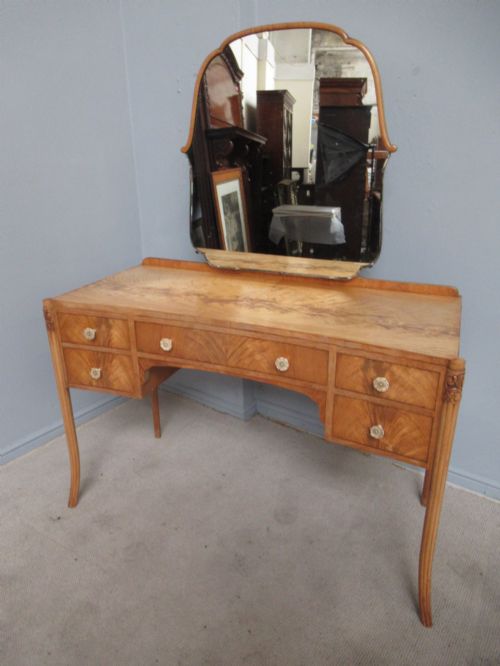
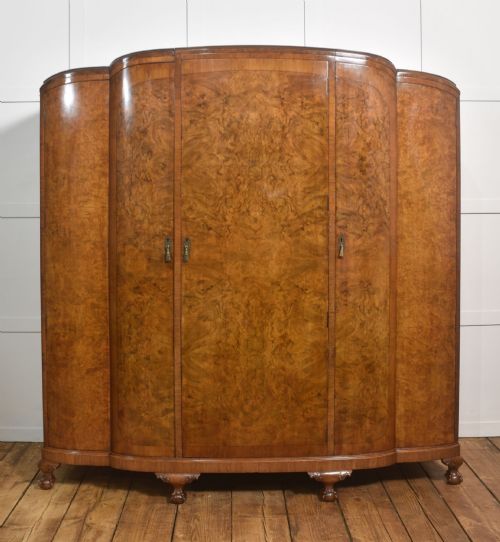
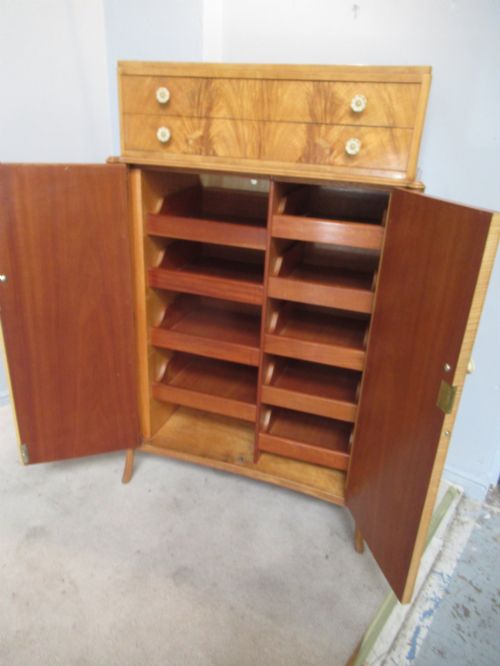
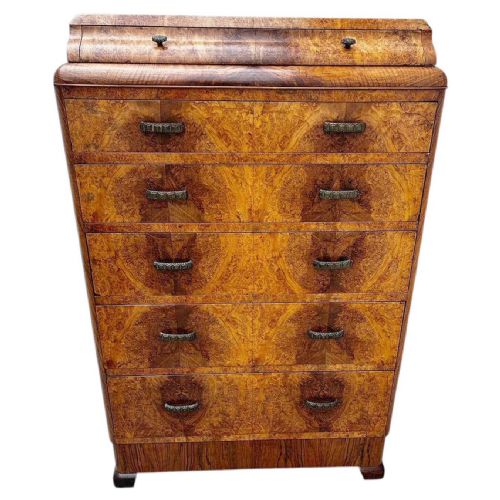
These pieces for a 1930s art deco bedroom bring geometric symmetry and rich timber grains to sleeping quarters.
1930s Art Deco Bedroom
When searching for a 1930s art deco bedroom, buyers encounter furniture designed for domestic repose primarily from the 1930, 1920, and 1940 periods, alongside occasional Edwardian influences. The selection centres on large storage items and sleeping furniture intended to create a unified suite.
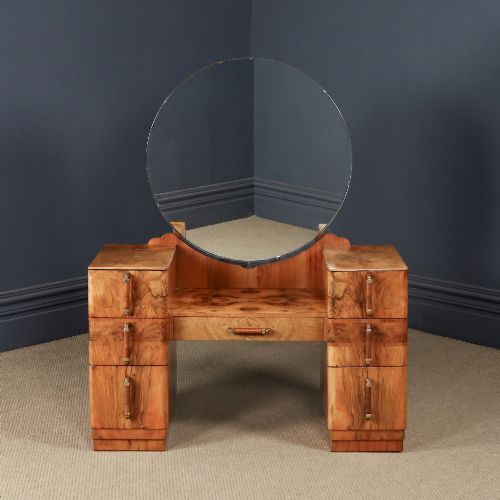
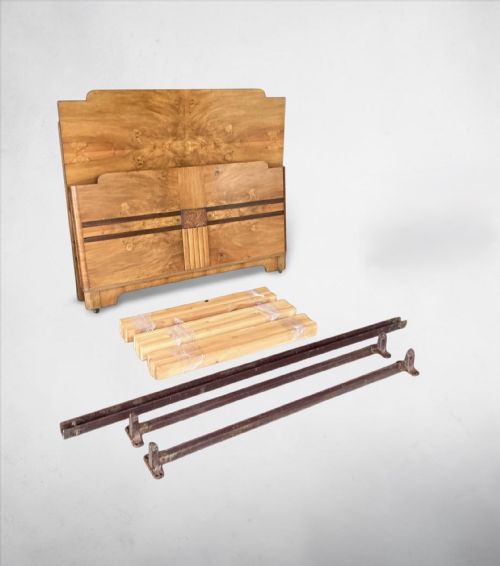
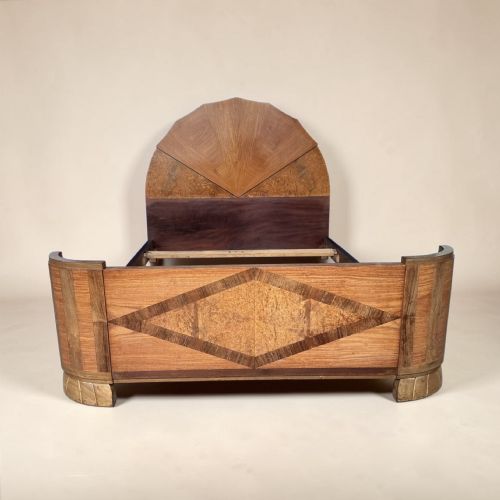
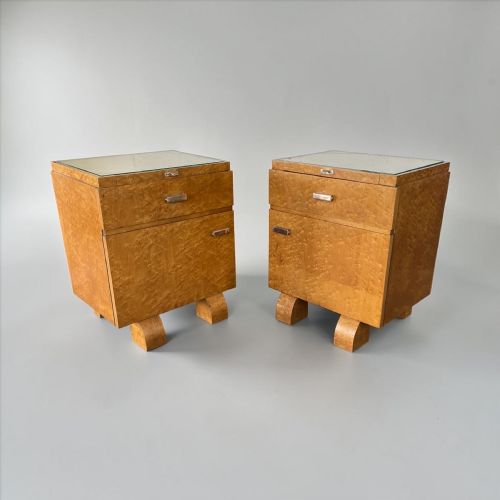
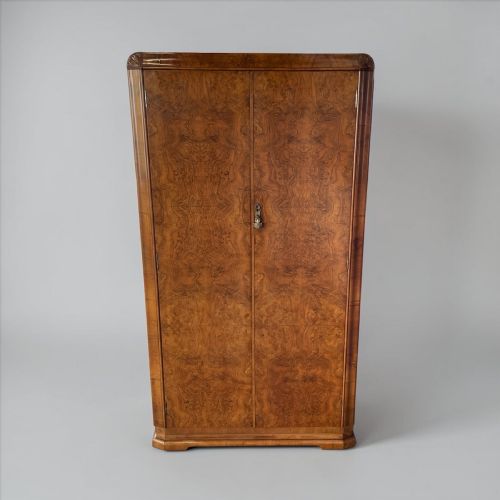
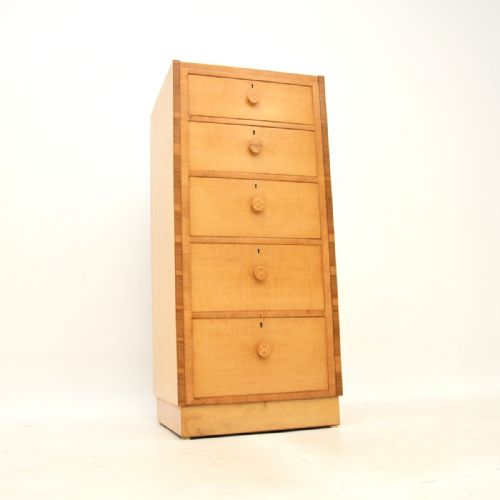
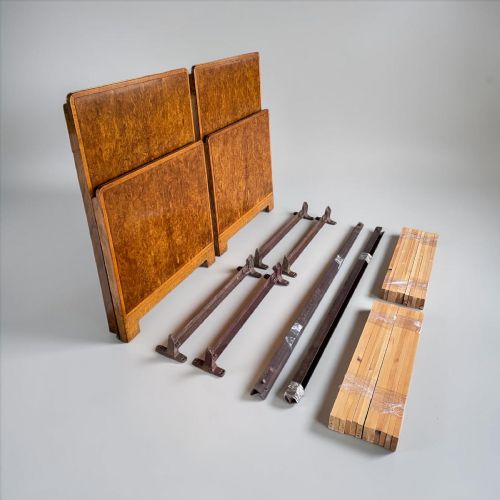
The most common forms on this page include wardrobes, tallboys, chests of drawers, and dressing tables paired with matching beds and bedside cabinets or tables. Pieces appear in distinct regional variants, taking in English, French Art Deco, and Scandinavian Art Deco aesthetics.
Materials and construction methods
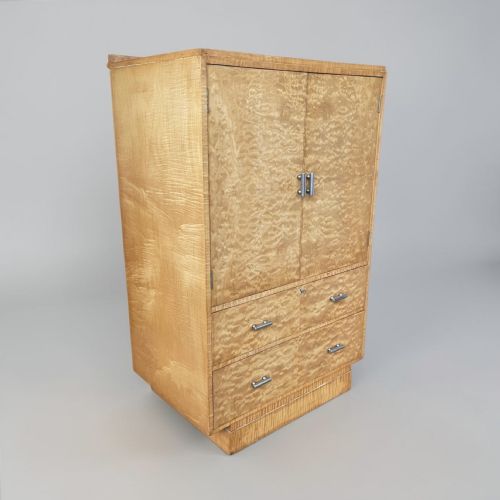
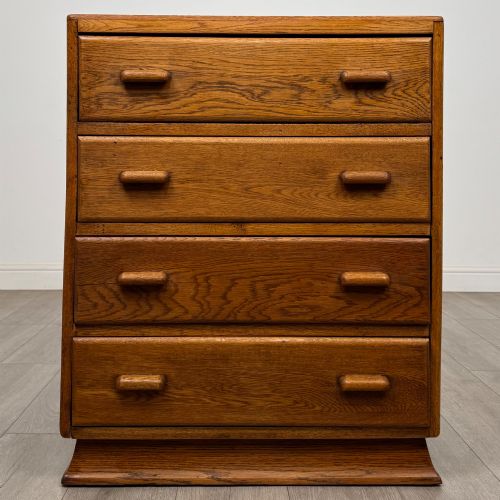
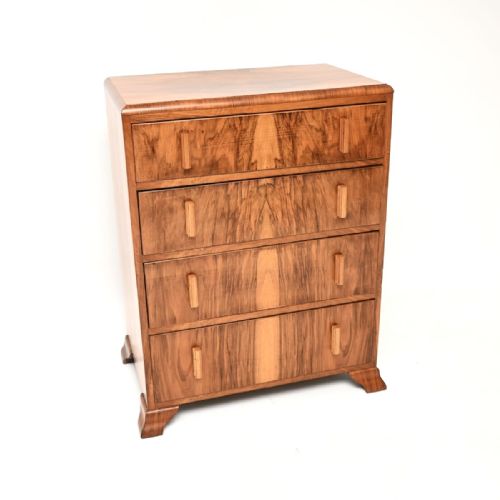
Cabinet makers utilised a palette of striking timbers, most notably burr walnut, walnut veneer, oak, limed oak, mahogany, maple, satinwood, sycamore, and palisander. Metal and brass elements frequently provide structural contrast or decorative trim.
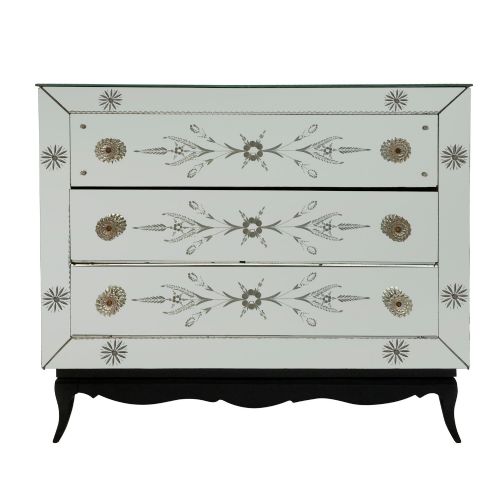
Surfaces often highlight figured wood grains through book-matching techniques, while specific items incorporate specialist finishes such as parchment-covered drawers or mirrored glass panels.
Listings span pieces dated across the 1920, 1930, and 1940 periods, alongside earlier Edwardian influences.
Distinctions in quality and execution
The standard of a piece rests on the selection and arrangement of timber veneers, particularly how symmetrically burr walnut or figured walnut grain wraps around curves and drawer fronts. Cabinet makers who invested time in book-matching created visual rhythm across large surfaces like wardrobe doors and breakfront facades.
Construction integrity shows in the weight of the carcase, the precision of joinery on bow-front designs, and the integration of secondary materials such as contrasting maple or satin birch details. Suites bearing maker attribution demonstrate higher design cohesion across multiple matching items.
Hille·Frank Taylor & Co.·Bath Cabinet Makers·Walter Carter Harrods
The 1930s Art Deco Bedroom Glossary
- Tallboy
- A tall chest of drawers, often combining wardrobe storage space or smaller drawers above deeper compartments.
- Compactum
- A fitted wardrobe containing a combination of hanging space, drawers, and shelving within a single unit.
- Breakfront
- A piece of furniture where the central section projects forward from the flanking cabinets or drawers.
- Parchment
- Animal skin stretched and treated to provide a smooth, pale covering for drawer fronts or decorative panels.
- Book-matching
- A technique where adjacent veneer slices are mirrored to create symmetrical patterns across a wooden surface.
1930s Art Deco Bedroom: Frequently Asked Questions
What pieces make up a complete art deco bedroom?
A full arrangement typically includes a double or single bed flanked by matching bedside tables or cabinets. Storage is handled by large wardrobes, compactums, or tallboys, paired with a dressing table featuring an integrated mirror.
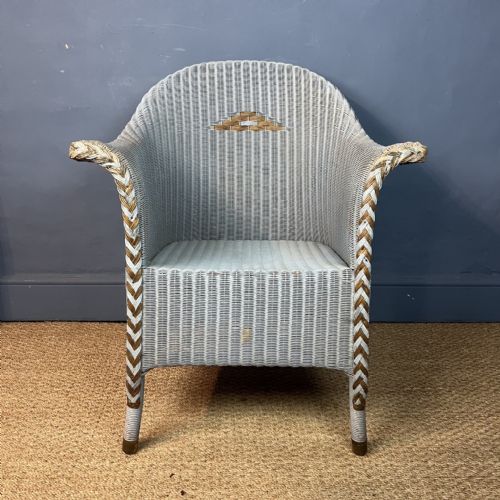
Additional seating often takes the form of compact bedroom chairs or armchairs. Together these items create a unified architectural scheme within the room.
How do English and French art deco furniture styles differ?
English examples frequently lean into warm figured and burr walnut timbers with restrained geometric lines and sturdy oak carcases. They prioritise practical proportions for domestic spaces.
French pieces often embrace bolder forms, utilising mirrored surfaces, exotic woods like palisander, and contrasting details such as parchment. They lean towards theatrical silhouettes and dramatic decorative elements.
Which woods are most common in 1930s bedroom furniture?
Walnut and burr walnut dominate the era, celebrated for their rich, swirling grain patterns. Oak, including limed oak variations, appears frequently in both standard and tall chest forms.
Lighter timbers like maple, sycamore, satinwood, and satin birch provide contrast for interiors and dressing table surfaces. These woods reflect a shift toward brighter sleeping environments.
How do I care for walnut veneer surfaces?
Keep walnut veneer pieces away from direct sunlight to prevent the timber tones from fading unevenly over time. Maintain a stable room temperature to protect the delicate wood layers from humidity shifts.
Dust gently with a dry, soft cloth and avoid chemical polishes that can degrade the historic finish. Wax should be applied sparingly only when the timber appears dry.