

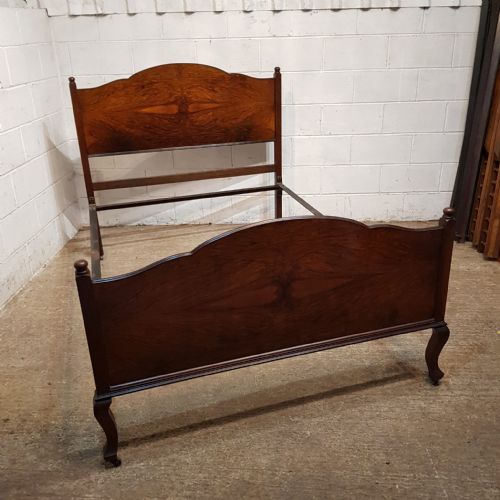


Art Deco Headboard
When you search for an art deco headboard, you are looking for geometric presence and rich timbers designed to anchor a bedroom.
Art Deco Headboard
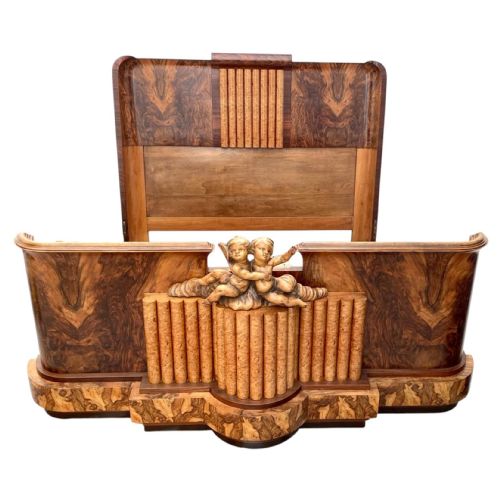
An art deco headboard provides a focal point defined by architectural lines and symmetrical forms. Many examples integrate bedside tables or cabinets into a single unified unit.
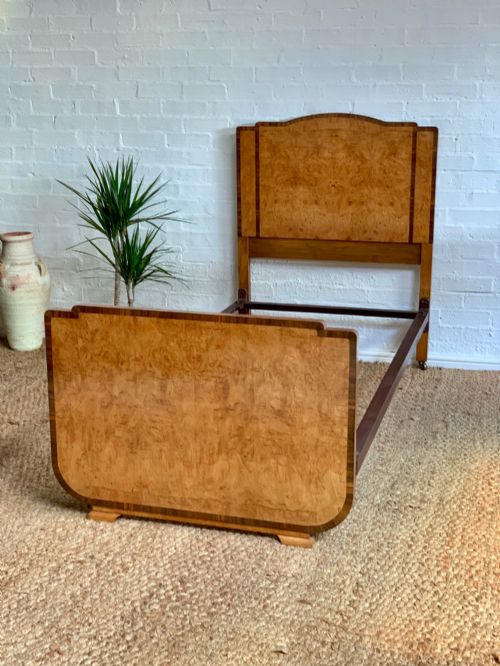
You will encounter pieces designed primarily for double and king-size beds, alongside single formats. While some items survive as complete bedsteads, standalone headboards frequently incorporate attached storage.
The dominant period represented is the 1930s, accompanied by occasional earlier 1920s variants. These pieces reflect the streamline modern and classical revival tastes of the interwar decades.
Materials and construction
Cabinet makers utilised timber frames overlaid with decorative veneers to achieve striking grain patterns. Walnut, burr walnut, and figured maple provide the characteristic warmth and movement across the surface.
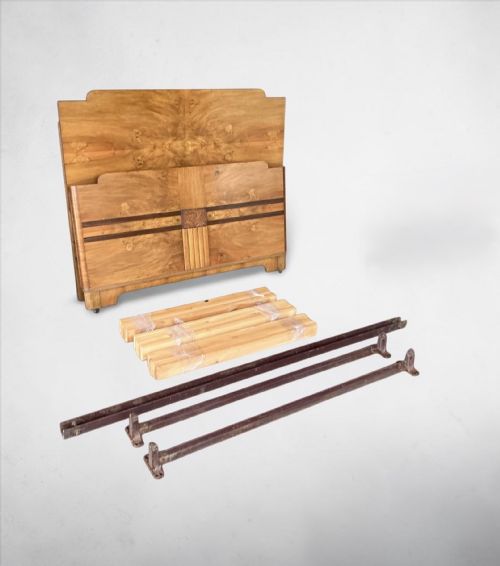
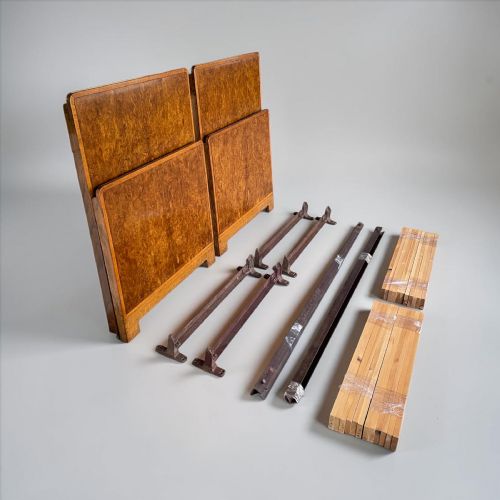
Exotic woods such as satinwood and macassar contrast against lighter blonde maples. Iron and metal elements occasionally appear in structural supports or decorative hardware.
Art Deco Headboard Retail Price Guide 2026
Typical asking prices for art deco headboard among the pieces listed under this phrase on Sellingantiques today, from the lower quarter to the upper quarter. They describe what is for sale here now, not the wider market.
Several headboards arrive with built-in bedside tables that ensure your alarm clock has nowhere to run.
Assessing quality and design
Quality rests in the selection of the veneer and the symmetry of its book-matched grain. Figured walnut or sunburst patterns require precise alignment by the maker to succeed.
Integrity of construction separates standard production from workshop pieces. Built-in cabinets, curved profiles, and matched bedside tables elevate the complexity of the original design.
Waring & Gillow England·Betty Joel·H.L. Epstein Brothers·Harry and Lou Epstein·Maples
The Art Deco Headboard Glossary
- Veneer
- A thin layer of choice timber applied over a secondary wood base. This technique allows makers to display dramatic grain patterns across wide surfaces.
- Book-matching
- A method of placing two adjacent veneer slices mirror-image to create symmetrical patterns. It forms the basis of many sunburst designs seen on headboards.
- Burr walnut
- A growth deformity in walnut trees that produces intricate, swirling grain formations. Highly prized for its decorative effect in panel work.
- Macassar
- A dark, heavily figured wood native to Indonesia. Often used as contrasting banding or inlay on lighter maple surfaces.
Art Deco Headboard: Frequently Asked Questions
How do I attach an art deco headboard?
Many period headboards feature integrated bedside cabinets that anchor the structure to the wall or floor. Standalone boards may require custom brackets to secure safely to a modern bed base.
Check the fixing points on the reverse before installation to ensure compatibility with your existing mattress frame.
Were bedside tables always attached?
Attached bedside cabinets and tables are a common feature of 1930s designs. They create a unified architectural silhouette across the bedroom wall.
Freestanding headboards also exist, though integrated configurations remain characteristic of larger double and king formats.
How do I care for walnut veneer?
Protect the polished surface from direct sunlight and excessive moisture to prevent fading and veneer lifting. Regular dusting with a soft, dry cloth maintains the sheen.
Avoid silicone-based polishes, opting instead for traditional beeswax applied sparingly.
What defines the skyscraper style?
Skyscraper style pieces draw inspiration from interwar architecture, featuring stepped silhouettes and vertical emphasis. These designs often culminate in a raised central section.
Maple and walnut versions utilise this geometry to draw the eye upward.