
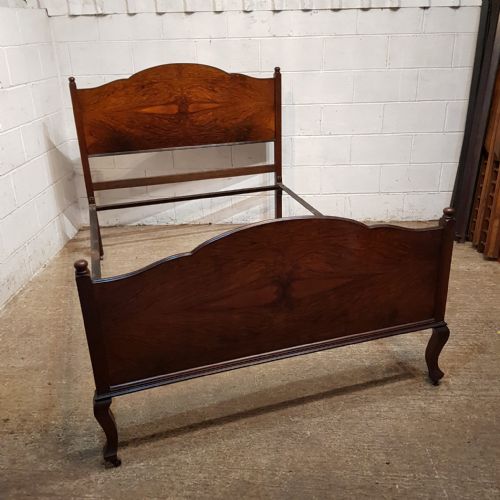


Vintage Art Deco Bed
A vintage art deco bed brings geometric forms and rich grain into the bedroom, offering strong horizontal lines and characteristic period presence.
Vintage Art Deco Bed
A vintage art deco bed centres on geometric silhouettes, architectural profiles and distinct period proportions originating predominantly from the 1930s. Buyers searching this phrase encounter substantial double beds, single bed frames, headboards with integrated cabinets, and occasional day beds.
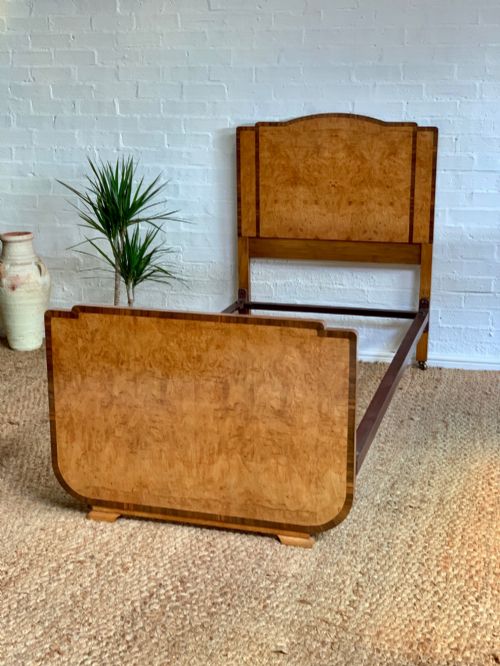
The version most commonly met on this page is a double bed constructed from walnut, frequently featuring figured veneers arranged to display dramatic grain patterns. Single beds and pairs of single beds also appear regularly, alongside larger king size frames and specific regional variants from France.
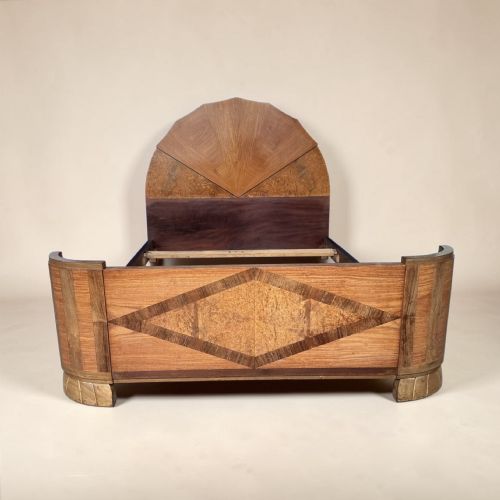
Beyond standard bedsteads, the category extends to include headboards fitted with attached bedside tables, platform bases, and related forms incorporating architectural elements like skyscraper steps and rounded Odeon profiles.
Construction and materials
Makers utilised timber solids and complex veneers, relying heavily on walnut, burr walnut, maple, birds eye maple and satinwood to create striking visual surfaces. Timber was selected for natural figuring, then cut and laid across panels to form symmetrical grain patterns.
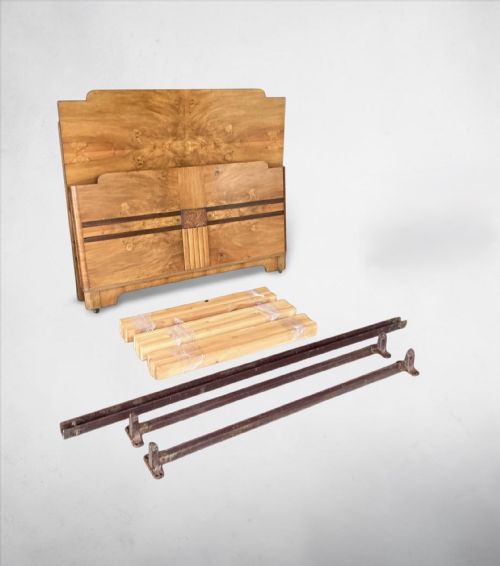
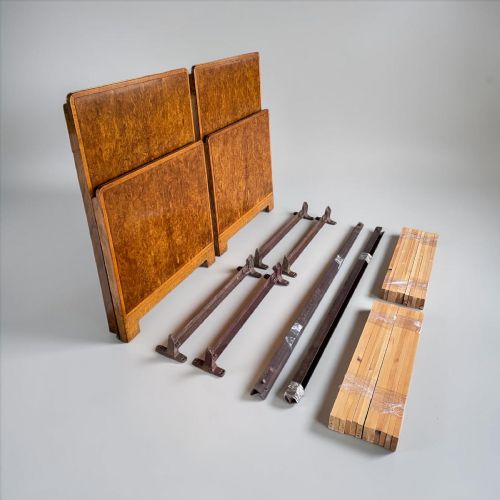
Frames incorporate structural iron and metal components alongside timber construction, particularly in bed bases and reading stands. Surface finishing involved polishing to accentuate the deep amber and blonde tones of the natural woods.
A tennis player immortalised in chrome and metal stands ready to illuminate the room from a vintage bedside lamp.
Judging quality and execution
Quality rests upon the selection and application of wood veneers, where balanced grain matching across large headboards and footboards demonstrates superior cabinet work. The harmony of secondary timbers and the precision of applied details like chrome fittings define the grade of the piece.
Design complexity also separates standard production from exceptional examples, seen in integrated furniture such as attached bedside cabinets, curved fan shapes, and architectural tiers characteristic of high-end maker commissions.
Waring & Gillow England·H.L. Epstein Brothers·Betty Joel·Heal's
The Vintage Art Deco Bed Glossary
- Burr walnut
- A prized timber harvested from tree growths that produces swirling, mottled grain patterns. It provides highly decorative surfaces on bed panels.
- Birds eye maple
- A figured timber showing small, circular eye formations across the light surface. This material offers a pale contrast to darker walnut frames.
- Odeon style
- An architectural influence marked by curved, tiered steps reminiscent of cinema design from the period. This profile shapes the headboards of specific bedsteads.
- Bedstead
- A framework supporting a mattress and base, distinct from simple headboards. These structures form complete architectural units in the sleeping chamber.
Vintage Art Deco Bed: Frequently Asked Questions
What mattress size fits these beds?
Sizes vary between standard single dimensions, traditional double proportions, and larger king size formats depending on origin. British and French sizing conventions from the period may differ slightly from modern standards.
Buyers should check exact internal frame measurements before sourcing a mattress to ensure a proper fit within the wooden surround.
How do attached bedside tables work?
Certain headboards incorporate built-in nightstands or shelving units as a single connected structure. These components are fixed directly to the main bed frame to create a unified suite.
This arrangement requires adequate wall space and specific clearance dimensions within the bedroom layout to accommodate the wider footprint.
Are slats included with these frames?
Listing specifications indicate whether modern support slats or original bases accompany the wooden structure. Platform bases and metal frames appear alongside traditional wooden rails.
Reviewing individual descriptions clarifies whether supplementary bed bases are necessary to support a modern mattress.
How do I care for walnut veneer?
Polished wood surfaces require protection from direct sunlight and excessive moisture to prevent fading and veneer lifting. Regular dusting with a soft cloth maintains the natural lustre of the finish.
Harsh chemical cleaners should be avoided in favour of traditional beeswax or appropriate furniture maintenance products suited to antique timber.