


Walnut Double Bedstead
A walnut double bedstead delivers rich timber grain and substantial presence, offering a historic focal point for a bedroom.
Walnut Double Bedstead
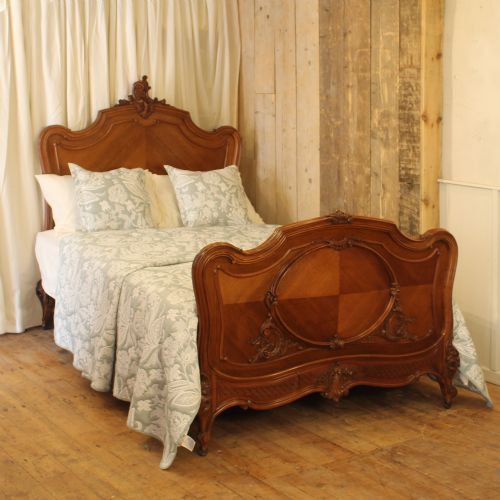
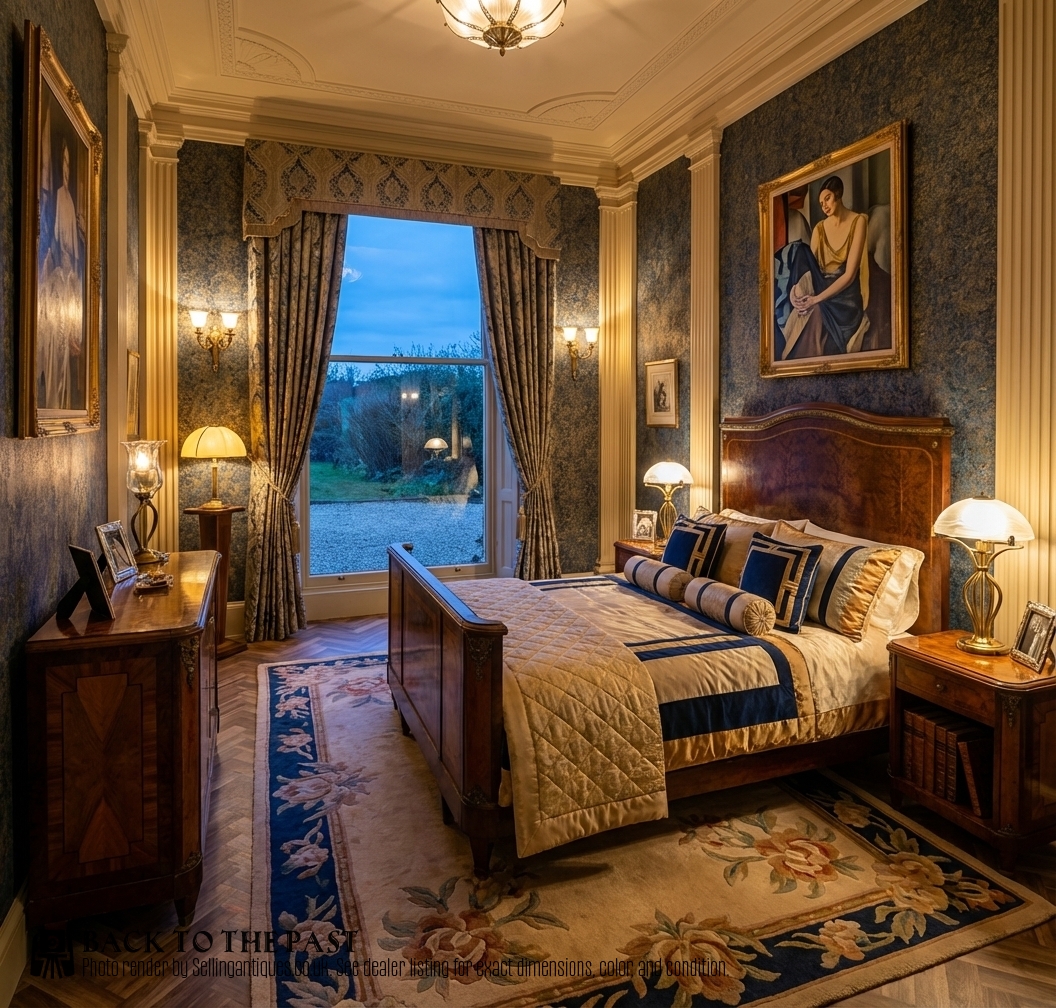
A walnut double bedstead provides a substantial sleeping frame executed in timber and veneer, spanning periods from the late nineteenth century through the Edwardian era and into the Art Deco decades. These frames combine structural timber with decorative grain patterns, appearing in both British workshops and continental French designs.
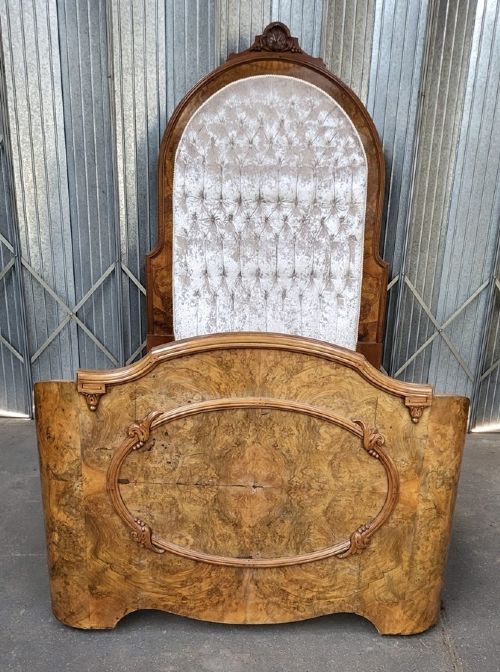
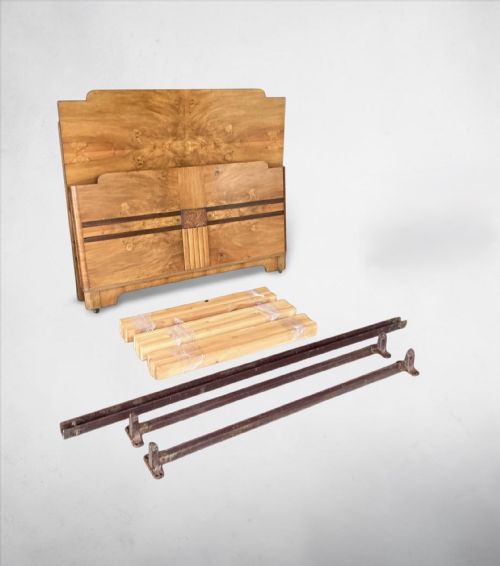
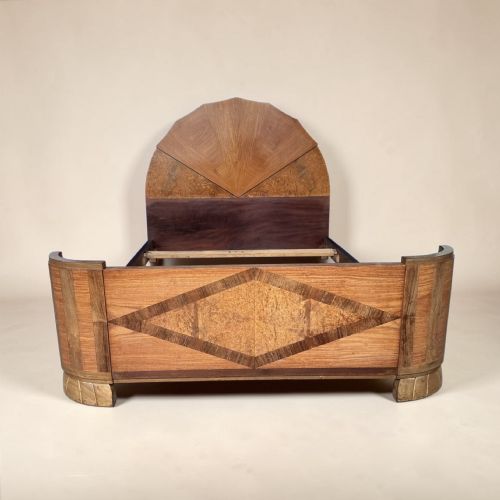
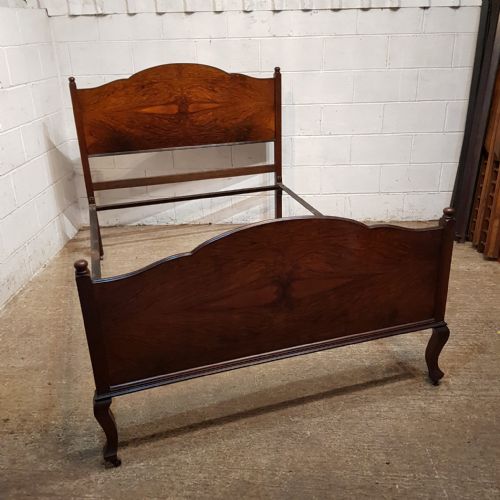
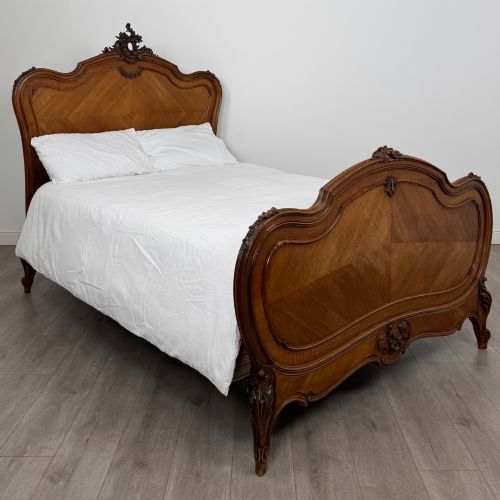
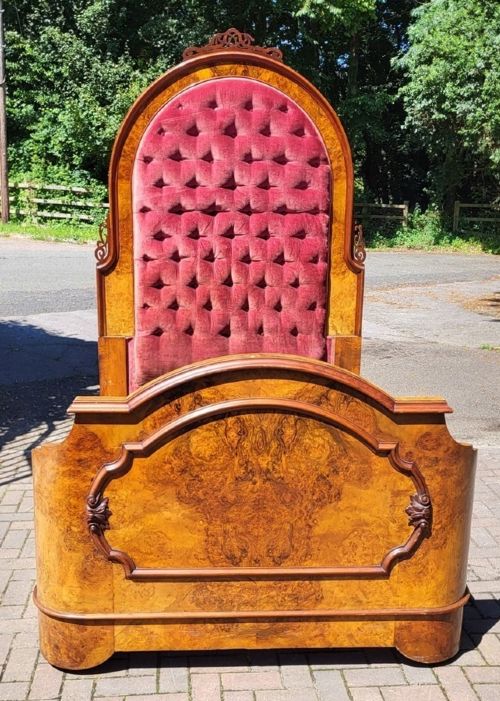
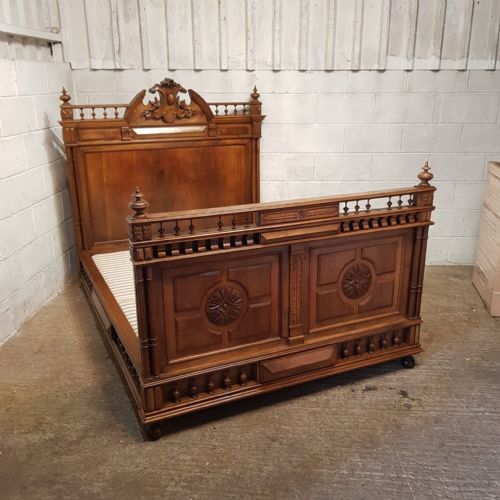
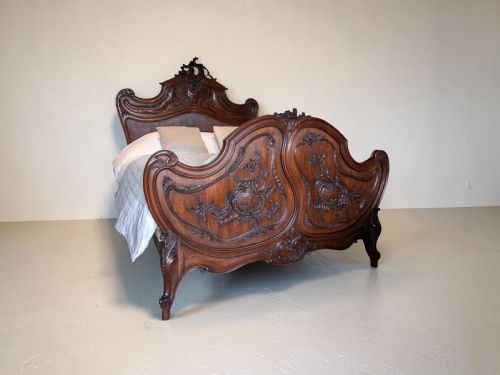
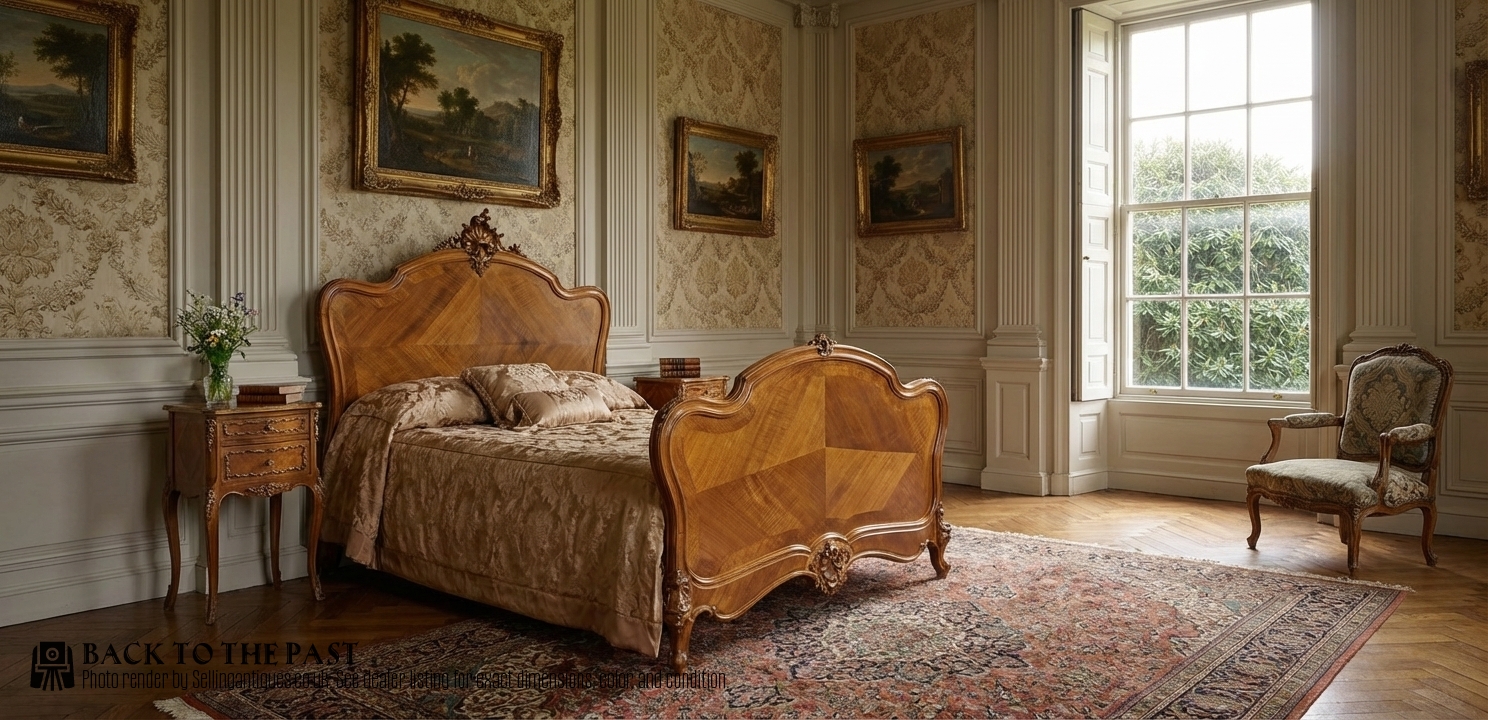
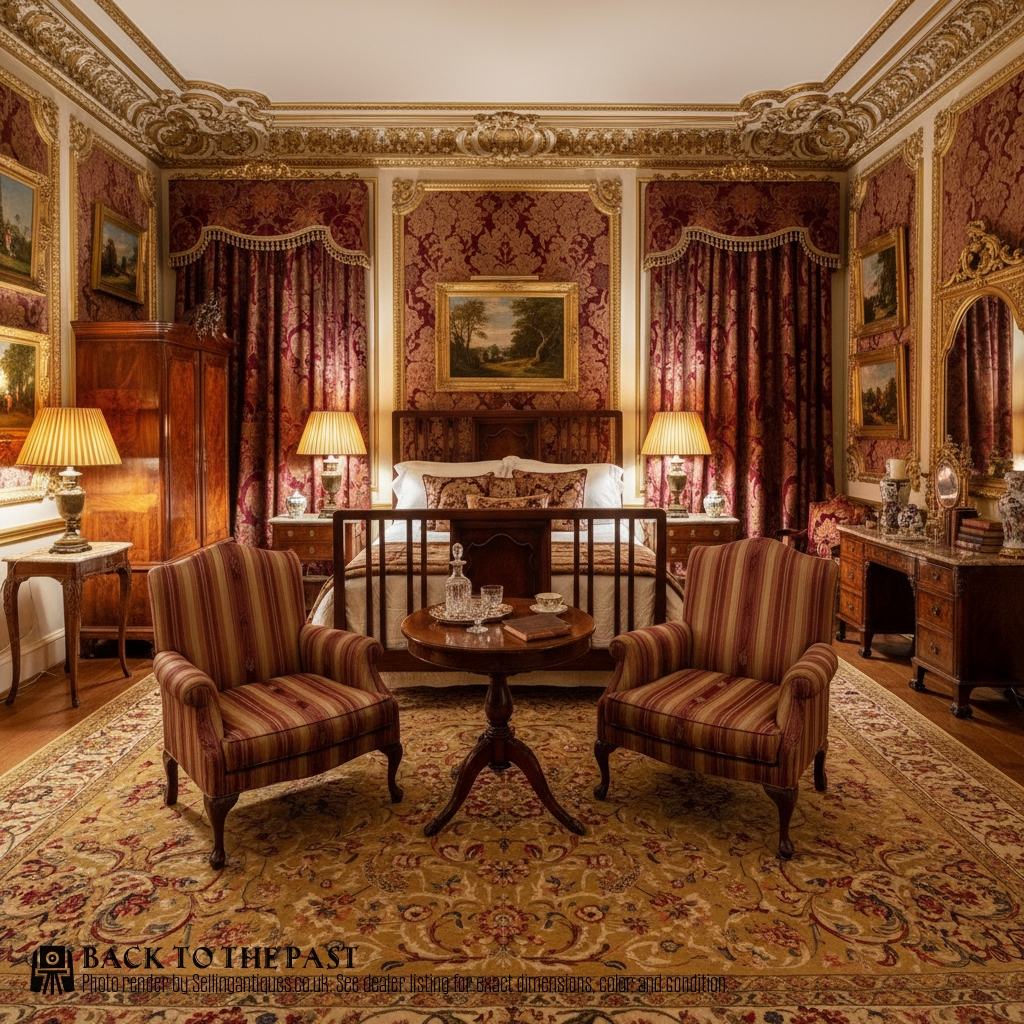
The most common examples on this page date from the Art Deco period, featuring curvaceous figured walnut or fan-shaped panels, alongside Victorian and Edwardian iterations incorporating carved details or high upholstered backs. French styles such as Louis XV and Henri II regularly emerge among the listings, bringing distinct regional silhouettes to the walnut double bedstead category.
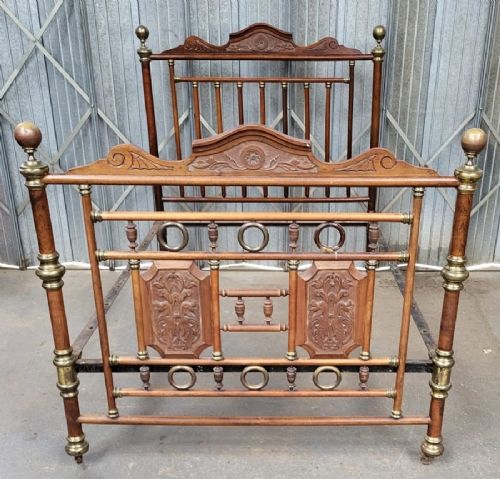
Buyers encounter various formats including standard double sizes and broader proportions, occasionally supplemented by brass or iron components within the framing. The overarching material remains walnut, manipulated through different eras into styles ranging from heavy nineteenth-century revivalism to streamlined 1930s geometry.
Materials and Construction
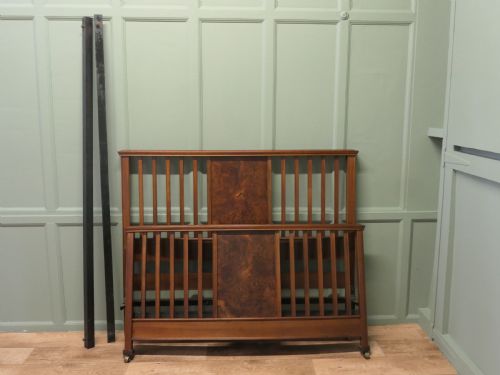
Craftsmen utilised solid walnut alongside specialised veneers such as burr and burl walnut to create decorative surfaces across headboards and footboards. Timber framing was frequently combined with secondary woods for internal structure, while brass and iron elements provided supplementary support and decorative mounts.
Surface ornamentation relied heavily on timber selection, displaying figured and marquetry patterns alongside hand carving. Upholstery techniques appeared on high back panels and buttoned designs, securing textiles directly into the timber frame.
Art Deco walnut beds occasionally demand acrobatic mattress-fitting sessions, proving that 1930s designers valued dramatic curves over modern sleeping standards.
Evaluating Quality
Quality rests in the selection of the timber grain, particularly the depth and movement found in burr and figured walnut veneers. Superior examples display carefully matched veneers across prominent panels rather than plain timber surfaces.
The execution of hand carving and the integrity of structural joinery distinguish finer specimens. Well-preserved upholstery detailing and original hardware contribute further to the distinction between standard production and exceptional examples.
The Walnut Double Bedstead Glossary
- Burr walnut
- A decorative timber derived from growth growths on walnut trees, yielding intricate swirling grain patterns. It is frequently utilised for feature panels on headboards.
- Bedstead
- A framework of a bed supporting the springs and mattress. These structures often incorporate carved headboards and footboards.
- Veneer
- A thin layer of superior wood applied to a base timber surface. This technique allows craftsmen to display rich grain patterns across large structural areas.
- Marquetry
- The art of applying pieces of veneer to a structure to form decorative patterns. It appears on revival pieces to create pictorial or geometric designs.
- Half tester
- A bed style featuring a partial canopy extending over the head of the bed. This form occurs within Victorian walnut examples.
Walnut Double Bedstead: Frequently Asked Questions
How do I care for a walnut bed?
Maintain walnut timber by dusting gently with a soft cloth and avoiding direct exposure to strong sunlight or excessive heat. Periodic application of appropriate wax polish helps preserve the finish of the veneer.
Keep humidity levels stable within the room to prevent timber movement or veneer lifting. Inspect structural joints occasionally to ensure stability remains firm.
Will modern mattresses fit antique beds?
Many older bedframes feature dimensions that differ slightly from modern standard sizes, particularly historical continental frames. Checking the exact internal measurements of the rails is essential before sourcing a mattress.
Custom mattress manufacturing or bespoke base slats can often resolve discrepancies in sizing. Consult the specific width and length of the bed frame rather than relying solely on period terminology.
How do I identify Art Deco beds?
Art Deco bed frames typically display streamlined symmetry, curvaceous silhouettes, and highly figured walnut veneers. These pieces often date from the 1930s and avoid heavy historical revival carving in favour of geometric or fan-shaped grain patterns.
The absence of ornate Victorian or Edwardian mouldings defines this aesthetic, focusing instead on the natural beauty of the polished timber. Original hardware, where present, conforms to clean, modernistic lines.
What is French walnut style?
French walnut styles encompass design movements like Louis XV, Louis XVI revival, Henri II, and French Chateau aesthetics. These beds frequently incorporate prominent carved crests, cabriole legs, or parcel gilt highlights alongside walnut timber.
Continental proportions may differ from British equivalents, sometimes offering alternative width specifications. The decorative vocabulary draws directly upon classical French motifs adapted through nineteenth and early twentieth century revivals.