
1920s Walnut Furniture
1920s walnut furniture brings rich grain patterns and geometric lines into modern rooms through beds, tallboys, and cocktail cabinets.
1920s Walnut Furniture
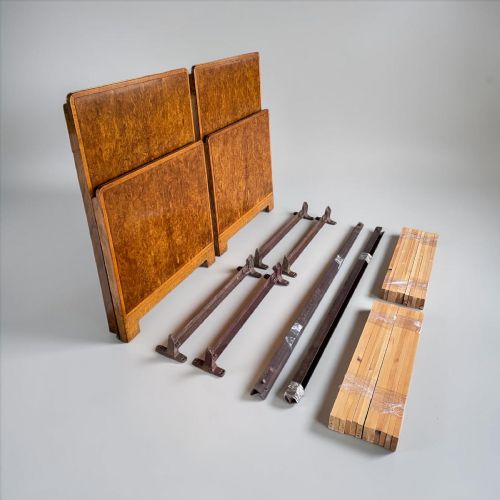
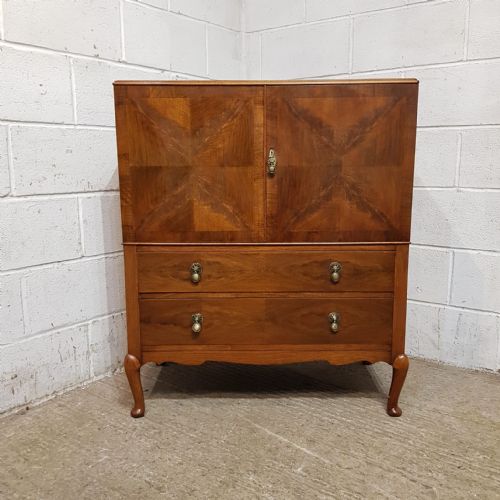
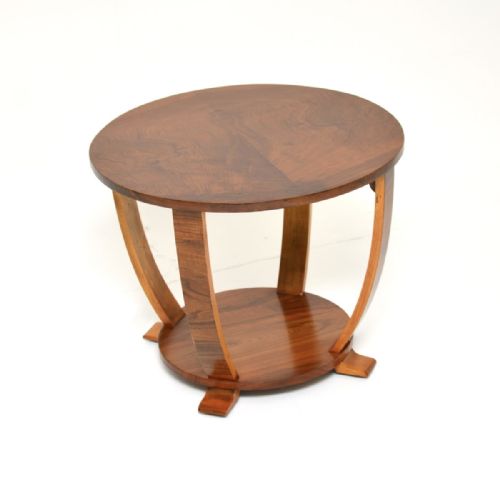
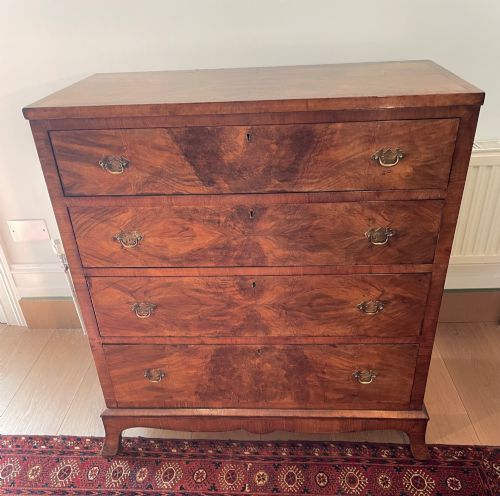
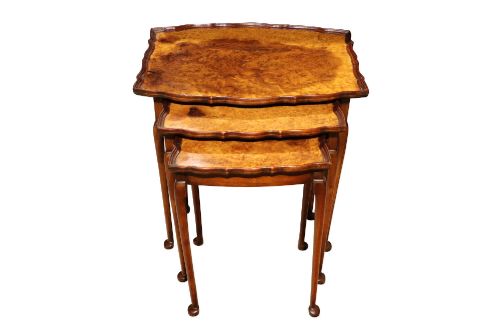
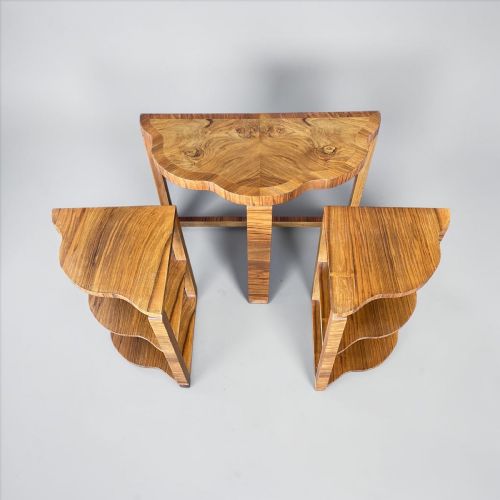
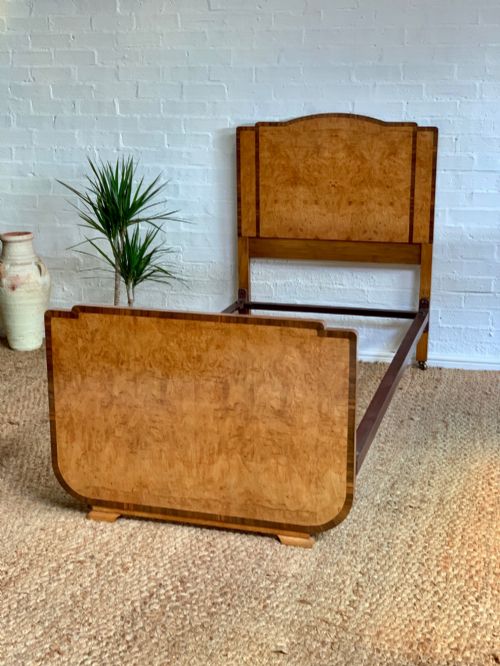
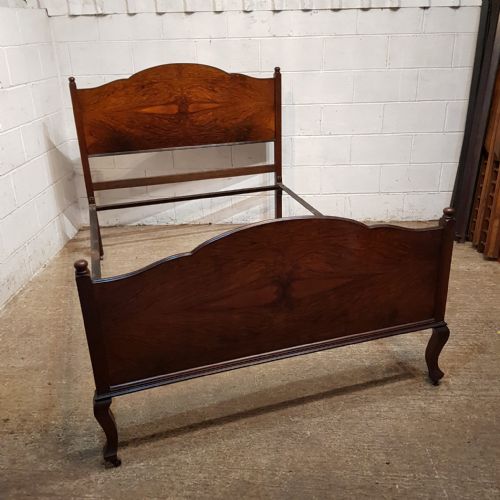
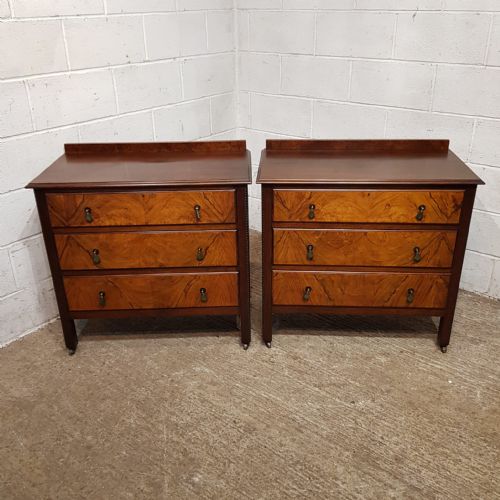
When searching for 1920s walnut furniture, buyers encounter items produced across the 1920s, 1930s, and into the 1940s that bridge traditional craftsmanship and modernist design. The selection ranges from bedroom pieces such as single beds, double beds, and tallboys to living and dining forms like sideboards, cocktail cabinets, and nests of tables.
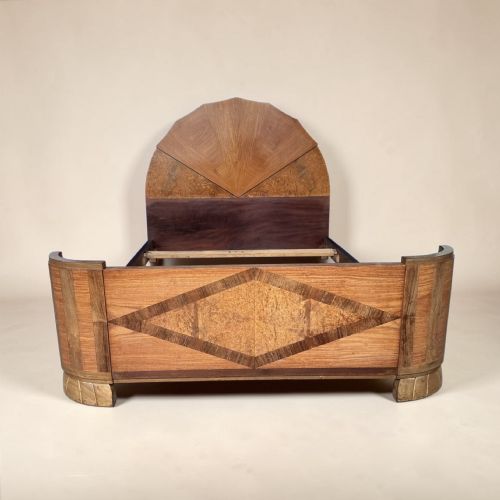
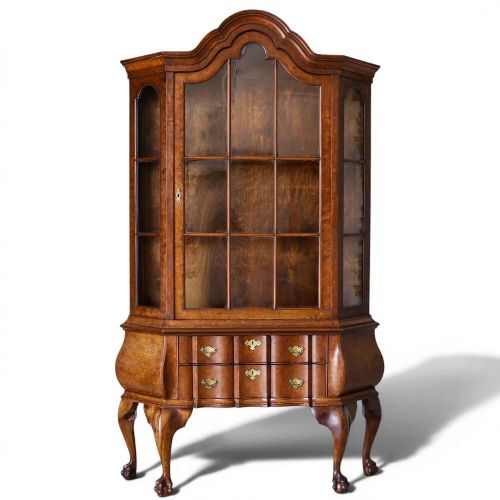
Art Deco examples dominate the selection alongside revival pieces that draw on Queen Anne, Georgian, and Dutch Baroque styles. These pieces utilise figured woods to create strong visual patterns on drawer fronts, cabinet doors, and tabletops.
Materials and construction methods
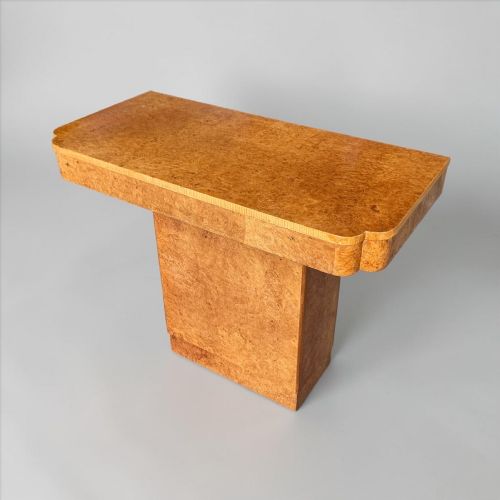
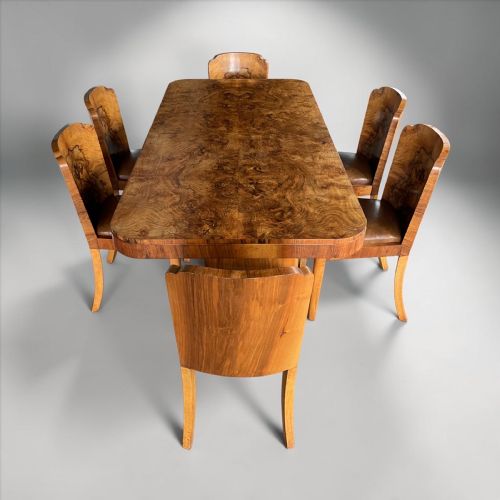
Cabinet makers utilised solid timber alongside walnut veneer and burr walnut veneer applied to structural carcass woods. Burr walnut sections bring intricate, swirling grain patterns that catch the light, contrasted against straighter grain borders.
Hardware details in brass and iron appear across doors and drawers, while specific regional pieces incorporate pearl inlay within timber frames. Joinery methods of the period secure these veneers to stable timber bases to handle domestic environments.
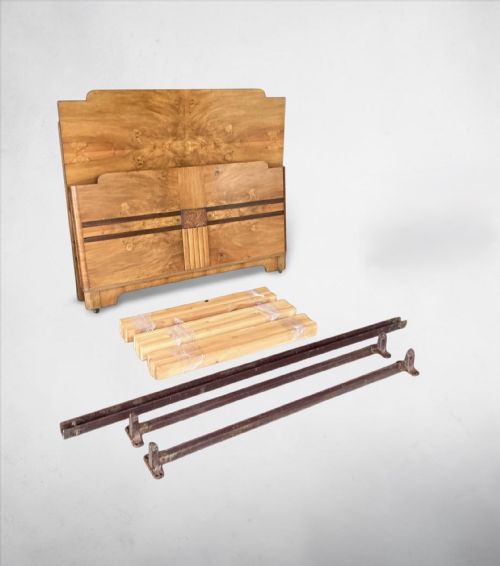
Object forms on this page include bedroom beds and tallboys alongside dining tables, occasional side tables, and glazed bookcases.
Determining quality in walnut pieces
Quality rests primarily on the selection and matching of the veneer figures across prominent surfaces like cabinet doors and chest drawers. Symmetrical grain patterns demonstrate greater skill in timber preparation.
The integration of secondary details, such as interior fittings within cocktail cabinets and bookcases, separates standard utility items from higher workshop productions. The crispness of carved revival details or the clean execution of Art Deco geometric lines indicates the maker's proficiency.
Waring & Gillow England·Maurice Adams·L.Martin of Paris·Heal's
The 1920s Walnut Furniture Glossary
- Burr walnut
- A veneer sliced from the gnarled growths on walnut trees. This timber yields highly decorative, swirling patterns prized for cabinet fronts.
- Tallboy
- A case piece combining a chest of drawers with a wardrobe or upper cabinet section. These vertical units maximise storage floor space.
- Cocktail cabinet
- A drinks storage unit popularised during the interwar period. Interiors often feature mirrored glass and slide-out preparation trays.
- Veneer
- A thin layer of figured wood applied over a stable secondary timber base. This technique allows decorative grain display without structural warping.
- Lowboy
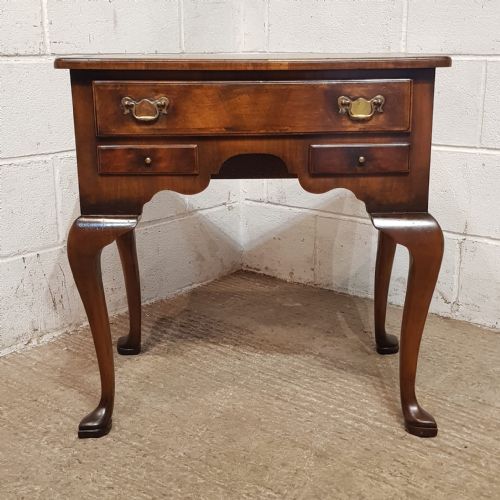
- A small dressing or side table fitted with low drawers. These tables typically rest on slender cabriole or straight legs.
1920s Walnut Furniture: Frequently Asked Questions
How do I identify Art Deco walnut?
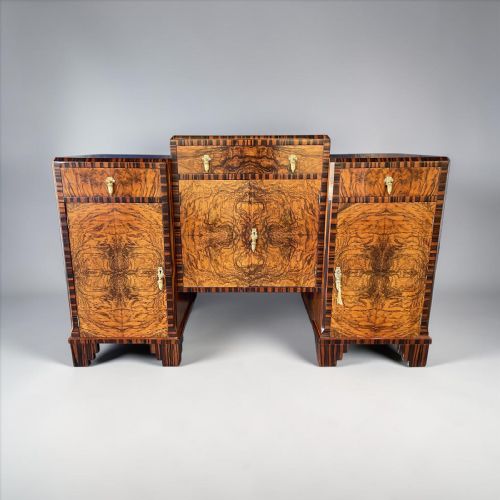
Art Deco walnut pieces rely on streamlined geometric forms, stepped outlines, and symmetrical book-matched veneers. These items abandon historical revival ornament in favour of clean architectural silhouettes.
Makers paired the rich grain of burr walnut with contrasting banded borders to emphasise the natural pattern of the wood without relying on carved decoration.
What is burr walnut?
Burr walnut comes from a tree growth or excrescence that produces tightly clustered, swirling grain patterns full of small knots. Cabinet makers sliced this wood into thin veneers for high-visibility surfaces.
Because of its irregular growth, large solid boards were impossible to source, making veneer application the standard method for furniture.
How should I care for walnut veneer?
Walnut furniture requires placement away from direct heat sources and strong sunlight to prevent veneer lifting and timber drying. Maintain the surface using a soft cloth and periodic application of suitable beeswax.
Avoid excessive moisture and commercial silicone sprays, which can penetrate through micro-cracks in older finishes.
Are 1920s beds standard sizes?
Beds from this decade often follow historical sizing conventions that differ from contemporary mattress dimensions. Single beds and 4ft 6" double beds require careful measurement before purchasing modern mattresses.
Many frames accommodate custom or modern mattress inserts with appropriate concealed support bases inside the original side rails.