


1920s Walnut Tallboy
A 1920s walnut tallboy offers vertical storage with rich grain patterns, combining practical drawer space with period elegance.
1920s Walnut Tallboy
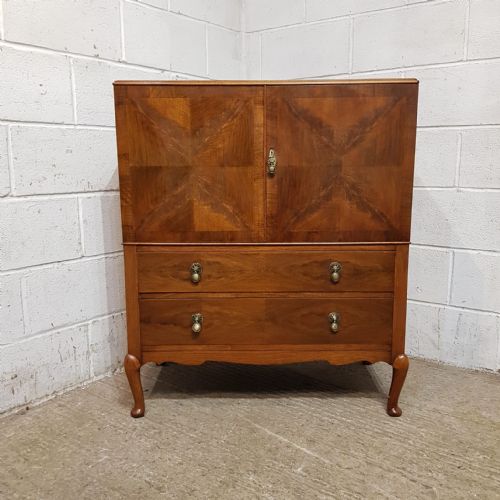
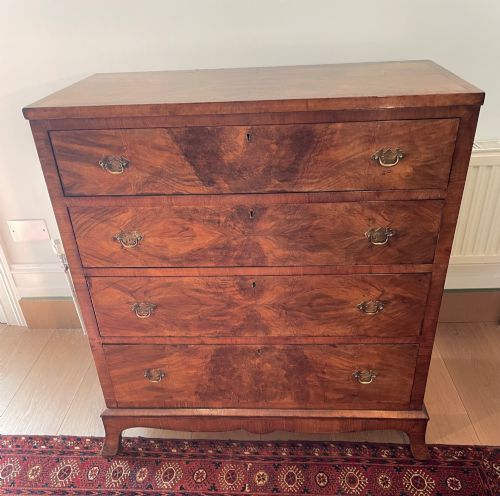
A 1920s walnut tallboy is a tall chest of drawers or cabinet designed for bedroom storage, appearing in both the 1920 and 1930 periods. These pieces combine the traditional forms of tallboys and chests of drawers with the distinct aesthetics of Art Deco, George V, and Queen Anne Revival styles.
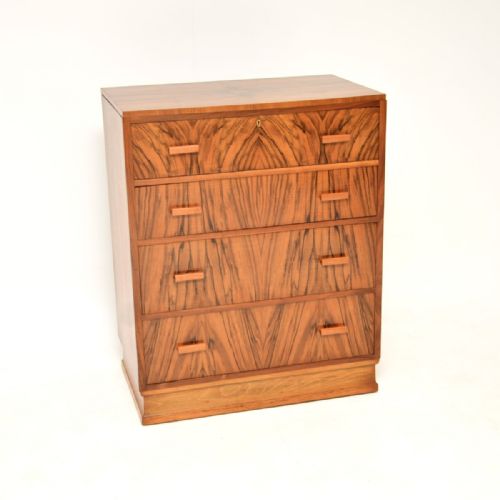
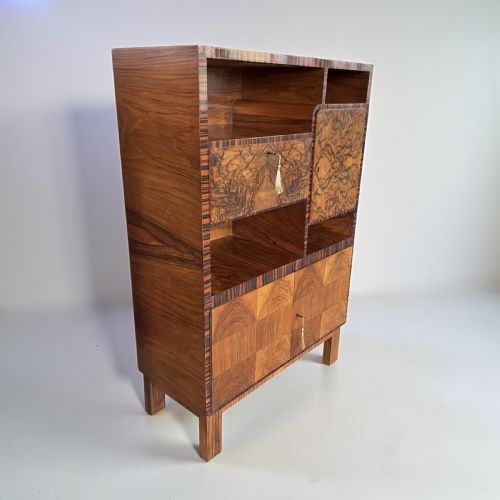
The versions most commonly met on this page feature burr walnut, figured walnut, and standard walnut woods, often complemented by brass hardware. Cabinets and five-height chests of drawers make up the primary forms alongside traditional tallboy constructions.
Originating from the early twentieth century, these items reflect the craftsmanship of the 1920s and 1930s. Buyers look to these tallboys for their combination of vertical proportions and decorative wood veneers.
How they were made
These pieces rely on wood veneer techniques, specifically employing burr walnut, figured walnut, and standard walnut veneer over secondary woods. This method highlights the natural patterns and swirls of the timber across the front drawers and cabinet doors.
Brass is utilised for handles, escutcheons, and hardware details, providing a metallic contrast to the dark warm tones of the walnut timber. Cabinetmakers constructed these tallboys with multiple drawer heights, such as five-height configurations, to maximise vertical storage.
Listings feature pieces from the 1920 and 1930 periods, incorporating Art Deco, George V, and Queen Anne Revival styles.
What varies in quality
The selection of the walnut veneer dictates much of the visual appeal, with richly figured burr walnut representing a more decorative choice than plain timber. The symmetry and book-matching of the grain across drawer fronts show the skill of the original cabinetmaker.
Construction integrity in the drawer joints and the retention of original brass hardware distinguish finer examples. The crispness of the Art Deco geometric lines or the carving on revival styles marks the standard of the workshop.
Heal's
The 1920s Walnut Tallboy Glossary
- Tallboy
- A tall chest of drawers, typically comprising a chest placed upon a base or built as a single tall unit. This form provides substantial drawer storage while occupying a compact floor footprint.
- Burr Walnut
- A specialised wood cut from the abnormal growth of a walnut tree, yielding highly swirled and mottled grain patterns. It is sliced into thin veneers for decorative furniture surfaces.
- Art Deco
- A design style prevalent in the 1930s characterised by sleek geometric shapes, streamlined forms, and modern industrial materials. It moves away from heavy historic revivalism.
- George V
- The stylistic period spanning the reign of George V, encompassing traditional craftsmanship alongside early modernist influences. Furniture from this era often blends classic proportions with subtle updates.
1920s Walnut Tallboy: Frequently Asked Questions
What is a 1920s walnut tallboy?
A 1920s walnut tallboy is a tall bedroom storage unit featuring multiple drawers, constructed primarily during the 1920 and 1930 periods.
These pieces utilise walnut veneers and incorporate styles ranging from George V traditionalism to Art Deco modernity.
How were these tallboys used?
They were designed for bedrooms to store folded clothing, linens, and personal items within a compact vertical footprint.
The multiple drawer heights allowed for organised storage while the top surface could hold decorative objects.
How do I live with a tallboy?
A tallboy integrates well into bedrooms, hallways, or living spaces as a statement storage piece that saves floor space.
Keep the walnut timber away from direct sunlight and excessive heat sources to preserve the veneer and finish.
How do I tell periods apart?
Pieces from the 1920s often show George V or Queen Anne Revival influences with softer, traditional lines and decorative handles.
Items from the 1930s typically display Art Deco characteristics with geometric forms and streamlined figured walnut surfaces.